1. Introduction
This instruction manual provides essential information for the SKF VKMA 01000 Timing Belt Kit. This kit is designed to facilitate the complete replacement of the engine timing belt system, ensuring optimal engine performance and reliability. It includes all necessary components for a thorough service.
2. Safety Information
Important Safety Notice:
- Installation of this timing belt kit requires specialized knowledge, tools, and experience.
- SKF strongly recommends that installation be performed exclusively by qualified and specialized mechanics.
- Failure to follow proper installation procedures and vehicle-specific guidelines can lead to severe engine damage, personal injury, or vehicle malfunction.
- Always refer to the vehicle manufacturer's service manual for specific torque values, timing marks, and installation sequences.
- Wear appropriate personal protective equipment (PPE) during installation.
3. Product Overview and Components
The SKF VKMA 01000 Timing Belt Kit provides a comprehensive solution for replacing critical components of your vehicle's timing system. The kit typically includes the timing belt, tensioner, and various pulleys necessary for a complete and reliable repair.

Image 3.1: The SKF VKMA 01000 Timing Belt Kit, showing the main components within its packaging. This image provides an overview of the product as it is supplied.
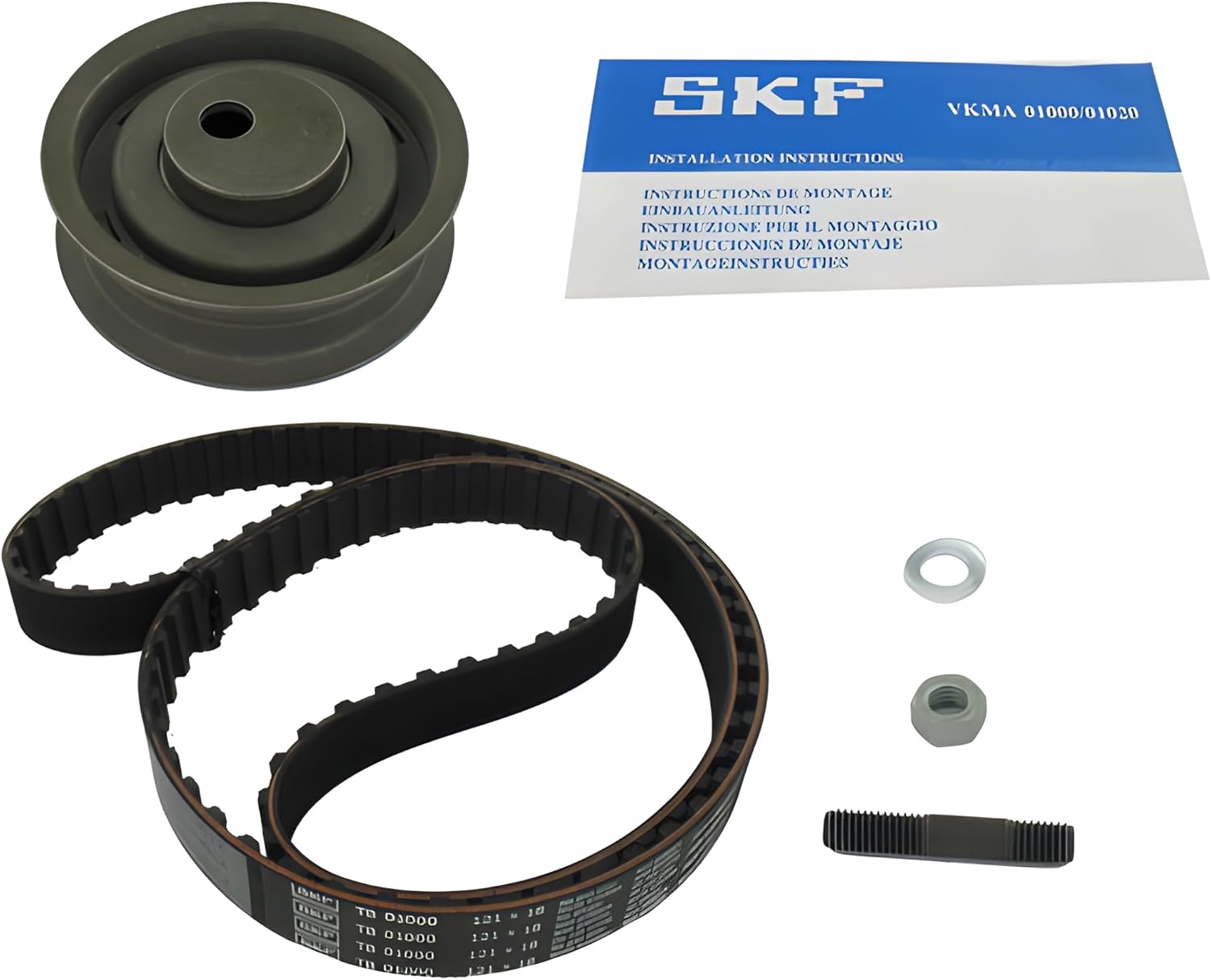
Image 3.2: This image displays the individual components included in the SKF VKMA 01000 Timing Belt Kit. Visible items are the timing belt, a tensioner, a pulley, a washer, a nut, and a bolt. These parts are essential for a complete timing belt system replacement.
4. Installation Guidelines
The installation of the timing belt kit is a complex procedure that must be carried out with precision. The following are general guidelines; always consult the specific vehicle service manual for detailed instructions.
4.1. Preparation
- Ensure the engine is cool before beginning work.
- Disconnect the vehicle's battery.
- Remove any components obstructing access to the timing belt system (e.g., accessory belts, covers, engine mounts).
- Identify and align the engine's timing marks (crankshaft and camshaft). This is critical for correct engine operation.
4.2. Component Replacement
- Carefully remove the old timing belt, tensioner, and pulleys.
- Inspect surrounding components for wear or damage (e.g., water pump, oil seals). Replace as necessary.
- Install the new SKF tensioner and pulleys, ensuring they are correctly seated and torqued to specifications.
- Install the new SKF timing belt, ensuring all timing marks remain aligned.
- Adjust the tensioner according to the vehicle manufacturer's specifications.

Image 4.1: This diagram provides a schematic representation of a timing belt system within an engine. It shows the timing belt connecting the crankshaft, camshaft, and other auxiliary pulleys, indicating the rotational synchronization of engine components.
4.3. Post-Installation
- Rotate the engine manually several times to confirm timing mark alignment and proper belt tension.
- Reinstall all removed components in reverse order.
- Reconnect the battery.
- Start the engine and check for proper operation, unusual noises, or warning lights.
5. Operating (Post-Installation Checks)
After successful installation of the SKF VKMA 01000 Timing Belt Kit, it is crucial to perform the following checks to ensure correct operation and prevent potential issues:
- Initial Engine Start: Listen for any abnormal noises immediately after starting the engine.
- Idle Stability: Observe the engine's idle speed and stability. Irregularities may indicate incorrect timing.
- Warning Lights: Ensure no engine warning lights (e.g., Check Engine Light) are illuminated on the dashboard.
- Test Drive: Conduct a short test drive under varying conditions to confirm smooth acceleration, proper power delivery, and absence of unusual vibrations or sounds.
- Fluid Levels: Recheck all fluid levels (e.g., coolant, power steering fluid) that might have been affected during the installation process.
If any issues are detected, immediately consult a qualified mechanic to diagnose and rectify the problem.
6. Maintenance
The timing belt is a critical engine component with a specified service interval. Adhering to the vehicle manufacturer's recommended maintenance schedule is paramount for engine longevity.
- Scheduled Replacement: Replace the timing belt kit at the intervals specified in your vehicle's owner's manual or service schedule. These intervals are typically based on mileage or time, whichever comes first.
- Regular Inspection: While the timing belt is usually enclosed, any opportunity to inspect it (e.g., during other engine work) should be taken. Look for cracks, fraying, missing teeth, or excessive wear.
- Associated Components: When replacing the timing belt, it is highly recommended to replace all associated components, such as the tensioner, idler pulleys, and often the water pump, as these parts wear concurrently and a failure in one can lead to timing belt failure.
7. Troubleshooting
If issues arise after the installation of the timing belt kit, consider the following general troubleshooting points. Always consult a professional mechanic for diagnosis and repair.
7.1. Engine Not Starting or Misfiring
- Incorrect Timing: The most common cause. Recheck timing marks carefully. Even a single tooth off can cause significant issues.
- Sensor Issues: Camshaft or crankshaft position sensors may have been damaged or incorrectly reconnected during the process.
- Electrical Connections: Ensure all electrical connectors removed during installation are securely reattached.
7.2. Unusual Noises (Whining, Squealing, Clicking)
- Incorrect Belt Tension: Too loose or too tight tension can cause noise. Recheck tensioner adjustment.
- Faulty Pulley/Tensioner: A new component might be defective, or an old, unreplaced component might be failing.
- Interference: The belt or other components might be rubbing against covers or other engine parts.
7.3. Engine Overheating
- If the water pump was replaced, ensure it is functioning correctly and the cooling system is properly bled of air.
- Check for coolant leaks from hoses or connections disturbed during the process.
8. Specifications
| Attribute | Value |
|---|---|
| Brand | SKF |
| Model Number | VKMA01000 |
| Item Weight | 488 g |
| Product Dimensions | 33.6 x 14.3 x 5 cm |
| OEM Part Numbers | 026 109 243, 026 109 243 A, 026 109 243 C, 026 109 243 E, 026 109 243 L, 056 109 119 A, 056 198 119, 6K0 198 002, N 011 133 1, N 011 133 7, N 012 231 4, N 902 964 01, LDK0310, 55400, 5540070, 55421, 5542170, 1 987 946 321, 1 987 948 017, 1 987 948 044, 1 987 948 652, 1 987 949 018, 1 987 949 343, 1 987 AE1 182, F 000 KR9 221, F 000 KR9 273, 10139 01, 14576 01, VKM 11000, VKMA 01000, VKMA 01002, VKMA 01009, VKMA 01011, VKMT 01000, MBK131, QBK131, 01031, 06688, 12652, 14574, GT357.01, 23801, 23801/D, 43870, TB108, 530 0001 10, 530 0162 10, 531 0063 10, 531 0600 10, 536 0005 10, KR5007, GT233, KTD3016, KTD3019, KTD3020, KTD3041, BOL-D021088, BOL-F904905, BOL-RX11000 |
| First Available Date | June 11, 2013 |
8.1. Vehicle Compatibility
This kit is compatible with various vehicle models, including but not limited to: AUDI 80, AUDI 100, SEAT CORDOBA, SEAT IBIZA, SEAT TOLEDO. Always verify compatibility with your specific vehicle using the SKF product catalog or a qualified mechanic.
9. Support and Warranty Information
For detailed technical information, specific installation instructions, and warranty details pertaining to the SKF VKMA 01000 Timing Belt Kit, please refer to the official SKF resources.
- QR Code: Locate the QR code on the product packaging. Scanning this code will provide direct access to comprehensive instructions, technical data, and additional product information from SKF.
- Professional Assistance: For any complex queries or issues, it is recommended to consult a certified automotive technician or contact SKF customer support.


