
Dwyer 2000-0D
Dwyer Magnehelic Series 2000 Differential Pressure Gauge User Manual
Model: 2000-0D | Brand: Dwyer
Introduction
The Dwyer Magnehelic Series 2000 Differential Pressure Gauge is designed for high accuracy in measuring low air or non-corrosive gas pressures, including positive, negative (vacuum), or differential pressures. Its frictionless Magnehelic gage movement ensures quick and precise indications. This gauge is built to resist shock, vibration, and over-pressures, offering a reliable and maintenance-friendly solution without the issues associated with manometer fluids.
Setup and Installation
Unpacking and Inspection
Carefully remove the gauge from its packaging. Inspect for any signs of damage during transit. Ensure all components, including mounting hardware and pressure fittings, are present.
Mounting
The Magnehelic gauge can be flush mounted in a panel or surface mounted. The bezel provides a flange for flush mounting. Ensure the mounting surface is stable and free from excessive vibration.
- Flush Mounting: Cut an appropriate opening in the panel. Insert the gauge and secure it using the provided mounting clamps or screws.
- Surface Mounting: Use suitable screws to attach the gauge directly to a flat surface.
Pressure Connections
Connect the pressure lines to the high and low pressure ports located on the side or back of the gauge. Use appropriate tubing and fittings to ensure a leak-free connection. For differential pressure measurement, connect the higher pressure source to the 'High' port and the lower pressure source to the 'Low' port.
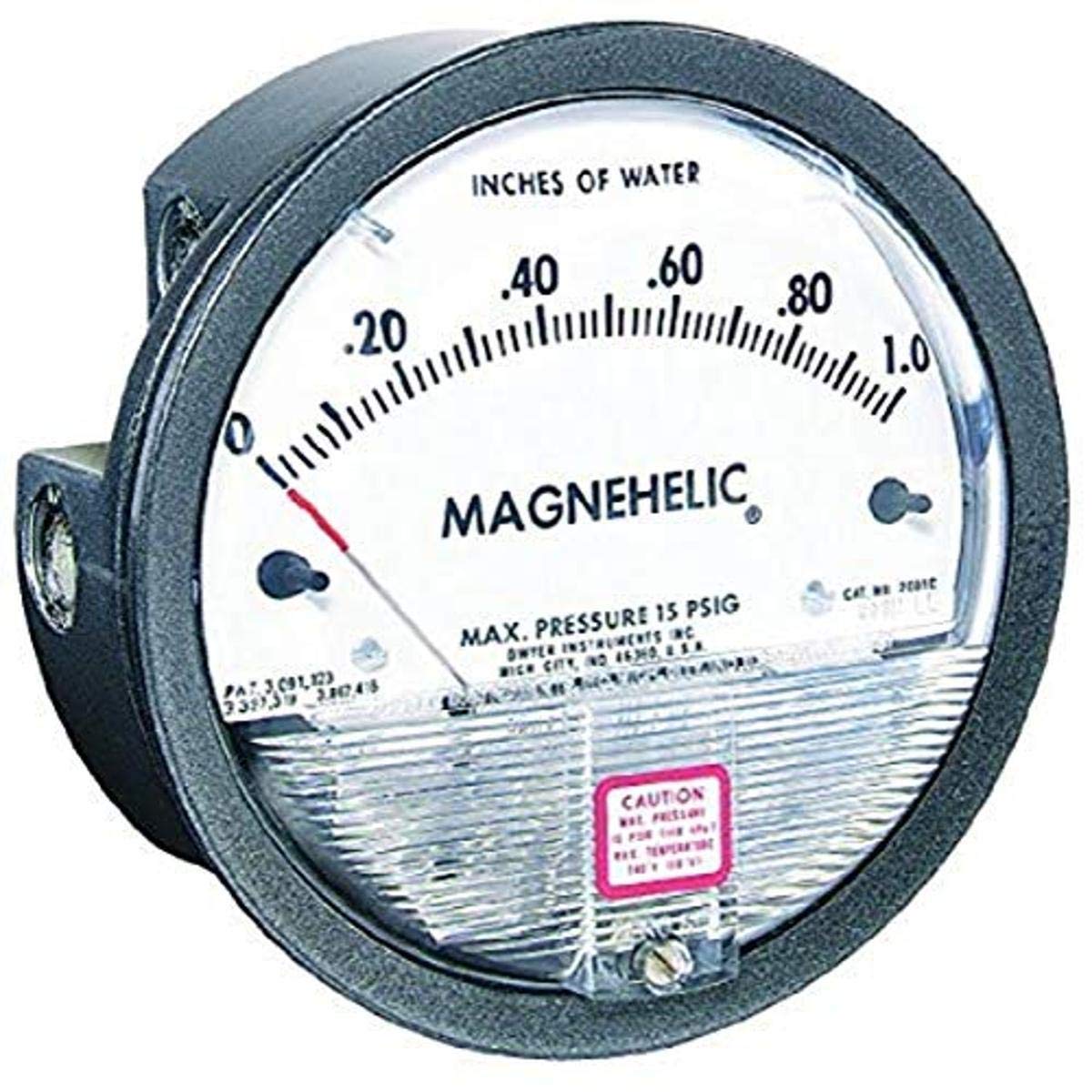
Figure 1: Front view of the Dwyer Magnehelic Series 2000 Differential Pressure Gauge. The gauge features a clear plastic face, a red-tipped pointer, and a scale indicating pressure in inches of water.
Zero Adjustment
Before operation, ensure the gauge reads zero when both pressure ports are open to atmospheric pressure or are connected to the same pressure source. If not, use the zero adjustment screw, typically located on the face of the gauge, to bring the pointer to the zero mark.
Operating Instructions
Reading the Gauge
The Magnehelic gauge provides a direct reading of pressure on its scale. The red-tipped pointer indicates the pressure value. Read the value at the center of the pointer tip. The scale is precision litho-printed for accuracy and ease of reading.
Pressure Types
- Positive Pressure: Connect the pressure source to the 'High' port, leaving the 'Low' port open to atmosphere.
- Negative Pressure (Vacuum): Connect the vacuum source to the 'Low' port, leaving the 'High' port open to atmosphere.
- Differential Pressure: Connect the higher pressure source to the 'High' port and the lower pressure source to the 'Low' port. The gauge will display the difference between the two pressures.
Over-Pressure Protection
The design of the Magnehelic gauge resists over-pressures up to 15 PSIG (Max. Pressure 15 PSIG indicated on the gauge face) without damage, protecting the internal mechanism.
Maintenance
Cleaning
The clear plastic face is highly resistant to breakage and provides undistorted viewing. To clean the face, use a soft, damp cloth. Avoid abrasive cleaners or solvents that could damage the plastic.
Calibration Check
While the Magnehelic gauge is designed for long-term accuracy, periodic calibration checks are recommended, especially in critical applications. This can be done by comparing its readings against a known, calibrated pressure standard.
Pointer Stops
The gauge features molded rubber pointer stops that prevent pointer over-travel without causing damage to the mechanism.
Troubleshooting
Pointer Does Not Move or Moves Erratically
- Check Connections: Ensure all pressure tubing connections are secure and free of leaks or blockages.
- Verify Pressure Source: Confirm that the pressure source is active and within the gauge's specified range.
- Inspect for Obstructions: Check the pressure ports and internal tubing for any foreign material that might be obstructing airflow.
Inaccurate Readings
- Zero Adjustment: Re-check and adjust the zero point as described in the Setup section.
- Environmental Factors: Ensure the gauge is operating within its specified temperature range. Extreme temperatures can affect accuracy.
- Gauge Orientation: For optimal accuracy, ensure the gauge is mounted in the correct orientation (usually vertical, unless otherwise specified for specific models).
- Over-pressure Events: While resistant, repeated or severe over-pressure events can potentially affect long-term accuracy.
Specifications
| Attribute | Value |
|---|---|
| Model Number | 2000-0D |
| Brand | Dwyer |
| Material | Aluminum |
| Item Weight | 1.3 Pounds (589.67 g) |
| Parcel Dimensions | 15.49 x 13.72 x 7.62 cm |
| Manufacturer | Dwyer Instruments |
| Date First Available | May 7, 2015 |
Key Features
- Bezel provides flange for flush mounting in panel.
- Clear plastic face is highly resistant to breakage, providing undistorted viewing of pointer and scale.
- Precision litho-printed scale is accurate and easy to read.
- Red tipped pointer of heat treated aluminum tubing is easy to see and rigidly mounted on the helix shaft.
- Pointer stops of molded rubber prevent pointer over-travel without damage.
Warranty Information
Dwyer Instruments, Inc. products are warranted to be free from defects in material and workmanship for a period of one year from the date of shipment. This warranty does not cover products that have been subjected to misuse, neglect, accident, or improper installation or application. For specific warranty details and claims, please refer to the official Dwyer Instruments, Inc. warranty policy or contact their customer service.
Customer Support
For technical assistance, replacement parts, or further information regarding your Dwyer Magnehelic Series 2000 Differential Pressure Gauge, please contact Dwyer Instruments, Inc. customer support. Have your model number (2000-0D) and any relevant purchase information ready when contacting support.
You can typically find contact information on the official Dwyer Instruments website or through your product distributor.
Related documents2000-0D


Ask a question about this manual
Ask about setup, troubleshooting, compatibility, parts, safety, or missing instructions. Manuals+ will review the question and use this page’s manual context to help answer it.