1. Introduction
The Bosal Heat Moldable Plus Double-Sided Fusible Interfacing is a unique material designed to provide stiffness and shape retention for various craft and sewing projects. This interfacing becomes pliable when heated, allowing it to be molded into desired three-dimensional forms. Once cooled, it retains its new shape, offering a stable foundation for fabric bowls, boxes, vases, children's crafts, costumes, and more. This product measures 20 inches by 36 inches.
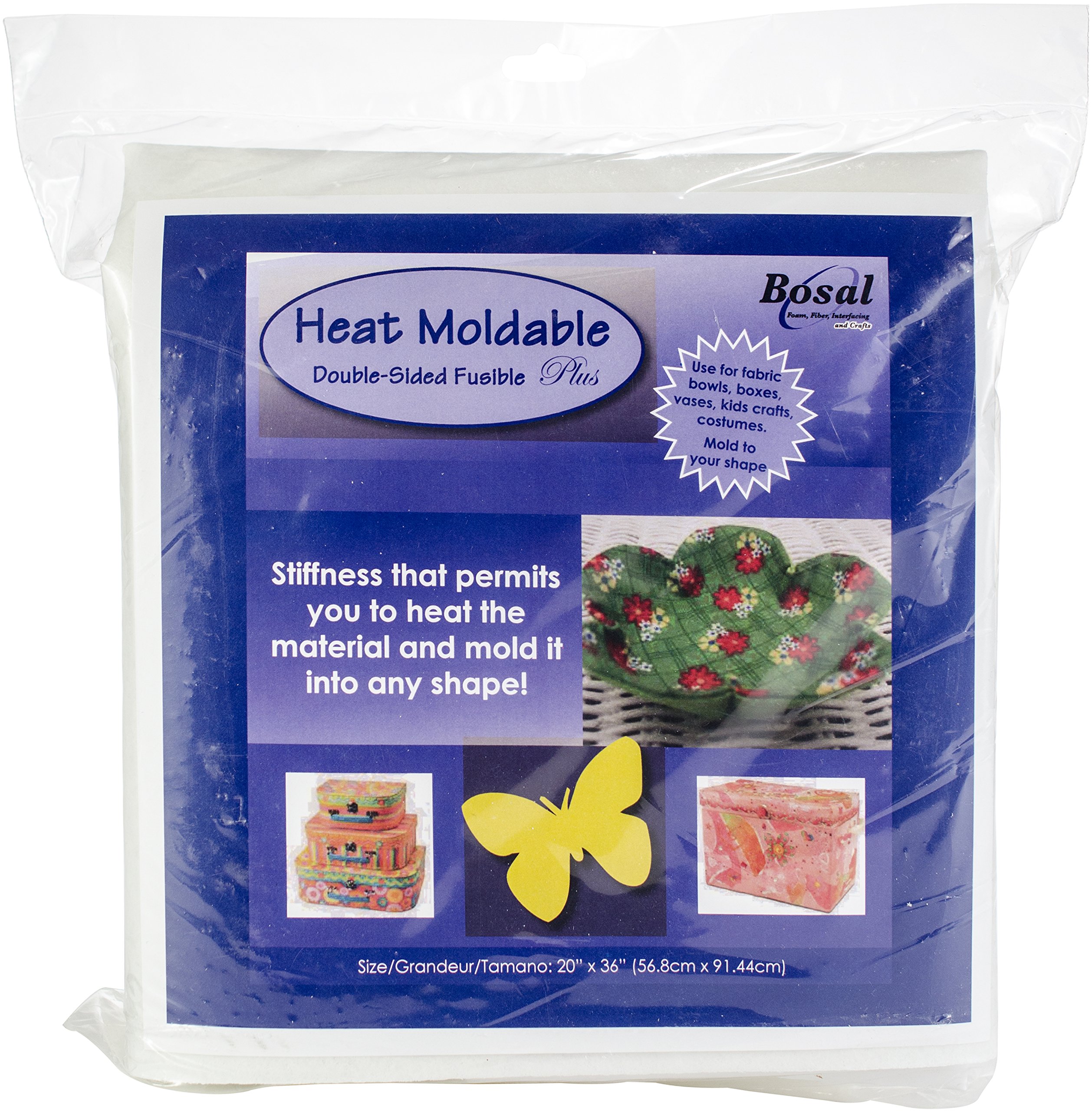
This image displays the Bosal Heat Moldable Plus Double-Sided Fusible Interfacing. It is a white, firm material, typically used as a stabilizer in various craft and sewing projects. The surface appears smooth, indicating its fusible nature.
2. Safety Information
Please read and understand all safety precautions before using this product. Improper use of heat sources can cause burns or damage to materials.
- Heat Source Caution: Always exercise extreme caution when using heat sources such as irons, heat guns, or hair dryers. These tools can reach high temperatures.
- Ventilation: Work in a well-ventilated area to dissipate any fumes that may be released during heating.
- Surface Protection: Protect your work surface from heat and potential adhesive transfer by using a heat-resistant mat or several layers of thick fabric.
- Skin Protection: Avoid direct contact with heated material and heat sources. Use appropriate tools or gloves if necessary for handling hot material.
- Children and Pets: Keep children and pets away from the work area during use.
3. Preparation
Before beginning your project, ensure you have all necessary materials and a suitable workspace.
- Inspect Material: Ensure the Bosal Heat Moldable Plus is clean and free of creases or damage.
- Prepare Fabric (if applicable): If fusing to fabric, ensure your fabric is pre-washed, dry, and ironed smooth.
- Gather Tools: Have your chosen heat source (iron, heat gun, or hair dryer), a heat-resistant work surface, and any shaping tools ready.
- Workspace: Set up your workspace in a well-ventilated area with adequate lighting.
4. Operating Instructions
Follow these steps to effectively heat and mold your Bosal Heat Moldable Plus interfacing.
4.1. Heating Methods
The material softens with heat, allowing it to be shaped. Choose one of the following heating methods:
4.1.1. Iron Method
- Set your iron to the lowest heat setting (e.g., synthetic or silk setting). Avoid high heat initially to prevent scorching or excessive stickiness.
- Place the Bosal Heat Moldable Plus on a heat-resistant surface. If fusing to fabric, place the fabric on top of the interfacing.
- Apply the iron to the material for approximately 15-20 seconds. For fusing, use a pressing cloth between the iron and your fabric.
- Carefully lift the iron and test a small area for pliability. The material should feel soft and flexible. If it is not soft enough, apply heat for a few more seconds.
- Avoid overheating, as this can make the material overly sticky or difficult to handle.
4.1.2. Heat Gun or Hair Dryer Method
- Hold the heat gun or hair dryer a few inches above the Bosal Heat Moldable Plus.
- Move the heat source continuously and evenly over the surface of the material.
- Observe the material as it softens. This usually takes a few seconds.
- Once pliable, proceed to the molding process.
4.2. Molding Process
Once the material is sufficiently heated and pliable:
- Quickly but carefully shape the material into your desired form. You can use your hands (with caution for heat), or shaping tools.
- Work efficiently, as the material will begin to cool and stiffen relatively quickly.
- For complex shapes, you may need to reheat sections as you work.
4.3. Cooling and Setting
After molding:
- Hold the material in its desired shape until it cools completely. As it cools, it will regain its stiffness and hold the new form.
- Allow ample time for full cooling and setting before further handling or adding embellishments.
5. Care and Storage
Proper care and storage will help maintain the quality and usability of your Bosal Heat Moldable Plus.
- Cleaning: If the material becomes soiled, gently wipe it with a damp cloth. Avoid harsh chemicals or excessive scrubbing.
- Storage: Store unused material flat or rolled to prevent unwanted creases or bends. Keep it in a cool, dry place away from direct sunlight or extreme heat, which could cause it to soften prematurely.
- Avoid Folding: Do not fold the material sharply, as this can create permanent creases that are difficult to remove.
6. Troubleshooting
Here are solutions to common issues you might encounter:
- Material not molding or softening sufficiently:
- Ensure your heat source is at the correct temperature.
- Increase the duration of heat application slightly.
- Ensure heat is applied evenly across the area you wish to mold.
- Material becomes too soft or sticky:
- You may be applying too much heat or for too long. Reduce heat duration or temperature.
- Allow the material to cool slightly before handling if it's excessively sticky.
- Creases or wrinkles appear:
- Reheat the affected area gently and flatten it out. Then, remold as desired.
- Store the material properly to prevent new creases.
- Fusing to fabric is not strong:
- Ensure sufficient heat and pressure are applied during the fusing process.
- Verify that the fabric is suitable for fusible interfacing.
7. Specifications
| Brand | Bosal |
| Model Number | BOS491 |
| Material | Heat-moldable, Stiff Plastic |
| Dimensions | 20 inches x 36 inches |
| Color | White |
| UPC | 834875004913 |
| Recommended Uses | Arts & Crafts, fabric bowls, boxes, vases, kids crafts, costumes |
| Country of Origin | United States |
8. Warranty and Support
For specific warranty information or product support, please refer to the packaging or contact Bosal directly through their official website or customer service channels. Keep your purchase receipt for any warranty claims.


