
1. Introduction
This manual provides essential instructions for the safe and efficient use of the uxcell MAL 25x150 Small Air Pneumatic Cylinder. This device is a mechanical component designed to convert the energy of compressed air into linear motion. It features a single rod and double-acting functionality, with a 25mm bore and 150mm stroke, making it suitable for various industrial and pneumatic system applications.
2. Safety Information
Always adhere to the following safety guidelines when handling, installing, or operating the pneumatic cylinder:
- Ensure the air supply is completely shut off and depressurized before performing any installation, maintenance, or repair work.
- Wear appropriate personal protective equipment (PPE), including eye protection, when working with pneumatic systems.
- Do not exceed the maximum operating pressure specified for the cylinder (0.7 MPa).
- Verify all connections are secure and leak-free before applying air pressure.
- Avoid placing hands or other body parts in the path of the moving rod during operation.
- Ensure the cylinder is properly mounted and secured to prevent accidental movement or detachment.
- Only use clean, dry, and filtered compressed air to prevent damage to internal components.
- Consult a qualified technician if you are unsure about any aspect of installation or operation.
3. Product Components
The uxcell MAL 25x150 pneumatic cylinder consists of several key parts designed for reliable linear actuation.

Figure 1: Overview of the uxcell MAL 25x150 Small Air Pneumatic Cylinder. This image displays the full length of the cylinder, highlighting its compact design and the threaded rod end for attachment.
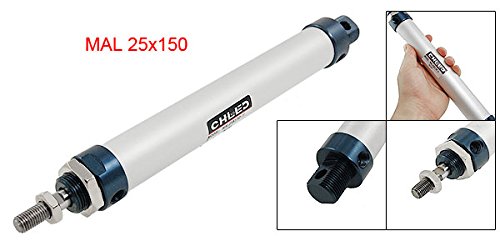
Figure 2: Detailed views of the uxcell MAL 25x150 Pneumatic Cylinder. This composite image shows the overall cylinder, a close-up of the air inlet port, and the threaded piston rod with its securing nut, illustrating key connection points and the compact size when held in hand.
Key components include:
- Cylinder Barrel: The main body housing the piston.
- Piston: Moves within the barrel, driven by compressed air.
- Piston Rod: Extends from the cylinder, providing the linear motion. It is a single rod design.
- End Caps: Seal the ends of the cylinder barrel and contain the air ports.
- Air Ports: Connections for compressed air supply, allowing for double-acting operation (air pressure extends and retracts the rod).
- Mounting Threads/Hardware: For securing the cylinder to a fixture.
4. Setup & Installation
Proper installation is crucial for the performance and longevity of the pneumatic cylinder. Follow these steps carefully:
- Mounting: Securely attach the cylinder to a stable surface or machine frame using appropriate mounting brackets and fasteners. Ensure the cylinder is aligned correctly with the intended direction of motion to prevent side loading on the piston rod.
- Air Supply Connection: Connect the compressed air lines to the cylinder's air ports. For double-acting cylinders, one port extends the rod, and the other retracts it. Use appropriate fittings and ensure all connections are tight to prevent air leaks.
- Air Quality: Ensure the compressed air supply is clean, dry, and filtered. An air filter, regulator, and lubricator (FRL unit) is recommended upstream of the cylinder to optimize performance and lifespan.
- Load Attachment: Connect the load to the piston rod using the threaded end. Ensure the connection is secure and that the load is aligned to avoid bending or stressing the rod.
- Initial Test: Before full operation, apply low air pressure and cycle the cylinder slowly to check for smooth movement, proper alignment, and any leaks. Gradually increase pressure to the desired operating level.
5. Operating Instructions
The uxcell MAL 25x150 is a double-acting pneumatic cylinder, meaning air pressure is used to both extend and retract the piston rod.
- Extension: To extend the piston rod, apply compressed air to the port that drives the piston forward.
- Retraction: To retract the piston rod, apply compressed air to the opposing port, which drives the piston backward.
- Control: The cylinder's movement is typically controlled by a directional control valve (e.g., a 4-way, 2-position valve) that directs air to the appropriate port and exhausts air from the other.
- Speed Control: Flow control valves can be installed in the air lines to regulate the speed of extension and retraction.
- Operating Pressure: Operate the cylinder within its specified pressure range (up to 0.7 MPa) to ensure optimal performance and prevent damage.
6. Maintenance
Regular maintenance ensures the longevity and reliable operation of your pneumatic cylinder.
- Air Quality: Periodically check and replace filters in your air preparation unit (FRL) to ensure a continuous supply of clean, dry air.
- Lubrication: If an air line lubricator is used, ensure it is filled with the recommended pneumatic oil. The cylinder itself is typically pre-lubricated, but external lubrication can extend seal life.
- Leak Checks: Regularly inspect air lines and connections for leaks. Leaks can reduce efficiency and cause premature wear.
- Mounting Security: Verify that all mounting bolts and connections remain tight. Loose mounting can lead to misalignment and damage.
- Rod Condition: Inspect the piston rod for any signs of damage, scratches, or corrosion. A damaged rod can compromise seal integrity.
- Seal Replacement: Over time, internal seals may wear out. If you notice reduced performance or air leakage from the rod end, consider seal replacement (if repair kits are available).
7. Troubleshooting
Refer to the following table for common issues and their potential solutions:
| Problem | Possible Cause | Solution |
|---|---|---|
| Cylinder does not move or moves slowly. | Insufficient air pressure; Air leaks; Clogged air filter; Incorrect valve operation; Excessive load; Internal friction/damage. | Check air supply pressure; Inspect for and repair leaks; Clean/replace air filter; Verify valve connections and function; Reduce load; Inspect cylinder for damage. |
| Air leakage from cylinder. | Damaged seals (piston or rod); Loose fittings; Scratched piston rod. | Replace seals; Tighten fittings; Inspect and replace cylinder if rod is damaged. |
| Erratic or jerky movement. | Inconsistent air pressure; Lack of lubrication; Misalignment; Worn seals. | Stabilize air pressure; Check lubricator (if used); Realign cylinder and load; Replace seals. |
| Cylinder overheats. | Excessive cycling rate; High friction due to lack of lubrication or misalignment. | Reduce cycle rate; Check lubrication; Correct misalignment. |
8. Specifications
Detailed technical specifications for the uxcell MAL 25x150 Small Air Pneumatic Cylinder:
- Product Name: Air Cylinder
- Model: MAL 25x150
- Rod Type: Single Rod
- Action Type: Double Acting
- Fluid: Air
- Bore: 25mm
- Stroke: 150mm
- Screw Hole Diameter: 8.5mm / 0.33''
- Rod Thread Diameter: 10mm / 0.39''
- Maximum Pressure: 0.7 MPa
- Overall Size (Approx): 285 x 30mm / 11.2'' x 1.2'' (Length x Max. Diameter)
- Main Material: Alloy
- Item Model Number: a11072200ux0166
- Manufacturer: uxcell
- Date First Available: July 18, 2012
9. Warranty and Support
For warranty information, technical support, or inquiries regarding replacement parts, please contact uxcell directly through their official website or the retailer from whom the product was purchased. Please have your model number (MAL 25x150) and item model number (a11072200ux0166) available when contacting support.