
Diversitech 5041 Test Leads User Manual
Model: 5041
1. Introduction
The Diversitech 5041 Test Leads are designed for electrical testing applications. These leads provide a reliable connection for various measurement tasks. They are constructed for durability and ease of use in professional and DIY settings.
This manual provides essential information for the safe and effective use, setup, operation, and maintenance of your Diversitech 5041 Test Leads. Please read it thoroughly before use and retain it for future reference.
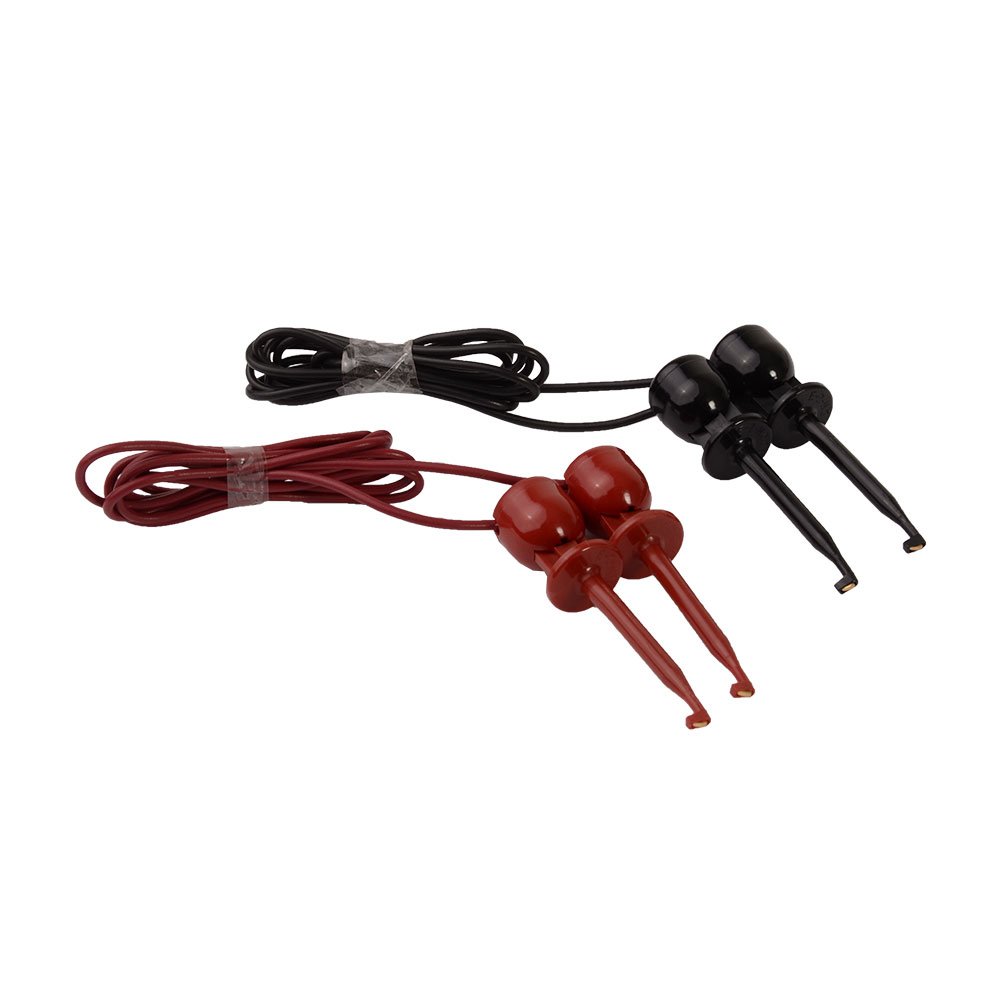
Figure 1: Diversitech 5041 Test Leads. This image shows the red and black test leads, each equipped with a small hook connector at one end and a standard banana plug connector at the other, suitable for low voltage electrical testing.
2. Safety Information
WARNING: Electrical testing can be hazardous. Always follow proper safety procedures and use appropriate personal protective equipment (PPE).
- Always ensure the power to the circuit being tested is OFF before connecting or disconnecting test leads, unless specifically instructed otherwise by the testing procedure.
- Inspect test leads for any damage (e.g., frayed insulation, exposed wires, cracked connectors) before each use. Do not use damaged leads.
- Ensure test leads are rated for the voltage and current of the circuit being tested.
- Avoid touching exposed metal parts of the test leads or the circuit during testing.
- Use caution when working near live electrical circuits.
- Keep hands and fingers away from the tips of the test leads when connected to a meter or power source.
- Do not modify the test leads in any way.
- Store test leads in a dry, clean place away from direct sunlight and extreme temperatures.
3. Package Contents
Verify that all items are present and undamaged upon opening the package:
- 1 set of Diversitech 5041 Test Leads (typically one red and one black lead)
Note: Additional tools or equipment required for testing (e.g., multimeter, power supply) are not included.
4. Setup
The Diversitech 5041 Test Leads are designed for straightforward connection to compatible testing equipment.
- Inspect Leads: Before each use, visually inspect both the red and black test leads for any signs of damage, such as cuts, abrasions, or exposed wiring. Ensure the connectors are clean and free of corrosion.
- Connect to Meter: Insert the banana plug ends of the test leads into the appropriate input jacks of your multimeter or other testing device. Typically, the black lead connects to the "COM" (common) jack, and the red lead connects to the voltage/resistance/current jack, depending on the measurement type. Refer to your meter's manual for specific connection instructions.
- Prepare for Connection: The small hook connectors are designed to securely attach to small terminals, wires, or component leads. Gently press the spring-loaded mechanism on the hook to open it, then release to secure it.
5. Operating Instructions
These test leads facilitate electrical measurements when used with a compatible multimeter or testing device.
- Ensure Safety: Always prioritize safety. Confirm the circuit is de-energized or take appropriate precautions if working with live circuits.
- Select Measurement Function: Set your multimeter to the desired measurement function (e.g., voltage, resistance, continuity).
- Connect to Circuit:
- Carefully attach the hook connectors to the points on the circuit you wish to measure. Ensure a firm and stable connection.
- For voltage measurements, connect the leads in parallel across the component or circuit points.
- For resistance or continuity measurements, ensure the circuit is completely de-energized before connecting the leads.
- Take Reading: Observe the reading on your multimeter.
- Disconnect Safely: After completing the measurement, disconnect the test leads from the circuit first, then from the multimeter.
6. Maintenance
Proper care ensures the longevity and accuracy of your test leads.
- Cleaning: Wipe the leads with a clean, dry, soft cloth after each use to remove dirt, dust, or residue. Do not use abrasive cleaners or solvents.
- Storage: Store the test leads coiled loosely to prevent kinking or damage to the insulation. Keep them in a dry, cool place, away from direct sunlight and corrosive materials.
- Inspection: Regularly inspect the leads for any signs of wear, cuts, or damage to the insulation or connectors. Replace immediately if damage is found.
7. Troubleshooting
If you encounter issues with your test leads, consider the following:
| Problem | Possible Cause | Solution |
|---|---|---|
| No reading or unstable reading on meter | Loose connection; Damaged lead; Incorrect meter setting | Ensure leads are firmly connected to both the meter and the circuit. Inspect leads for damage. Verify meter is set to the correct function and range. |
| Leads appear damaged | Physical wear and tear; Improper handling | Discontinue use immediately. Replace the test leads. |
| Hooks not gripping securely | Spring mechanism worn or dirty; Incorrect application | Clean the hook mechanism. Ensure the hook is appropriately sized for the terminal. |
8. Specifications
| Feature | Detail |
|---|---|
| Brand | Diversitech |
| Model Number | 5041 |
| Item Weight | 3.2 ounces |
| Product Dimensions | 5 x 3 x 0.5 inches |
| Included Components | Fasteners & Hooks, s-hooks (Refers to the hook-style connectors on the leads) |
| Batteries Required? | No |
| Manufacturer | Diversitech |
| Country of Origin | United States |
9. Warranty and Support
For information regarding warranty coverage, technical support, or replacement parts for your Diversitech 5041 Test Leads, please contact Diversitech directly.
You can typically find contact information on the manufacturer's official website or through the retailer where the product was purchased.
Diversitech Contact Information:
- Refer to the packaging or the official Diversitech website for the most current contact details.
- Online resources may include FAQs, product documentation, and customer service portals.