
PLUGGEDSOLAR PS1500
Contents
PLUGGEDSOLAR 1.8KW Solar Panel System with Micro Grid Tie Inverter
Model: PS1500 - Instruction Manual
1. Introduction
The PLUGGEDSOLAR 1.8KW Solar Panel System (Model PS1500) is designed to enable homeowners to generate their own electricity by converting sunlight into usable AC power. This system features crystalline solar panels and micro grid-tie inverters, allowing for direct connection to a standard 110/120V AC electrical outlet. This manual provides essential information for the safe installation, operation, and maintenance of your solar power system.

This image illustrates the PLUGGEDSOLAR system, featuring solar panels installed on a ground mount and the simple plug-in connection to a standard wall outlet.
2. Safety Information
Please read and understand all safety instructions before installing or operating the PLUGGEDSOLAR system. Failure to follow these instructions may result in electric shock, fire, or serious injury.
- Utility Approval: It is critical to contact your local utility company and obtain all necessary approvals and permits before installing and operating this grid-tie solar system. Interconnection agreements are often required.
- Electrical Safety: Always treat electrical components with caution. Ensure the system is unplugged from the AC outlet before performing any maintenance or adjustments.
- Professional Consultation: If you are unsure about any aspect of the installation or electrical connections, consult a qualified electrician or solar professional.
- Component Handling: Solar panels are heavy and fragile. Handle them with care to prevent damage. Micro-inverters can become hot during operation; avoid touching them directly.
- Environmental Conditions: Do not install or operate the system in hazardous environments, near flammable materials, or in areas prone to flooding.
3. Components Included
Your PLUGGEDSOLAR 1.8KW system includes the following main components:
- Solar Panels: 5 x 360 Watt Crystalline Solar Panels (Total 1800 Watts)
- Micro Grid Tie Inverters: 3 units, UL-1741/CSE/IEEE certified for safety and utility interconnection.
- Power Cord: 50ft cord with a standard plug for AC outlet connection.
- Power Monitor: Plug-in device for tracking energy generation.
- Mounting Hardware: Components for attaching panels to a mounting structure. Note: Mounting racks are sold separately and are not included in the base kit.

This image displays the micro grid tie inverter, a key component that converts DC power from the solar panels into AC power for home use and grid synchronization.

A collection of typical mounting hardware components used for securing solar panels, such as rails, end clamps, mid clamps, and fasteners.
4. Setup and Installation
The PLUGGEDSOLAR system is designed for straightforward installation. Follow these steps carefully:
- Site Selection and Mounting:
- Choose a location for your solar panels that receives maximum direct sunlight throughout the day, free from obstructions like trees or buildings.
- Panels can be installed on a roof or a ground-mounted rack. Ensure the mounting structure is secure, properly anchored, and can withstand local weather conditions (e.g., wind, snow).
- Utilize the provided mounting hardware to securely attach the solar panels to your chosen mounting structure.

An example of solar panels mounted on the roof of a home, demonstrating a typical rooftop installation for solar energy systems.

This image shows solar panels installed on a ground-level rack in a residential backyard, illustrating a common ground-mount setup.

An example of solar panels installed as part of a patio cover, demonstrating a versatile installation option for the system.
- Panel and Inverter Connection:
- Connect the solar panels to the micro grid-tie inverters. Each micro-inverter is designed to connect to specific solar panels. Refer to the wiring diagram provided with your micro-inverters for correct connections.
- Ensure all DC connections between panels and inverters are secure and weatherproof.
- Grid Connection:
- Once the panels and inverters are securely installed and connected, plug the system's main 50ft power cord into a standard, properly grounded 110/120V AC electrical outlet.
- The micro-inverters will automatically detect the grid and begin synchronizing to feed power into your home's electrical system.
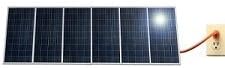
This image highlights the direct plug-in capability of the solar panel system, showing a single panel connected to a standard electrical outlet.
- Utility Interconnection:
- Before operating the system, ensure you have obtained all necessary approvals from your local utility company. This is a critical step for grid-tied systems to ensure safety and compliance.
5. Operating Instructions
The PLUGGEDSOLAR system is designed for automatic operation:
- Automatic Power Generation: When sunlight is available, the solar panels will generate DC electricity. The micro grid-tie inverters will automatically convert this DC power into AC power and feed it into your home's electrical system, reducing your reliance on grid electricity.
- Power Monitoring: Use the included plug-in power monitor to track the system's energy generation. This device provides real-time data on power output, helping you understand your system's performance.

A plug-in power monitor device, used to track and display real-time energy generation, consumption, and associated costs from the solar system.
6. Maintenance
Regular maintenance ensures optimal performance and longevity of your solar system:
- Panel Cleaning: Periodically inspect solar panels for dirt, dust, leaves, or other debris that may accumulate on their surface. Clean panels with water and a soft brush or cloth as needed. Avoid abrasive cleaners or harsh chemicals.
- Connection Inspection: Annually inspect all electrical connections (DC and AC) to ensure they remain secure and free from corrosion.
- Shading: Monitor for any new sources of shading (e.g., tree growth) that might impact panel performance and address them if possible.
7. Troubleshooting
If your system is not performing as expected, consider the following common issues:
- No Power Generation:
- Ensure there is sufficient direct sunlight on the panels.
- Verify that the system's power cord is securely plugged into the AC outlet.
- Check the indicator lights on the micro-inverters for any error codes or status indications. Refer to the inverter manual for specific light patterns.
- Confirm that the utility grid is active (no power outage).
- Reduced Power Output:
- Clean the solar panels if they are dirty.
- Check for any new shading from trees, buildings, or other obstructions.
- Verify that all panel-to-inverter connections are secure.
For persistent issues or complex problems, please contact PLUGGEDSOLAR customer support.
8. Specifications
| Feature | Specification |
|---|---|
| Brand | PLUGGEDSOLAR |
| Model | PS1500 |
| System Power Output | 1800 Watts (1.8KW) |
| Solar Panel Type | Monocrystalline Silicon |
| Inverter Certification | UL-1741/CSE/IEEE |
| AC Output Voltage | 110/120V AC |
| Material | Aluminum, Monocrystalline Silicon, Tempered Glass |
| Approximate System Weight | 50 Pounds |
| Efficiency | High Efficiency |
| Power Source | Solar-Powered |
9. Warranty Information
The solar panels included in this system come with a 25-year warranty. For specific warranty details regarding the micro grid-tie inverters and other components, please refer to the individual product documentation or contact PLUGGEDSOLAR directly.
10. Support and Contact Information
For any questions, technical assistance, or support regarding your PLUGGEDSOLAR 1.8KW Solar Panel System, please contact our customer service team:
Phone: 832-759-0805
Operating Hours: 9 AM - 5 PM, Pacific Standard Time (PST)
11. Additional Information: Federal Solar Tax Credit
The PLUGGEDSOLAR 1.8KW Solar Panel System may qualify for a 30% Federal Solar Tax Credit (Residential Clean Energy Credit). This credit can significantly reduce the cost of your solar installation.
- Consult IRS Form 5695, Residential Energy Credits, and a qualified tax professional to determine your eligibility and for detailed instructions on claiming this credit.
- Additional local utility rebates and state tax benefits may also be available in your area. Research local incentives or contact your utility provider for more information.

An excerpt from IRS Form 5695, Residential Energy Credits, indicating the potential for a 30% federal tax credit on qualified solar electric property costs.
Documents and downloads
Ask a question about this manual
Ask about setup, troubleshooting, compatibility, parts, safety, or missing instructions. Manuals+ will review the question and use this page’s manual context to help answer it.