1. Introduction to NFPA 70E® 2012 Edition
This manual provides guidance for understanding and applying the NFPA 70E®: Standard for Electrical Safety in the Workplace®, 2012 Edition. This standard was developed in response to OSHA's request and addresses critical information regarding the effects of arc flash, arc blast, and direct current (DC) hazards. It also incorporates recent advancements in electrical design and Personal Protective Equipment (PPE).
The primary objective of NFPA 70E is to provide practical guidance for protecting workers from electrical hazards in the workplace.
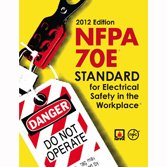
Figure 1: Cover of the NFPA 70E®: Standard for Electrical Safety in the Workplace®, 2012 Edition. This image displays the official cover of the paperback standard, featuring the NFPA logo and the full title.
2. Understanding the Standard's Structure
To effectively utilize the NFPA 70E 2012 Edition, it is important to understand its organizational structure. The standard is divided into articles, chapters, and annexes, each addressing specific aspects of electrical safety.
2.1 Key Sections
- Article 100: Definitions - Provides essential terminology used throughout the standard.
- Article 110: General Requirements for Electrical Safety-Related Work Practices - Outlines fundamental safety principles.
- Chapter 2: Safety-Related Maintenance Requirements - Details procedures for maintaining electrical equipment.
- Chapter 3: Safety Requirements for Special Equipment - Addresses specific types of electrical apparatus.
- Annexes - Offer supplementary information, examples, and guidance.
3. Applying the Standard
The NFPA 70E 2012 Edition is a performance-based standard, meaning it specifies desired outcomes rather than prescriptive methods. Users must apply its principles to their specific workplace conditions.
3.1 Risk Assessment
A core component of applying NFPA 70E is conducting thorough risk assessments to identify electrical hazards, estimate the likelihood of occurrence, and determine the severity of potential injury. This includes assessing arc flash and shock hazards.
3.2 Establishing an Electrically Safe Work Condition
The standard emphasizes establishing an electrically safe work condition before beginning work on electrical equipment. This involves:
- Determining all possible sources of electrical supply.
- Opening the disconnecting device(s).
- Visually verifying that the disconnecting device(s) are open.
- Applying lockout/tagout devices.
- Testing for the absence of voltage.
- Applying temporary protective grounding equipment, if necessary.
3.3 Personal Protective Equipment (PPE)
When an electrically safe work condition cannot be established, appropriate PPE must be used. The standard provides guidance on selecting and using arc-rated clothing, gloves, eye protection, and other necessary equipment based on the hazard risk assessment.
4. Maintenance and Revisions
While this document pertains to the 2012 Edition, electrical safety standards are periodically revised to incorporate new research, technologies, and best practices. Users should be aware that subsequent editions of NFPA 70E may introduce updated requirements and recommendations.
For ongoing compliance and the most current information, it is recommended to consult the latest edition of NFPA 70E and related industry standards. Regular training and review of safety procedures are crucial for maintaining an effective electrical safety program.
5. Addressing Common Application Challenges
Applying complex safety standards like NFPA 70E can present challenges. Here are common areas where clarification or careful consideration is often needed:
- Interpreting Arc Flash Boundaries: Ensure accurate calculation and establishment of arc flash boundaries based on incident energy analysis.
- PPE Selection: Verify that selected PPE matches the determined hazard risk category. Refer to the standard's tables and requirements.
- Qualified Person Definition: Confirm that personnel performing electrical work meet the definition of a "qualified person" as outlined in Article 100, possessing demonstrated skills and knowledge.
- Documentation: Maintain thorough documentation of risk assessments, training, and equipment maintenance as required by the standard.
If uncertainties arise, consult with experienced electrical safety professionals or refer to official NFPA interpretations.
6. Product Specifications
| ASIN | B007BIR8OA |
| Publisher | FPA (National Fire Protection Association) |
| Publication Date | January 1, 2012 |
| Edition | First Edition (2012) |
| Language | English |
| Print Length | 107 pages |
| ISBN-10 | 1455910147 |
| ISBN-13 | 978-1455910144 |
| Item Weight | 0.01 ounces |
7. Warranty Information
As this product is a published standard, it does not typically come with a manufacturer's warranty in the traditional sense for electronic devices or appliances. The content reflects the consensus of the NFPA technical committee at the time of publication.
For information regarding the accuracy or interpretation of the standard's content, please refer to the official NFPA resources.
8. Support and Further Information
For additional support, interpretations, or to inquire about future editions and related training, please contact the National Fire Protection Association (NFPA) directly.
- Official Website: www.nfpa.org
- Contact Information: Refer to the "Contact Us" section on the NFPA website for phone numbers and email addresses.
- Related Resources: Explore NFPA's extensive library of codes, standards, handbooks, and training materials for comprehensive electrical safety knowledge.


