1. Introduction and Overview
This manual provides essential information for the proper installation, operation, and maintenance of your Bosch Lambda Sensor, model 0258017178. The Bosch Lambda Sensor is a critical component in modern vehicle exhaust systems, designed to measure the oxygen content in the exhaust gases. This measurement is vital for the Engine Control Unit (ECU) to optimize the air-fuel mixture, leading to improved engine combustion efficiency and reduced emissions.
Bosch Lambda Sensors are functionally and quality tested to meet original equipment standards, ensuring high performance and reliability throughout their service life. This sensor features a vehicle-specific connector for a secure electrical connection and is designed for straightforward installation.
2. Safety Information
- Professional Installation Recommended: All installation and maintenance work on automotive components, especially those related to the engine and exhaust system, should only be carried out by trained and qualified specialists. Improper installation can lead to vehicle damage, malfunction, or personal injury.
- Vehicle Compatibility: Before installation, it is crucial to confirm the compatibility of this product with your specific vehicle model using the vehicle identification number (VIN) or a reliable parts finder. All vehicle-specific restrictions and requirements must be strictly observed.
- Electrical Safety: Disconnect the vehicle's battery before performing any electrical work to prevent short circuits or electrical shock.
- Hot Components: Exhaust system components can become extremely hot during operation. Allow the engine and exhaust system to cool down completely before attempting any work.
3. Package Contents
The Bosch Lambda Sensor 0258017178 package typically includes the following components:
- Bosch Lambda Sensor with integrated cable and vehicle-specific connector.
- Mounting clips and cable ties (may vary by specific kit).

Figure 3.1: Bosch Lambda Sensor 0258017178 with packaging and accessories.
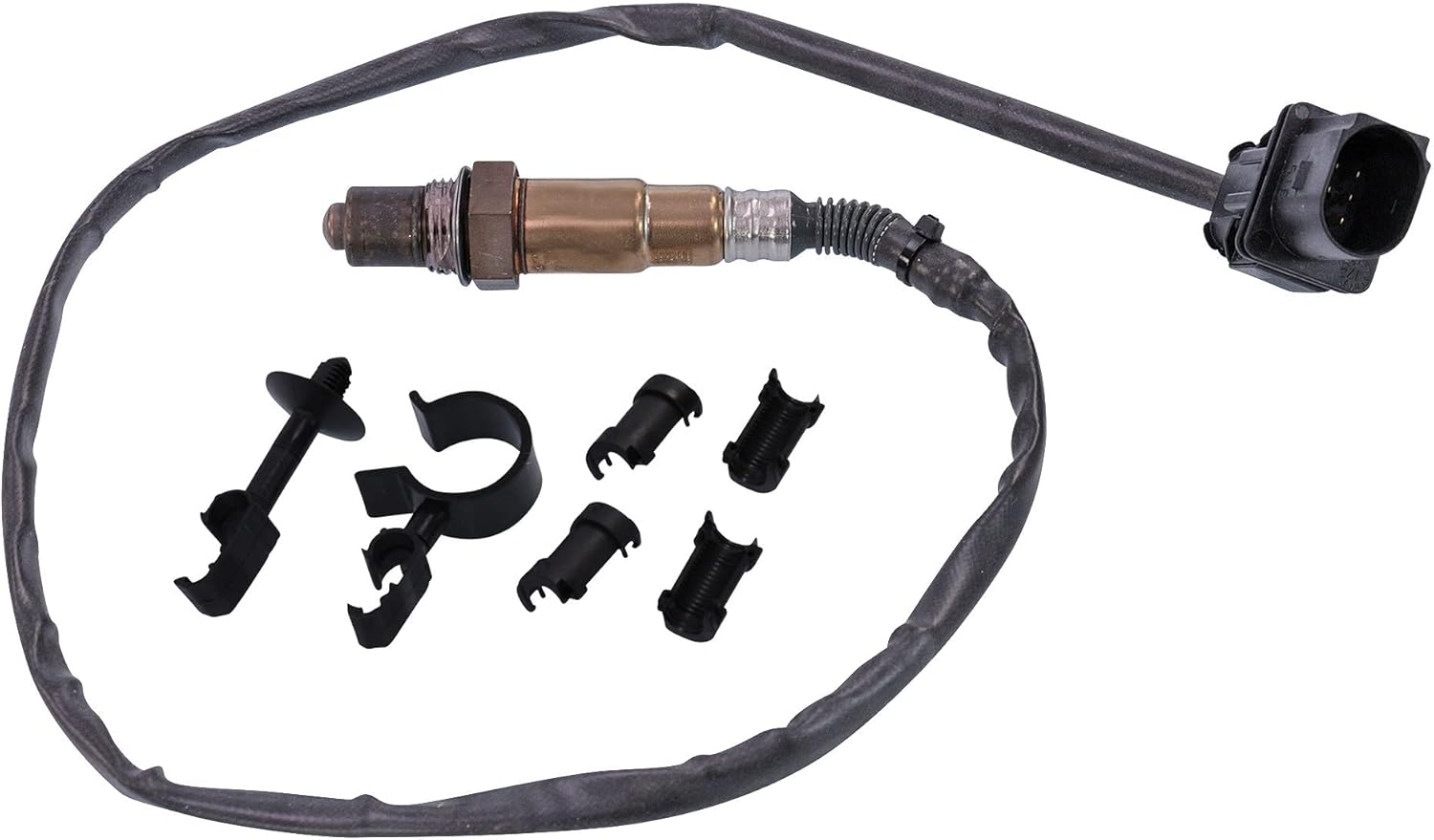
Figure 3.2: The Bosch Lambda Sensor 0258017178 and included mounting clips.

Figure 3.3: Detail of the 5-terminal vehicle-specific connector.

Figure 3.4: Close-up of the sensor tip, showing the threaded section for installation.
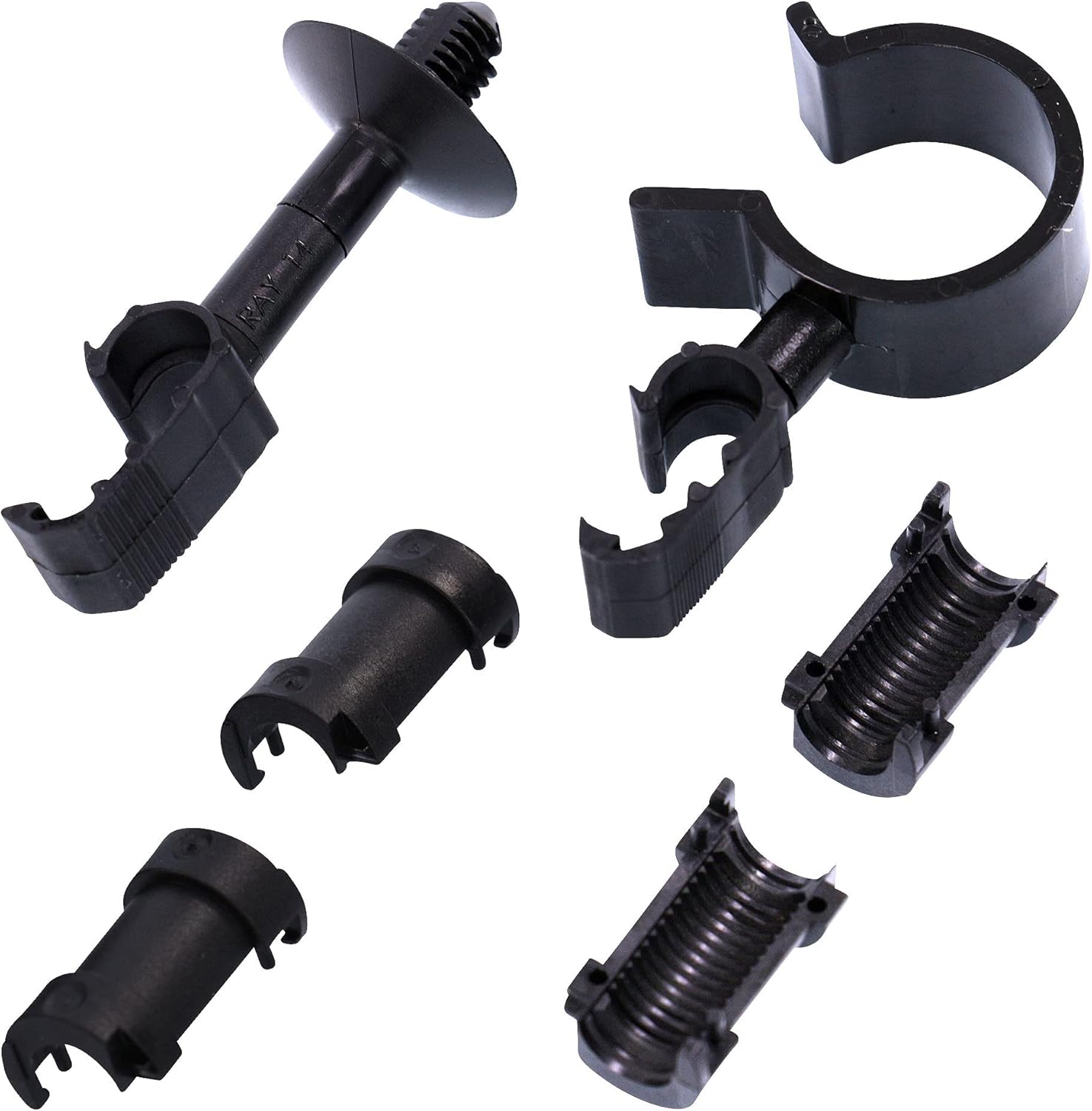
Figure 3.5: Various mounting clips and fasteners provided for securing the sensor cable.

Figure 3.6: Cable ties included for proper cable management.
4. Compatibility
The Bosch Lambda Sensor 0258017178 is compatible with a range of vehicle models. It is essential to verify compatibility with your specific vehicle before installation.
Compatible Vehicle Models (Sample List):
- VW Golf V 1.6 FSI (2003 - 2009) 85kW
- VW Golf VI 1.4 TSI (2008 - 2013) 90kW
- Audi A3 Sportback 1.4 TFSI (2004 - 2013) 92kW
- VW Golf PLUS 1.6 FSI (2005 - 2013) 85kW
- Audi A1 Hatchback 1.4 TFSI (2010 - ) 90kW
- VW Golf VI 1.4 TSI (2008 - 2013) 118kW
- Audi A1 Sportback 1.4 TFSI (2011 - ) 90kW
- VW Scirocco Coupe 1.4 TSI (2008 - ) 118kW
- Audi A3 Hatchback 1.4 TFSI (2003 - 2012) 92kW
- VW Golf V 1.4 FSI (2003 - 2009) 66kW
Note: This is a sample list. Always use your vehicle's specific identification to confirm exact compatibility.
Equivalent Part Numbers (Sample List):
- AUDI: 07L 906 262 L, 07C 906 262 BR, 07L 906 262 N, 1K0 998 262 L, 03C 906 262 A
- PORSCHE: 958 606 133 11, 03H 906 262 N, 958 606 129 01, 958 606 129 00, 958 606 128 01, 958 606 134 11, 06E906262M, 958 606 128 00, 03H906262E, 03H906262D, 06E906262N, 955 606 129 30, 03H 906 262 M
- SEAT: 1K0 998 262 L
- SKODA: 1K0 998 262 L, 07C 906 262 BH
- VW: 07L 906 262 S, 07C 906 262 BJ, 03H 906 262 E, 03H 906 262 N, 03H 906 262 M, L03C 906 262 BJ, 07C 906 262 BR, 06H 906 262 D, 06A 906 262 EH, 07L 906 262 Q, 03C 906 262 BJ, 03C 906 263 BJ, 03H 906 262 H, 025 801 726 8, 03H 906 262 AB, 07C 906 262 BL, 07L 906 262 L, 03C 906 262 AJ, 1K0 998 262 L, 03C 906 262 A, 07C 906 262 BH, 03C 906 262 AF, 022 906 262 CD, 03C 906 262 AM, 07C 906 262 BK, 03H 906 262 D, 07L 906 262 N, 06A 906 262 EM
- BOSCH: 0 258 007 212, 0 258 017 079, 0 258 017 154, 0 258 017 178, 0 258 017 179, 0 258 017 195, 0 258 017 077, 0 258 017 073, 0 258 017 260, 0 258 017 075, 0 258 017 243, 0 258 017 261
5. Installation (Setup)
The Bosch Lambda Sensor 0258017178 is designed for direct replacement and is "installation ready." However, due to the complexity of automotive systems and the critical role of the lambda sensor, professional installation is strongly recommended.
General Installation Steps (for qualified technicians):
- Preparation: Ensure the engine and exhaust system are completely cool. Disconnect the vehicle's battery.
- Locate Old Sensor: Identify the existing lambda sensor in the exhaust system. Note its position (e.g., pre-catalytic converter, post-catalytic converter). This specific model is listed as 'Left' in specifications, which typically refers to the bank 1 sensor on V-engines or the primary sensor on inline engines.
- Disconnect Electrical Connector: Carefully disconnect the electrical connector of the old sensor. The Bosch sensor features a vehicle-specific connector for a precise fit.
- Remove Old Sensor: Use an appropriate oxygen sensor socket wrench to remove the old sensor from the exhaust pipe. Be aware that sensors can be seized due to heat and corrosion.
- Prepare New Sensor: The new Bosch Lambda Sensor is typically pre-coated with anti-seize compound on its threads. If not, apply a thin layer of high-temperature anti-seize compound to the threads of the new sensor, being careful not to get any on the sensor tip.
- Install New Sensor: Carefully thread the new sensor into the exhaust pipe by hand to avoid cross-threading. Tighten it to the manufacturer's specified torque using the oxygen sensor socket wrench.
- Connect Electrical Connector: Connect the new sensor's electrical connector to the vehicle's wiring harness. Ensure a secure and proper connection.
- Secure Wiring: Use the provided mounting clips and cable ties to secure the sensor wiring, preventing it from touching hot exhaust components or moving parts.
- Final Steps: Reconnect the vehicle's battery. Clear any stored diagnostic trouble codes (DTCs) using a diagnostic scan tool. Start the engine and check for proper operation and absence of warning lights.
Always refer to your vehicle's specific service manual for detailed installation procedures and torque specifications.
6. Operation
The Bosch Lambda Sensor 0258017178 continuously monitors the oxygen levels in the exhaust gases. This data is transmitted as an electrical signal to the vehicle's Engine Control Unit (ECU). The ECU uses this information to make real-time adjustments to the fuel injection and ignition timing, ensuring the engine operates at its optimal air-fuel ratio (stoichiometric ratio). This process is crucial for:
- Optimizing engine combustion efficiency.
- Reducing harmful exhaust emissions.
- Maintaining fuel economy.
- Ensuring proper function of the catalytic converter.
A properly functioning lambda sensor is essential for the overall performance and environmental compliance of your vehicle.
7. Maintenance
Lambda sensors are wear-and-tear components and do not typically require routine maintenance. Their lifespan can be affected by factors such as fuel quality, engine condition, and driving habits. Bosch sensors are designed for a long service life under normal operating conditions.
If a lambda sensor malfunctions, it can lead to decreased fuel efficiency, increased emissions, and illumination of the "Check Engine" light. Regular vehicle diagnostics can help identify potential issues with the sensor.
8. Troubleshooting
If you experience issues such as reduced fuel economy, rough idling, increased emissions, or the "Check Engine" light illuminating, a faulty lambda sensor could be a contributing factor.
Common Symptoms of a Faulty Lambda Sensor:
- Illuminated "Check Engine" light (Malfunction Indicator Lamp - MIL).
- Decreased fuel efficiency.
- Rough engine idle or hesitation.
- Increased exhaust emissions (failed emissions test).
- Strong sulfur smell from exhaust.
Diagnostic Steps:
- Scan for DTCs: Use an OBD-II scanner to retrieve any diagnostic trouble codes (DTCs) stored in the ECU. Codes related to oxygen sensors typically start with P0130 to P0167.
- Inspect Wiring: Visually inspect the sensor's wiring and connector for any signs of damage, corrosion, or loose connections.
- Professional Diagnosis: If DTCs indicate a lambda sensor issue, or if symptoms persist, it is recommended to have a qualified technician perform a thorough diagnosis. They can test the sensor's output signal and heating element function using specialized equipment.
Do not attempt to repair a faulty sensor; replacement with a new, genuine Bosch part is the recommended solution.
9. Specifications
| Attribute | Value |
|---|---|
| Brand | Bosch |
| Model Number | 0258017178 |
| Item Dimensions (L x W x H) | 5.12 x 1.97 x 7.48 inches |
| Material | Kunststoff (Plastic for connector/housing) |
| Item Weight | 0.17 Kilograms (approx. 6 ounces) |
| Measurement Accuracy | ±1.5% |
| Mounting Type | Flange Mount (threaded) |
| Output Type | Electrical Signal |
| Specific Uses For Product | Automotive |
| Upper Temperature Rating | 250 Degrees Celsius |
| Position | Left (typically refers to Bank 1 Sensor 1 or primary sensor) |
| GTIN (Global Trade Identification Number) | 04047024158658 |
| Manufacturer Part Number | 0893195 |
| Date First Available | June 4, 2013 |
10. Warranty and Support
Bosch products are manufactured to high-quality standards. For specific warranty information, please refer to the documentation provided with your purchase or visit the official Bosch Automotive Aftermarket website.
For technical support or inquiries regarding the Bosch Lambda Sensor 0258017178, please contact Bosch customer service or consult an authorized Bosch service center.


