
1. Overview
The MAHLE KL 140 Fuel Filter is engineered to protect your vehicle's fuel system from contaminants, ensuring a clean and constant fuel supply to the engine. This filter is designed to meet original equipment manufacturer (OEM) specifications, providing reliable performance and contributing to efficient engine operation.
Key features include:
- High Safety Standards: Complies with stringent car manufacturer safety standards, ensuring sealing tightness.
- OEM Specifications: Designed to vehicle manufacturers' specifications for precise fit and function.
- Superior Filtration: Features embossed and pleated filter media for high dirt holding capacity and minimal pressure drop.
- European Engineering: Benefits from European design and manufacturing expertise.

Figure 1: A side view of the MAHLE KL 140 Fuel Filter, showing its cylindrical metal housing and connection points.
2. Setup and Installation
Important Safety Notice: Fuel system work can be hazardous. It is highly recommended that installation be performed by a qualified automotive technician. Improper installation can lead to fuel leaks, fire hazards, and damage to the vehicle's fuel system.
General Installation Steps (Professional Installation Recommended):
- Prepare Vehicle: Ensure the vehicle is parked on a level surface, the engine is off and cool, and the parking brake is engaged. Disconnect the negative terminal of the battery.
- Depressurize Fuel System: Consult your vehicle's service manual for the correct procedure to safely depressurize the fuel system. This is a critical step to prevent fuel spray and potential injury.
- Locate Fuel Filter: Identify the location of the existing fuel filter. It is typically found along the fuel line, often underneath the vehicle or in the engine bay.
- Disconnect Old Filter: Place a suitable container beneath the filter to catch any residual fuel. Carefully disconnect the fuel lines from the old filter. Be prepared for some fuel spillage.
- Remove Old Filter: Remove the mounting brackets or clamps securing the old filter.
- Install New Filter: Position the MAHLE KL 140 Fuel Filter, ensuring the flow direction arrow on the filter matches the fuel flow direction in your vehicle. Secure it with the existing mounting hardware. The filter typically includes new copper washers for the upper connection, which should be used to ensure a proper seal.
- Reconnect Fuel Lines: Attach the fuel lines to the new filter, ensuring all connections are secure and tight.
- Reconnect Battery: Reconnect the negative battery terminal.
- Check for Leaks: Turn the ignition to the 'ON' position (without starting the engine) for a few seconds to allow the fuel pump to prime the system. Check all connections for any signs of fuel leaks. Repeat this step if necessary.
- Start Engine: Start the engine and allow it to run for a few minutes, checking again for any leaks.

Figure 2: A technical drawing of the MAHLE KL 140 Fuel Filter with labeled dimensions (D, D1, H, M3, M4) for precise fitment.
Product Video: MAHLE Original Fuel Filters
Video 1: An official MAHLE video explaining the importance and function of MAHLE Original Fuel Filters, highlighting their internal components and safety standards.
3. Operating Principles
The MAHLE KL 140 Fuel Filter operates continuously as part of your vehicle's fuel delivery system. Its primary function is to remove impurities, rust, dirt, and other particles from the fuel before it reaches the engine's sensitive components, such as the fuel injectors and fuel pump. By ensuring a clean fuel supply, the filter helps maintain optimal engine performance, fuel efficiency, and longevity of the fuel system components.
The filter's design also contributes to maintaining consistent fuel pressure and flow, which is crucial for modern fuel injection systems.
4. Maintenance
The MAHLE KL 140 Fuel Filter is a maintenance item that requires periodic replacement. Over time, the filter media will accumulate contaminants, which can restrict fuel flow and reduce its effectiveness.
Replacement Intervals:
- Consult your vehicle's owner's manual or service schedule for specific recommended fuel filter replacement intervals. These intervals can vary significantly based on vehicle make, model, year, and driving conditions.
- As a general guideline, fuel filters are often recommended for replacement every 30,000 to 60,000 miles, or every 2 to 4 years. However, driving in dusty environments or using lower quality fuel may necessitate more frequent changes.
Regular replacement of the fuel filter is essential to prevent fuel system issues, maintain engine performance, and avoid costly repairs to fuel pumps and injectors.
5. Troubleshooting
A clogged or failing fuel filter can manifest in several ways. If you experience any of the following symptoms, consider inspecting or replacing your fuel filter, or consult a qualified mechanic:
- Reduced Engine Performance: The engine may feel sluggish, hesitate during acceleration, or experience a noticeable loss of power.
- Difficulty Starting: The engine may crank for an extended period before starting, or fail to start altogether, especially if the fuel pump struggles to push fuel through a severely clogged filter.
- Engine Stalling: The engine might stall unexpectedly, particularly under load or at higher speeds, due to insufficient fuel delivery.
- Rough Idling: An inconsistent fuel supply can cause the engine to idle roughly.
- Check Engine Light: In some modern vehicles, a severely restricted fuel filter can trigger the check engine light.
If you suspect a fuel filter issue, professional diagnosis is recommended to accurately identify the problem and ensure proper repair.
6. Specifications
| Specification | Detail |
|---|---|
| Brand | MAHLE |
| Model | KL 140 |
| Product Grade | Replacement Part |
| Outer Material | Metal |
| Vehicle Service Type | Passenger Car |
| Item Diameter | 70 Millimeters |
| Item Weight | 373.08 Grams (13.2 ounces) |
| Style | OE |
| UPC / GTIN | 027067849441 |
| Manufacturer Part Number | KL 140 |
| OEM Part Numbers | GMC:12366546, TOYOTA:2330011100, TOYOTA:2330011210, TOYOTA:2330016210, TOYOTA:2330019285 |
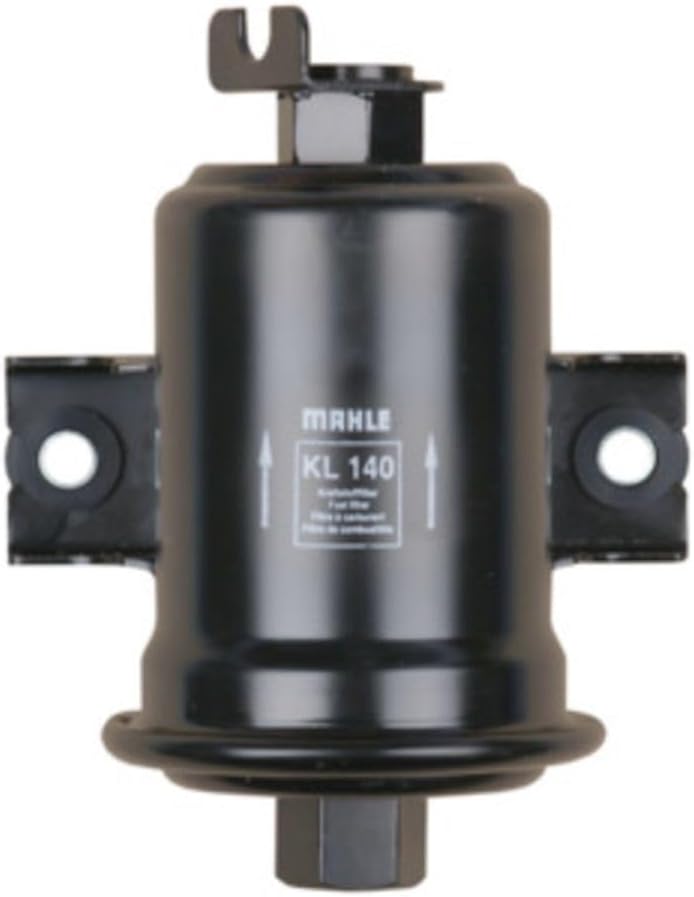
Figure 3: A front view of the MAHLE KL 140 Fuel Filter, displaying the MAHLE logo and model number KL 140, along with flow direction arrows.
7. Warranty and Support
For specific warranty information regarding your MAHLE KL 140 Fuel Filter, please refer to the documentation provided with your purchase or contact the retailer from whom you purchased the product. Warranty terms and conditions can vary by region and seller.
For technical support, product inquiries, or further assistance, please visit the official MAHLE website or contact their customer service department. When contacting support, please have your product model number (KL 140) and any relevant purchase details available.


