
Introduction
This manual provides essential information for the safe and effective use of your ABUS 74/40 Safety Lockout Tagout Padlock. The ABUS 74/40 series is designed for lockout/tagout applications, featuring a lightweight, non-magnetic, non-sparking, and dielectric construction. It is crucial to understand the proper procedures for its application to ensure safety.
Safety Information
Always adhere to all local and national safety regulations when implementing lockout/tagout procedures. This padlock is intended to prevent accidental operation of machinery or equipment during maintenance or service. Never use this padlock for purposes other than its intended safety lockout application. Ensure all personnel involved are properly trained in lockout/tagout procedures.
Setup
- Unpacking: Carefully remove the padlock and its key from the packaging. Inspect for any signs of damage.
- Initial Inspection: Verify that the padlock operates smoothly. Insert the key, turn it to open the shackle, and remove the key. The shackle should move freely.
- Key Management: Each padlock is supplied with one key. It is critical to maintain strict control over this key, as it is the only means to remove the lockout.
Operating Instructions
The ABUS 74/40 padlock features an automatic locking mechanism and key-retaining function for enhanced safety during lockout procedures.
Locking Procedure
- Isolate Energy Source: Before applying the padlock, ensure the energy source for the equipment is completely isolated and de-energized.
- Apply Lockout Device: Place the padlock through the designated lockout point on the equipment.
- Engage Lock: Simply press the shackle down into the padlock body until it clicks into place. No need to turn the key to lock.
- Key Retention: The key cannot be removed from the padlock as long as the shackle is open. Once the shackle is pressed down and locked, the key can be removed. This ensures the key is not misplaced while the equipment is locked out.
- Attach Tag: Securely attach a lockout tag to the padlock, providing information such as the reason for lockout, the date, and the name of the authorized person.
Unlocking Procedure
- Verify Safety: Before unlocking, ensure that the equipment is safe to re-energize and that all personnel are clear.
- Insert Key: Insert the correct key into the padlock.
- Turn Key: Turn the key to release the shackle.
- Remove Padlock: Remove the padlock and tag from the lockout point.

Image: A worker demonstrates the application of ABUS lockout tagout padlocks on industrial valves, ensuring equipment safety during maintenance.
Video: An official ABUS video demonstrating the features and application of the ABUS 74/40 KD Safety Lockout Non-Conductive Padlock, highlighting its use in lockout/tagout procedures.
Features and Design
- Lightweight Aluminum Body: Provides physical resistance while remaining lightweight for ease of use.
- Non-Conductive Properties: Plastic-covered body and shackle offer insulation against electric current, making it ideal for electrical lockout applications.
- High Precision 6-Pin Cylinder: Offers tamper resistance and security.
- NANO PROTECT Shackle: Provides superior corrosion resistance, extending the padlock's lifespan in various environments.
- Color Coding: Available in various colors to facilitate easy identification and differentiation of lockout points or departments.
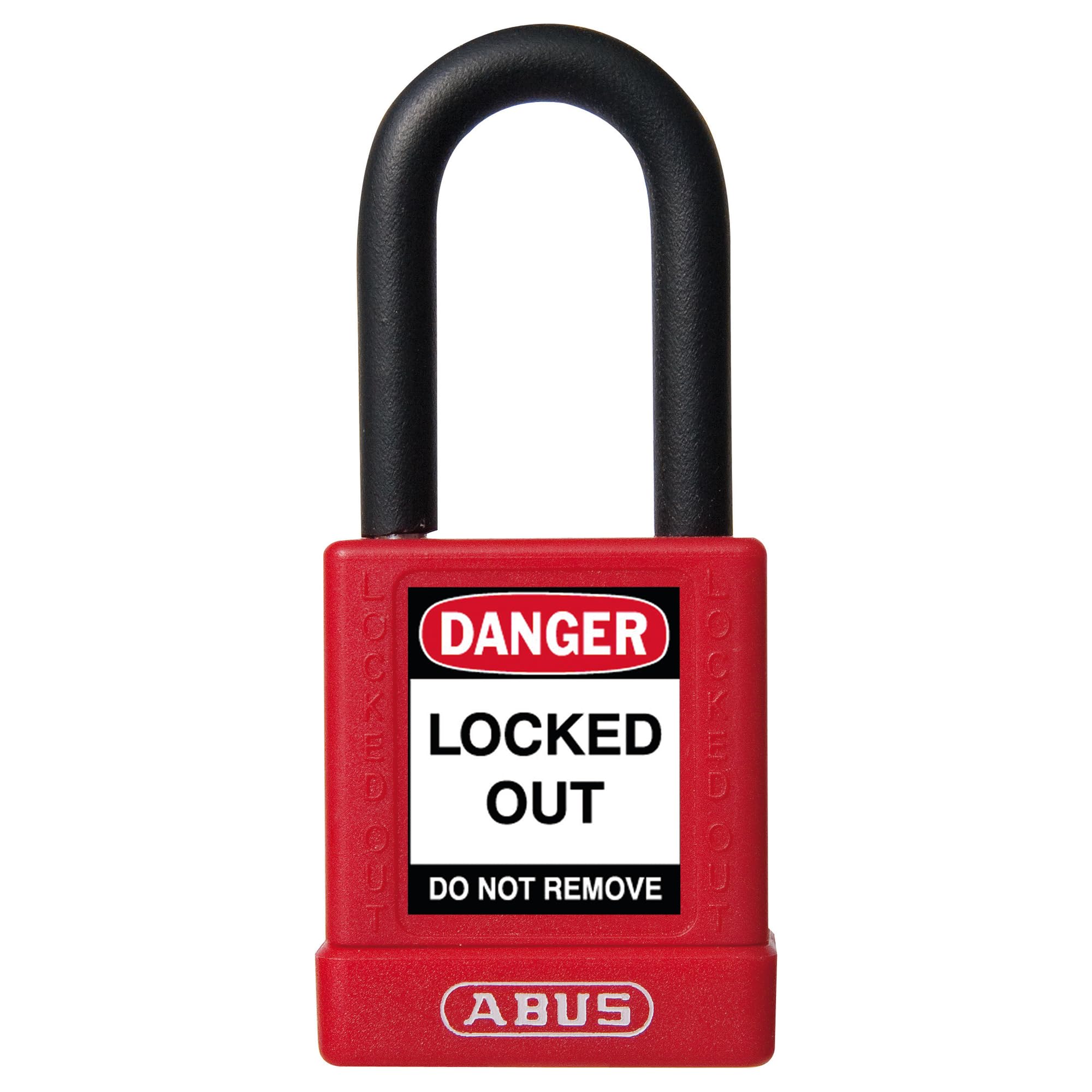
Image: The ABUS 74/40 Safety Lockout Tagout Padlock in its red variant, showcasing its design and keyhole.
Maintenance
Proper maintenance ensures the longevity and reliable operation of your ABUS padlock.
- Lubrication: Periodically apply a small amount of non-greasy lubricant (e.g., graphite-based or silicone spray) to the keyway and shackle mechanism to ensure smooth operation. Avoid oil-based lubricants that can attract dirt.
- Cleaning: Wipe the padlock body and shackle with a clean, damp cloth to remove dirt and debris. Do not use harsh chemicals or abrasive cleaners.
- Inspection: Regularly inspect the padlock for any signs of wear, damage, or corrosion. Ensure the shackle closes securely and the key operates freely. Replace any damaged padlocks immediately.
Troubleshooting
Padlock Not Locking
- Check for Obstructions: Ensure no debris is preventing the shackle from fully entering the padlock body.
- Shackle Alignment: Verify the shackle is correctly aligned with the locking mechanism.
- Lubrication: Apply lubricant to the shackle mechanism as described in the Maintenance section.
Key Not Turning or Removing
- Correct Key: Ensure you are using the correct key for the padlock.
- Key Retention Feature: Remember the key cannot be removed when the shackle is open. Ensure the shackle is fully closed and locked before attempting to remove the key.
- Lubrication: Apply lubricant to the keyway.
- Debris in Keyway: Check for any foreign objects obstructing the keyway.
Specifications

Image: Technical diagram illustrating the dimensions and specifications of the ABUS 74/40 padlock.
| Feature | Detail |
|---|---|
| Brand | ABUS |
| Model Number | 74/40 KD Red 1-1/2" Shackle |
| Lock Type | Key Lock |
| Special Feature | Keyless (Automatic Locking) |
| Material | Alloy Steel, Aluminum, Plastic |
| Item Dimensions (L x W x H) | 3.6 x 1.8 x 0.9 inches |
| Color | Red |
| Included Components | 1 x Key |
| UPC | 078217098059 |
Warranty Information
If an ABUS product fails to work properly due to a manufacturing defect, return it to ABUS postage prepaid, and it will be repaired or replaced at ABUS's discretion. ABUS products are warranted for specific periods of time from the date of purchase. Specific warranty periods appear on the product packaging.
Support
For further assistance, technical support, or inquiries regarding your ABUS 74/40 Safety Lockout Tagout Padlock, please visit the official ABUS website or contact their customer service department. Refer to the product packaging for specific contact details.