
Introduction
This service manual provides detailed instructions and information for the maintenance, repair, and overhaul of Case 430CK and 530CK series tractors. It is designed for technicians and experienced operators to ensure proper servicing and longevity of the machinery. Adherence to the procedures outlined herein is crucial for safe and efficient operation.
Safety Information
Always prioritize safety when working with heavy machinery. Read and understand all safety decals on the tractor and in this manual before performing any service or operation. Failure to follow safety precautions can result in serious injury or death.
- Always wear appropriate personal protective equipment (PPE), including safety glasses, gloves, and sturdy footwear.
- Disconnect the battery before working on electrical systems.
- Relieve hydraulic pressure before disconnecting hydraulic lines.
- Support the tractor securely with jack stands before working underneath it.
- Ensure the engine is off and cooled down before performing maintenance.
- Keep hands, feet, and clothing clear of moving parts.
- Use proper tools for each task.
Pre-Operation Checks
Before each operation, perform the following checks to ensure the tractor is in safe working condition:
- Fluid Levels: Check engine oil, hydraulic fluid, coolant, and fuel levels. Replenish as needed.
- Tires: Inspect tires for proper inflation and any signs of damage.
- Lights and Signals: Verify all lights, turn signals, and warning lights are functional.
- Brakes: Test brake pedal operation and parking brake engagement.
- Steering: Check for excessive play in the steering wheel.
- Safety Devices: Ensure all safety guards and shields are in place and secure.
- Leaks: Look for any visible leaks of oil, fuel, or coolant.
Operating Instructions
Familiarize yourself with the tractor's controls before starting. Always operate the tractor from the operator's seat. Ensure the area around the tractor is clear of personnel and obstacles.
Starting the Engine:
- Ensure the transmission is in neutral and the parking brake is engaged.
- Turn the ignition key to the "ON" position and wait for indicator lights to cycle.
- Turn the key to "START" and release once the engine fires. Do not crank for more than 15 seconds.
- Allow the engine to warm up before engaging implements or driving.
Driving the Tractor:
- Depress the clutch pedal fully.
- Select the desired gear.
- Release the parking brake.
- Slowly release the clutch while gradually applying throttle.
- Always maintain a safe speed and be aware of your surroundings.
Maintenance
Regular maintenance is essential for the performance and longevity of your Case 430CK or 530CK tractor. This section outlines general maintenance procedures. For detailed instructions, refer to the specific sections within the full service manual.
Service Manual Overview:
The comprehensive service manual covers various systems, including General Specifications, Electrical Systems, Engines, Fuel Systems, and Hydraulics. Each section provides detailed diagrams and step-by-step procedures for inspection, adjustment, repair, and overhaul.
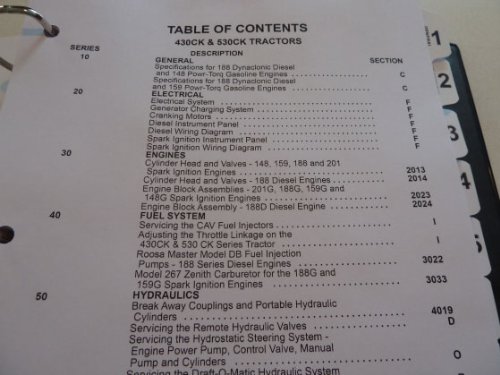
Image: A page from the service manual showing the Table of Contents, listing sections such as General, Electrical, Engines, Fuel System, and Hydraulics. This provides an overview of the manual's comprehensive coverage.
Hydraulic System Maintenance:
The hydraulic system is critical for many tractor functions. Regular inspection of hydraulic cylinders, lines, and fluid is necessary. The service manual includes detailed exploded views and flow charts to assist in diagnosis and repair.
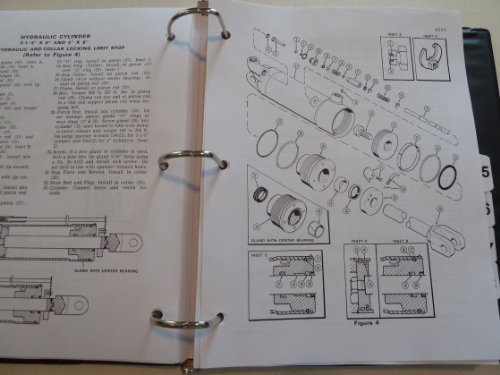
Image: An exploded diagram illustrating the components of a hydraulic cylinder, including seals, pistons, and housing. This diagram is essential for correct assembly and disassembly during maintenance.

Image: A color-coded oil flow chart depicting the hydraulic system in a neutral state. This diagram helps in understanding the fluid path and diagnosing hydraulic issues.
Transmission Service:
The transmission system, including the eight-speed dual range, requires periodic inspection and fluid changes. Detailed diagrams assist in understanding the internal workings and proper reassembly.
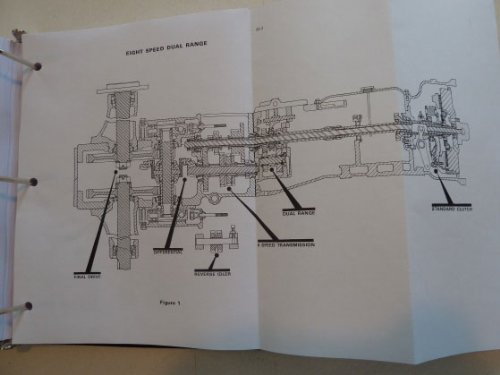
Image: A detailed cross-sectional diagram of an eight-speed dual range transmission, highlighting key components such as gears, shafts, and clutches. This visual aid is crucial for transmission repair and overhaul.
Troubleshooting
This section provides general guidance for common issues. For specific diagnostic procedures and repair steps, consult the relevant sections of the full service manual.
| Problem | Possible Cause | Solution |
|---|---|---|
| Engine Fails to Start | Low fuel, dead battery, faulty starter, clogged fuel filter. | Check fuel level, charge/replace battery, inspect starter, replace fuel filter. |
| Loss of Hydraulic Power | Low hydraulic fluid, clogged filter, faulty pump, air in system. | Check fluid level, replace filter, inspect pump, bleed system. |
| Overheating Engine | Low coolant, clogged radiator, faulty thermostat, worn fan belt. | Check coolant, clean radiator, replace thermostat, adjust/replace belt. |
Specifications
The Case 430CK and 530CK tractors are robust machines designed for various agricultural and industrial tasks. Specific technical data, including engine displacement, horsepower, weight, and dimensions, are detailed within the service manual. Always refer to the manual for precise specifications relevant to your specific tractor model and serial number.
- Engine Types: Diesel and Gasoline options (e.g., 188 Dynaclonic Diesel, 148 Power-Torq Gasoline).
- Transmission: Various options, including eight-speed dual range.
- Hydraulic System: Open-center system with specific pressure and flow rates.
- Electrical System: 12-volt system with generator/alternator charging.
Warranty and Support
For information regarding the warranty of your Case 430CK or 530CK tractor, please consult your original purchase documentation or contact an authorized Case dealer. For technical support or to order genuine replacement parts, refer to the contact information provided by your local Case distributor or the manufacturer's official website.


