Introduction
This manual provides essential information for the safe and efficient operation, maintenance, and care of your Butterfly Blue Line Wider Stainless Steel Pressure Pan-Pressure Cooker. Please read all instructions carefully before first use and retain this manual for future reference.
The Butterfly Blue Line Pressure Cooker is designed for modern kitchens, featuring a durable stainless steel construction with an Aluminum Thermal Base (ATB) for efficient heat distribution. It includes essential safety features such as a Gasket Release Vent (GRV) and a safety valve, along with ergonomically designed handles for comfortable use.
Safety Information
Always follow basic safety precautions when using electrical appliances to reduce the risk of fire, electric shock, and/or injury to persons.
- Do not fill the pressure cooker more than two-thirds full with food, and no more than half full for foods that expand, such as rice or dried vegetables.
- Ensure the lid is properly closed and locked before applying heat.
- Never force the lid open. Wait until all pressure has been released before attempting to open the cooker.
- Always check the gasket, safety valve, and vent tube for blockages or damage before each use.
- Use caution when moving the pressure cooker containing hot liquids.
- Keep hands and face away from the steam vent when pressure is being released.
- Do not use the pressure cooker for deep frying with oil.
- Keep out of reach of children.
Components
Familiarize yourself with the parts of your Butterfly Pressure Cooker:
- Cooker Body: The main pot, made of premium quality stainless steel with an Aluminum Thermal Base (ATB).
- Lid: Stainless steel lid with an inner or outer lid closure mechanism.
- Main Handle: Ergonomically designed handle on the cooker body.
- Auxiliary Handle: Smaller handle on the opposite side for easier lifting and pouring.
- Pressure Regulator/Weight Valve: Regulates the pressure inside the cooker.
- Safety Valve: A secondary safety device that releases pressure if the main vent is blocked.
- Gasket: Rubber sealing ring that fits inside the lid to create a pressure-tight seal.
- Gasket Release Vent (GRV): A safety feature designed to release pressure if the gasket is displaced.

Image: The Butterfly Blue Line Pressure Cooker with its lid securely closed, showcasing its stainless steel finish and black handles.

Image: The Butterfly Blue Line Pressure Cooker with its lid open, revealing the interior of the stainless steel pot and the blue gasket on the lid.
Setup and First Use
- Unpacking: Carefully remove all packaging materials and inspect the pressure cooker for any damage.
- Initial Cleaning: Before first use, wash the cooker body, lid, and gasket with warm soapy water. Rinse thoroughly and dry completely.
- Gasket Installation: Ensure the rubber gasket is properly seated in the lid's groove.
- Safety Check: Verify that the vent tube and safety valve are clear of any obstructions.
- Test Run (Optional but Recommended): For the first use, add 2-3 cups of water to the cooker. Close the lid securely and place it on the stove over medium heat. Allow pressure to build and the pressure regulator to whistle once or twice. Then, turn off the heat and allow pressure to release naturally. This helps to ensure all components are functioning correctly.
Operating Instructions
Cooking with your Pressure Cooker
- Add Ingredients: Place your ingredients and the required amount of liquid into the pressure cooker. Do not exceed the maximum fill lines (2/3 full for most foods, 1/2 full for expanding foods).
- Close the Lid: Align the lid with the cooker body and close it securely according to the specific inner or outer lid mechanism. Ensure the handles are properly aligned and locked.
- Apply Heat: Place the pressure cooker on a suitable heat source (gas, electric, induction). Use high heat until pressure builds up.
- Pressure Build-up: Steam will begin to escape from the vent tube. Once a steady stream of steam is released, place the pressure regulator (weight valve) onto the vent tube. The regulator will begin to whistle or jiggle, indicating that full pressure has been reached.
- Reduce Heat: Once full pressure is reached, reduce the heat to the lowest setting that maintains the pressure regulator's steady whistle or jiggle.
- Cooking Time: Cook for the recommended time for your recipe.
- Release Pressure: There are two common methods for releasing pressure:
- Natural Release: Turn off the heat and allow the pressure to dissipate naturally. This is suitable for foods that benefit from continued cooking, such as stews and grains. The pressure indicator will drop, or the regulator will stop whistling, indicating pressure is released.
- Quick Release (for certain foods only): Carefully move the pressure cooker to the sink and run cold water over the lid (avoiding the vent tube) until pressure is released. Alternatively, carefully lift the pressure regulator with a utensil to release steam. Use extreme caution as hot steam will escape rapidly.
- Open the Lid: Once all pressure has been released, carefully open the lid away from your face to avoid residual steam.
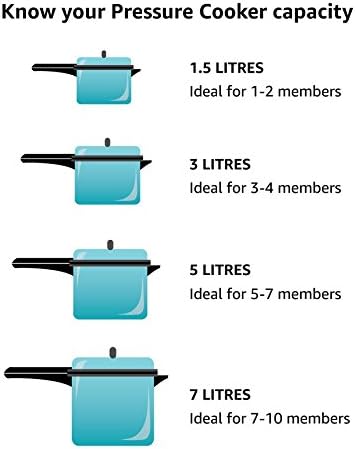
Image: A chart illustrating different pressure cooker capacities (1.5, 3, 5, 7 liters) and their ideal suitability for different family sizes (1-2, 3-4, 5-7, 7-10 members respectively).
Maintenance and Cleaning
Proper maintenance ensures the longevity and safe operation of your pressure cooker.
- Daily Cleaning: After each use, wash the cooker body and lid with warm soapy water. For stubborn food residues, soak the cooker before cleaning.
- Gasket Care: Remove the gasket from the lid after each use and wash it separately. Allow it to dry completely before re-inserting or storing. Replace the gasket annually or if it shows signs of cracking, hardening, or stretching.
- Vent Tube and Safety Valve: Regularly check the vent tube and safety valve for any food particles or blockages. Use a small brush or wire to clear them if necessary.
- Dishwasher Safe: The pressure cooker is dishwasher safe, but hand washing is recommended for best results and to prolong the life of the gasket.
- Storage: Store the pressure cooker with the lid inverted on the body to allow air circulation and prevent the gasket from sticking or developing odors.
Troubleshooting
| Problem | Possible Cause | Solution |
|---|---|---|
| Pressure not building up. | Lid not properly closed; Gasket worn or improperly seated; Vent tube or safety valve blocked; Insufficient liquid. | Ensure lid is locked; Re-seat or replace gasket; Clear blockages; Add more liquid. |
| Steam leaking from lid. | Gasket dirty, worn, or improperly seated; Lid not closed correctly; Rim of cooker dirty. | Clean or replace gasket; Re-close lid; Clean cooker rim. |
| Food sticking to bottom. | Too little liquid; Heat too high. | Add more liquid; Reduce heat once pressure is reached. |
| Lid difficult to open after cooking. | Pressure not fully released. | Ensure all pressure is released before attempting to open. Do not force. |
Specifications
- Brand: Butterfly
- Model: BL-4.5L
- Capacity: 4.5 Liters
- Material: Stainless Steel
- Color: Silver
- Finish Type: Stainless Steel
- Special Feature: Manual Operation
- Item Weight: 6 Pounds (approximately 2.72 kg)
- Control Method: Touch (referring to manual interaction)
- Controller Type: Hand Control
- Operation Mode: Manual
- Dishwasher Safe: Yes
- Closure Type: Inner Lid, Outer Lid
- Product Dimensions: 12 x 12 x 12 inches (approximately 30.48 x 30.48 x 30.48 cm)
- Manufacturer: Gandhi - Appliances
- Date First Available: April 21, 2012

Image: A diagram illustrating the approximate height of the pressure cooker, measured at 17 inches (43 cm) from the top of the lid to the bottom of the pot.
Warranty and Support
For warranty information and customer support, please refer to the warranty card included with your purchase or contact Butterfly customer service directly. Keep your purchase receipt as proof of purchase for any warranty claims.
Regularly check the manufacturer's official website for updated product information, FAQs, and service center locations.


