
1. Introduction to Weight Distribution Hitches
A weight distribution hitch is a specialized towing system designed to improve vehicle and trailer control. It achieves this by leveling the trailer and distributing a portion of its tongue weight more evenly across the axles of both the trailer and the tow vehicle. This process helps to reduce sag at the rear of the tow vehicle and improve steering and braking performance. CURT weight distribution hitches are commonly used for travel trailers, campers, and other large loads.
The CURT 17332 model features a 2-inch x 2-inch shank and is compatible with Class 3, 4, and most Class 5 trailer hitches. It is important to note that while a weight distribution hitch can increase the gross trailer weight capacity of most trailer hitches, the vehicle's weight carrying capacity must always be considered. Never exceed the lowest weight capacity of any towing component.

Image: Diagram illustrating the effect of a weight distribution hitch. The top image shows a sagging tow vehicle without weight distribution, while the bottom image shows a level tow vehicle and trailer with weight distribution engaged.
2. Safety Information
Read and understand all instructions and warnings before installing or operating this weight distribution hitch. Failure to follow these instructions could result in serious injury or property damage.
- Always ensure all components are securely fastened and in good working condition before each use.
- Do not exceed the maximum gross trailer weight (GTW) or tongue weight (TW) ratings of the hitch, tow vehicle, or trailer.
- Ensure the trailer ball is properly torqued and secured.
- Always use safety chains as required by law and manufacturer guidelines.
- Perform regular inspections for wear, damage, or corrosion on all hitch components.
CALIFORNIA WARNING: Cancer and Reproductive Harm - www.P65Warnings.ca.gov
3. Package Contents and Components
The CURT 17332 Short Trunnion Bar Weight Distribution Hitch includes the following main components. Please verify all parts are present before beginning installation.

Image: Overview of the complete CURT 17332 Short Trunnion Bar Weight Distribution Hitch kit, showing the hitch head, shank, spring bars, lift handle, sway control, and hardware.
- Hitch Head Assembly: The central component that connects to the trailer ball and shank.
- Shank: Inserts into the vehicle's receiver hitch. Can be flipped for drop or rise adjustment.
- Trunnion-Style Spring Bars (2): Forged steel bars that apply leverage to distribute weight.
- Lift Handle: Used to engage and disengage the spring bars.
- Sway Control Bar: An optional component to reduce trailer sway.
- Sway Control Brackets: Mount to the trailer frame for attaching the sway control bar.
- Hardware Kit: Includes various bolts, nuts, washers, pins, and clips for assembly.
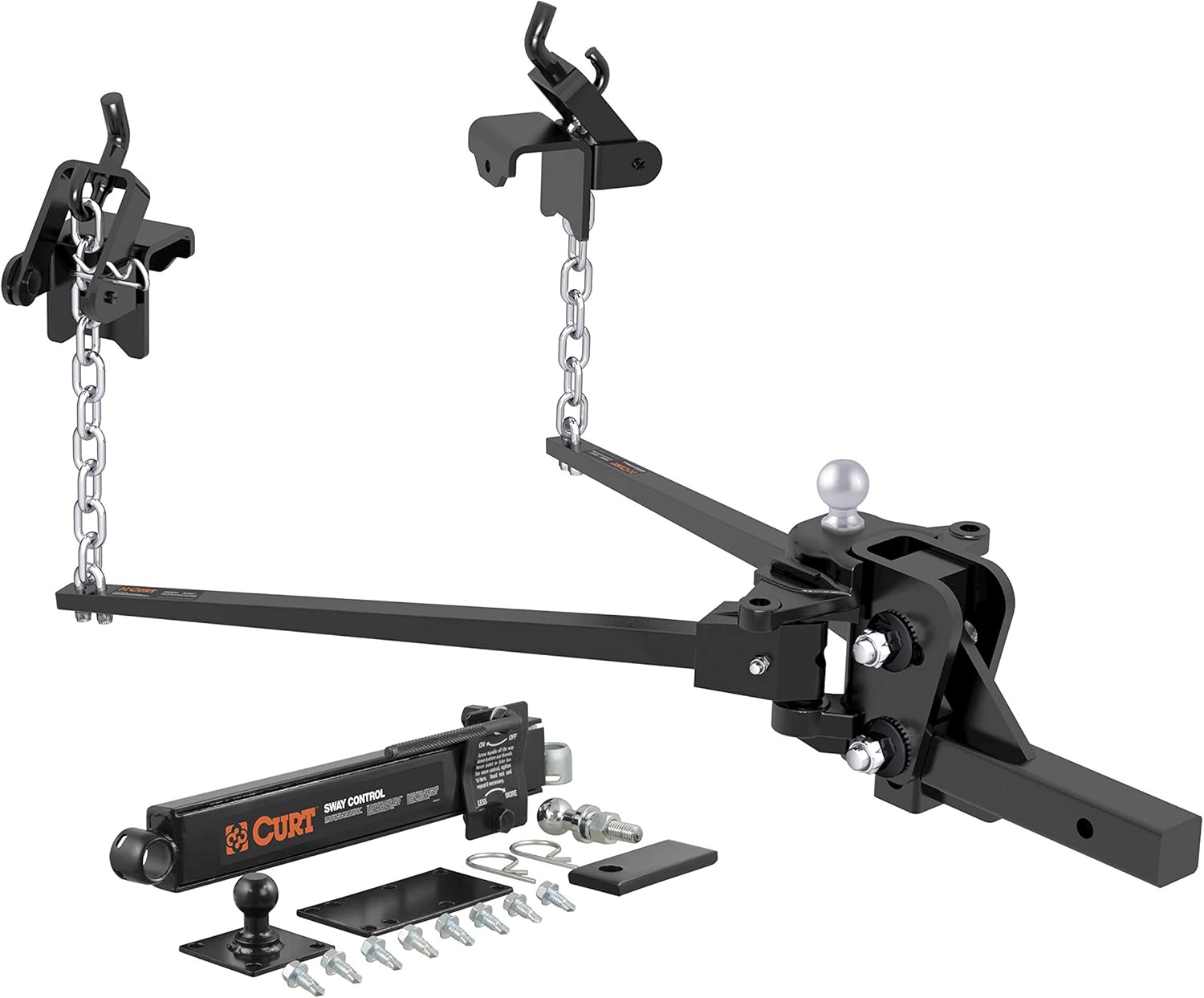
Image: Detailed view of the heavy-duty formed hitch head assembly.

Image: A single 28-3/8 inch trunnion-style forged steel spring bar with its attached chain.

Image: The lift handle, used for leverage when attaching or detaching spring bars.

Image: The sway control bar, designed to minimize trailer sway during towing.

Image: A sway control bracket with mounting bolts, used to secure the sway control bar to the trailer frame.

Image: Various bolts, nuts, washers, pins, and clips included in the hardware kit for assembly.
4. Setup and Installation
Proper installation and adjustment are critical for the safe and effective operation of your weight distribution hitch. It is recommended to perform the initial setup on a level surface with the trailer loaded as it would be for travel.
4.1. Initial Assembly
- Mount the Shank: Insert the shank into your vehicle's receiver hitch and secure it with a hitch pin and clip. Ensure the shank is oriented correctly for the required drop or rise to achieve a level trailer.
- Attach the Hitch Head: Slide the hitch head onto the shank. The head angle will need to be adjusted later to achieve proper weight distribution. Secure it with the provided bolts and nuts, but do not fully tighten until the angle is set.
- Install Trailer Ball: Mount the appropriate trailer ball (purchased separately) onto the hitch head and torque it to the manufacturer's specifications.
4.2. Adjusting Head Angle and Spring Bars
This is the most critical step for proper weight distribution. The goal is to return the tow vehicle and trailer to a level position.
- Measure Initial Heights: With the trailer unhitched and level, measure the height of the front and rear bumper of the tow vehicle from the ground. Also, measure the height of the trailer coupler.
- Connect Trailer: Hitch the trailer to the tow vehicle without engaging the spring bars. Measure the front and rear bumper heights again. Note the sag.
- Attach Spring Bars: Insert the trunnion-style spring bars into the hitch head. Use the lift handle to raise the spring bars and attach their chains to the hook-up brackets on the trailer frame. Adjust the number of chain links to apply tension. Start with a moderate number of links.
- Re-measure and Adjust: After engaging the spring bars, re-measure the front and rear bumper heights. The goal is to return the front bumper to its original unhitched height or slightly lower, and the rear bumper should be level with or slightly higher than the front. Adjust the hitch head angle (using the tilt washers) and the number of chain links until the desired level is achieved.
- Final Tightening: Once the correct adjustment is found, fully tighten all bolts on the hitch head and shank to the manufacturer's specified torque values.

Image: A hand demonstrating the adjustment of chain links on a spring bar, a crucial step in setting up the weight distribution hitch.
4.3. Sway Control Installation (Optional)
If your kit includes a sway control bar, install the sway control ball mount onto the hitch head and the sway control bracket onto the trailer frame according to the specific instructions provided with the sway control unit. Connect the sway control bar between these two points.
Video: An official CURT video demonstrating the features and benefits of the CURT 17332 Short Trunnion Bar Weight Distribution Hitch. This video provides a visual overview of the product and its functionality, which can aid in understanding the setup process.
5. Operating Instructions
Once the hitch is properly installed and adjusted, follow these steps for connecting and disconnecting your trailer.
5.1. Connecting the Trailer
- Couple Trailer: Back your tow vehicle to the trailer and couple the trailer to the hitch ball. Lock the coupler latch.
- Raise Trailer and Vehicle: Use the trailer's tongue jack to raise both the trailer and the rear of the tow vehicle. This reduces tension on the spring bars, making them easier to attach.
- Attach Spring Bars: Insert the spring bars into the hitch head. Use the lift handle to raise each spring bar and hook the appropriate chain link onto the hook-up bracket. Ensure the same number of links are used on both sides.
- Lower Trailer: Slowly lower the trailer tongue jack until all weight is transferred to the hitch and spring bars. Remove the tongue jack from the ground.
- Connect Safety Chains and Breakaway Cable: Attach the trailer's safety chains to the tow vehicle and connect the breakaway cable.
- Connect Sway Control (if applicable): Attach the sway control bar if you are using one.
5.2. Disconnecting the Trailer
- Park on Level Ground: Ensure the vehicle and trailer are on a level surface and the parking brake is engaged.
- Disconnect Sway Control (if applicable): Remove the sway control bar.
- Raise Trailer and Vehicle: Use the trailer's tongue jack to raise both the trailer and the rear of the tow vehicle, relieving tension on the spring bars.
- Remove Spring Bars: Carefully unhook the spring bar chains from the hook-up brackets and remove the spring bars from the hitch head.
- Lower Trailer and Uncouple: Lower the trailer tongue jack until the trailer is resting on its own. Uncouple the trailer from the hitch ball.
6. Maintenance
Regular maintenance ensures the longevity and safe operation of your CURT weight distribution hitch.
- Inspect Before Each Trip: Check all bolts, nuts, pins, and clips for tightness and security. Inspect spring bars, hitch head, and shank for any signs of wear, cracks, bends, or corrosion.
- Lubrication: Apply grease to the hitch ball, trunnion bar pivot points, and any other moving parts as recommended by the manufacturer. This reduces friction and wear.
- Cleaning: Keep the hitch components clean from dirt, road grime, and salt. A durable black powder coat finish helps protect against rust and UV damage, but regular cleaning is still beneficial.
- Storage: When not in use, store the hitch in a dry place to prevent corrosion.
7. Troubleshooting
Here are some common issues and their potential solutions:
| Problem | Possible Cause | Solution |
|---|---|---|
| Tow vehicle still sags at the rear. | Insufficient tension on spring bars; incorrect head angle. | Increase the number of chain links engaged or adjust the hitch head angle to apply more upward force. Re-measure vehicle height. |
| Excessive trailer sway. | Improper weight distribution; insufficient tongue weight; no sway control. | Ensure proper weight distribution is achieved. Verify tongue weight is within recommended range (10-15% of GTW). Install or adjust sway control device. |
| Noisy operation (creaking, groaning). | Lack of lubrication; metal-on-metal friction. | Lubricate the hitch ball, spring bar pivot points, and any other friction points with appropriate grease. |
| Difficulty engaging/disengaging spring bars. | Too much tension; not raising trailer/vehicle enough. | Ensure the trailer tongue jack is used to raise both the trailer and the rear of the tow vehicle sufficiently before attempting to attach or remove spring bars. |
8. Specifications
Key specifications for the CURT 17332 Short Trunnion Bar Weight Distribution Hitch:
| Feature | Specification |
|---|---|
| Model Number | 17332 |
| Gross Trailer Weight (GTW) Capacity | Up to 10,000 lbs. |
| Tongue Weight (TW) Capacity | 1,000 lbs. |
| Shank Size | 2-Inch x 2-Inch |
| Spring Bar Style | Trunnion Bar |
| Spring Bar Length | 28-3/8 inches |
| Material | Carbon Steel |
| Finish Type | Black Powder Coated |
| Item Weight | 64.1 pounds |
| Vehicle Service Type | Trailer |
| Universal Fit | Yes |
9. Warranty Information
The CURT 17332 Short Trunnion Bar Weight Distribution Hitch comes with a Limited Lifetime Warranty. This warranty covers defects in material and workmanship for the lifetime of the original purchaser. A separate One-Year Warranty applies to the finish and wear items.
For specific details regarding warranty claims and coverage, please refer to the official CURT warranty documentation or contact CURT customer support.
10. Support and Contact
If you have any questions regarding the installation, operation, maintenance, or troubleshooting of your CURT 17332 Weight Distribution Hitch, please contact CURT customer support.
- Manufacturer: Curt Manufacturing
- Website: Visit the official CURT website for additional resources, FAQs, and contact information.