
Introduction
This manual provides essential information for the safe and efficient operation, maintenance, and care of your 2010 Ford Escape. It is designed to help you understand the features and functions of your vehicle, ensuring a reliable and enjoyable driving experience. Please read this manual thoroughly to familiarize yourself with your vehicle's capabilities and important safety warnings.
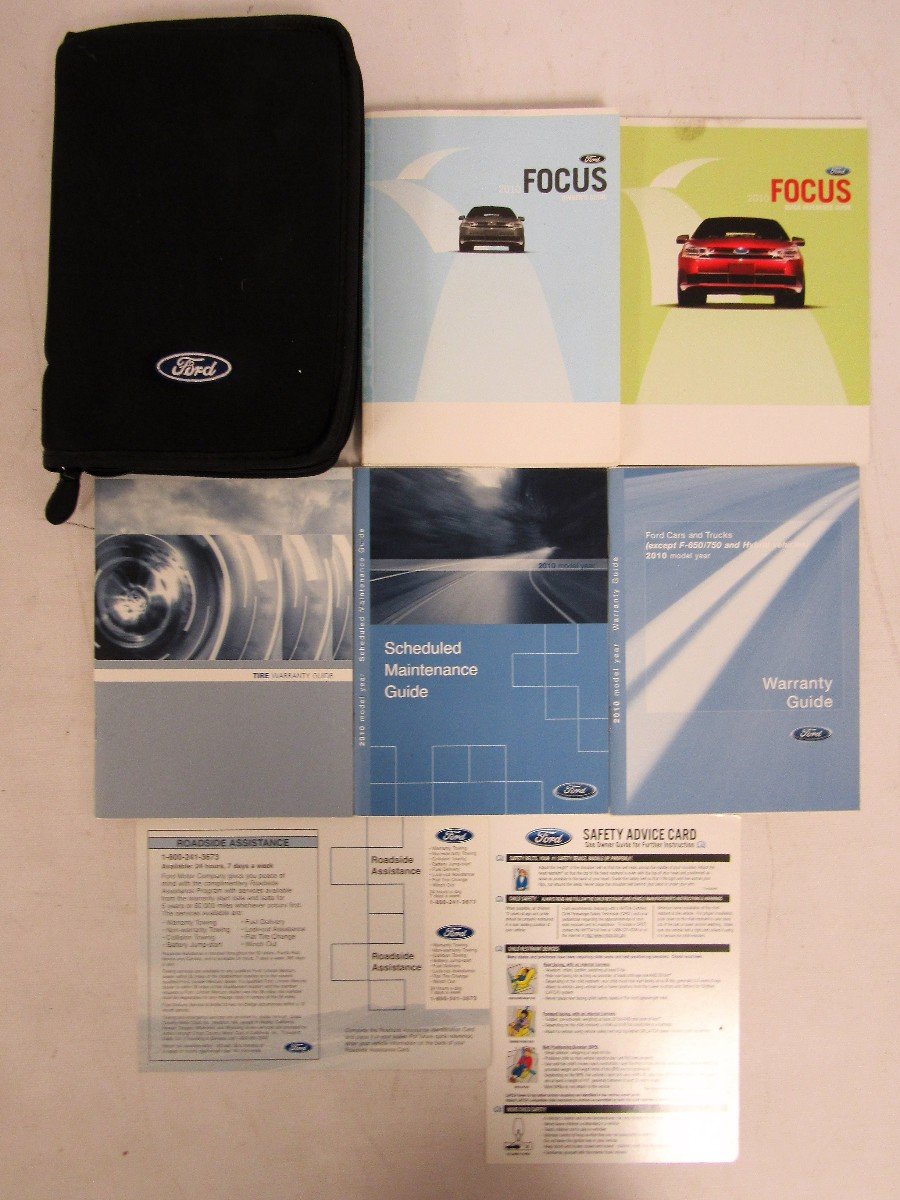
Image: The black fabric case that typically holds the Ford owner's manual and supplementary guides.
Initial Setup and Familiarization
Before operating your Ford Escape, it is important to familiarize yourself with its basic controls and adjustments. This section covers initial setup procedures to ensure a comfortable and safe driving position.
- Seating Position: Adjust the seat forward or backward, and the seatback angle, to achieve a comfortable and safe driving posture. Ensure you can easily reach the pedals and steering wheel.
- Steering Wheel Adjustment: Adjust the steering wheel for optimal comfort and control, ensuring a clear view of the instrument cluster.
- Mirror Adjustment: Properly adjust the interior rearview mirror and exterior side mirrors to maximize visibility around your vehicle.
- Dashboard Controls: Locate and understand the functions of essential controls such as headlights, turn signals, windshield wipers, and climate control.

Image: An example cover of a 2010 Ford Owner's Guide, illustrating the type of manual included. While this image shows "Focus", the principles apply to the Escape.
Vehicle Operation
This section details the procedures for starting, driving, and stopping your 2010 Ford Escape, along with information on various vehicle systems.
- Starting the Engine: Instructions for starting the vehicle, including key insertion and ignition procedures.
- Transmission Operation: Guidance on using the automatic or manual transmission, including shifting gears and parking.
- Braking System: Information on the braking system, including anti-lock brakes (ABS) and proper braking techniques.
- Lighting and Visibility: How to operate headlights, fog lights, turn signals, and windshield wipers for optimal visibility in various conditions.
- Climate Control: Instructions for using the heating, ventilation, and air conditioning (HVAC) system to maintain cabin comfort.

Image: An example cover of a 2010 Ford Quick Reference Guide, providing concise operational instructions. While this image shows "Focus", the format is typical for Ford vehicles.
Maintenance and Care
Regular maintenance is crucial for the longevity and performance of your Ford Escape. This section outlines recommended service schedules and procedures for routine care.
- Scheduled Maintenance: Follow the recommended service intervals for oil changes, tire rotations, filter replacements, and inspections.
- Fluid Checks: Instructions for checking engine oil, coolant, brake fluid, power steering fluid, and windshield washer fluid levels.
- Tire Care: Information on tire pressure, rotation, and inspection for wear to ensure safety and extend tire life.
- Battery Maintenance: Tips for maintaining your vehicle's battery, including cleaning terminals and checking charge.
- Exterior and Interior Care: Guidelines for cleaning and protecting your vehicle's paint, upholstery, and interior surfaces.
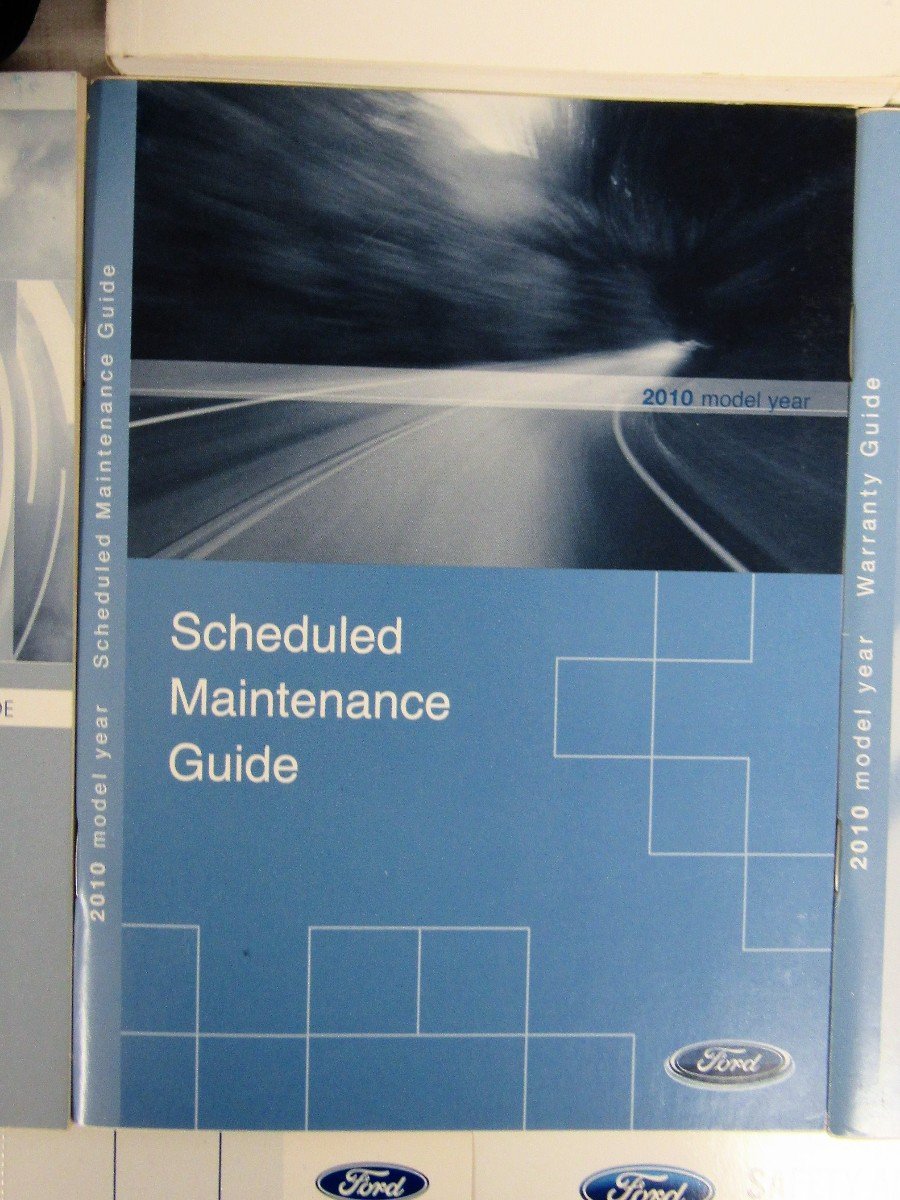
Image: The cover of the 2010 Ford Scheduled Maintenance Guide, detailing recommended service intervals.

Image: The cover of the Tire Warranty Guide, providing information on tire coverage and care.
Troubleshooting Common Issues
This section provides guidance on identifying and resolving common vehicle issues. For more complex problems, consult a qualified service technician.
- Warning Lights: Explanation of various dashboard warning lights and their meanings (e.g., check engine, oil pressure, battery).
- Engine Not Starting: Steps to take if the engine fails to start, including checking the battery and fuel level.
- Flat Tire: Instructions for safely changing a flat tire or using a tire repair kit.
- Overheating: What to do if the engine temperature gauge indicates overheating.
- Electrical Problems: Basic checks for issues with lights, radio, or power windows.
Vehicle Specifications
This section contains technical specifications for the 2010 Ford Escape. Refer to your specific manual for detailed figures relevant to your vehicle's trim level and options.
| Feature | Description/Value |
|---|---|
| Engine Type | (Refer to specific manual for 2.5L I4 or 3.0L V6 options) |
| Fuel Tank Capacity | (Refer to specific manual for exact capacity) |
| Tire Pressure (Cold) | (Refer to tire placard on vehicle or manual) |
| Dimensions (Approx.) | Length, Width, Height (Refer to specific manual) |
| Curb Weight | (Varies by trim and options; refer to specific manual) |
Note: The provided product information lists the manual's dimensions and weight, not the vehicle's. For detailed vehicle specifications, please consult the relevant sections within your physical owner's manual.
Safety Advice and Child Restraint Systems
Your safety and the safety of your passengers are paramount. This section highlights critical safety information, including proper use of seat belts and child restraint systems.
- Seat Belts: Always wear your seat belt and ensure all passengers are properly restrained. Adjust the shoulder belt so it rests across the middle of your shoulder, not your neck.
- Child Safety: Always read and follow the child restraint and vehicle manufacturer's instructions and warnings.
- Child Restraint Types: Information on rear-facing, forward-facing, and belt-positioning booster seats.
- LATCH System: Details on using the Lower Anchors and Tethers for Children (LATCH) system for secure child seat installation.
- More Child Safety: Important advice such as never leaving children unattended, teaching children not to play in vehicles, and keeping doors and trunks locked.

Image: A Ford Safety Advice Card, providing essential guidelines for seat belt usage and child safety.

Image: A close-up view of the Ford Safety Advice Card, specifically detailing instructions for various child restraint systems and general child safety practices.
Warranty and Support
This section provides information regarding your vehicle's warranty coverage and available support services, including roadside assistance.
- Roadside Assistance: Details on the complimentary Roadside Assistance Program, available 24 hours a day, 7 days a week. Services may include:
- Warranty Towing
- Non-warranty Towing
- Collision Towing
- Battery Jump-start
- Fuel Delivery
- Lock-out Assistance
- Flat Tire Change
- Winch Out
- Contact Information: Phone numbers and procedures for accessing roadside assistance services.
- Warranty Coverage: General information on vehicle warranty terms and conditions. Refer to your warranty guide for specific details.

Image: The Ford Roadside Assistance card, outlining available services and contact information for support.