
Introduction
This manual provides comprehensive instructions for the operation and maintenance of your Pentax SF10 35mm film camera, equipped with a Takumar F ZOOM 28-80mm lens. The Pentax SF10 is an advanced autofocus SLR camera designed for ease of use while offering creative control for film photography enthusiasts.
Please read this manual thoroughly before using your camera to ensure proper handling and to maximize its performance and longevity.

Figure 1: Front-right view of the Pentax SF10 camera with the Takumar 28-80mm lens attached. The camera body is black, and a black neck strap is visible.
Setup
1. Battery Installation
The Pentax SF10 requires two CR-P2 lithium batteries. Ensure the camera is powered off before installing or replacing batteries.
- Locate the battery compartment on the bottom of the camera body.
- Open the battery compartment cover by sliding the latch.
- Insert the two CR-P2 batteries according to the polarity indicators (+/-) inside the compartment.
- Close the battery compartment cover securely until it clicks into place.
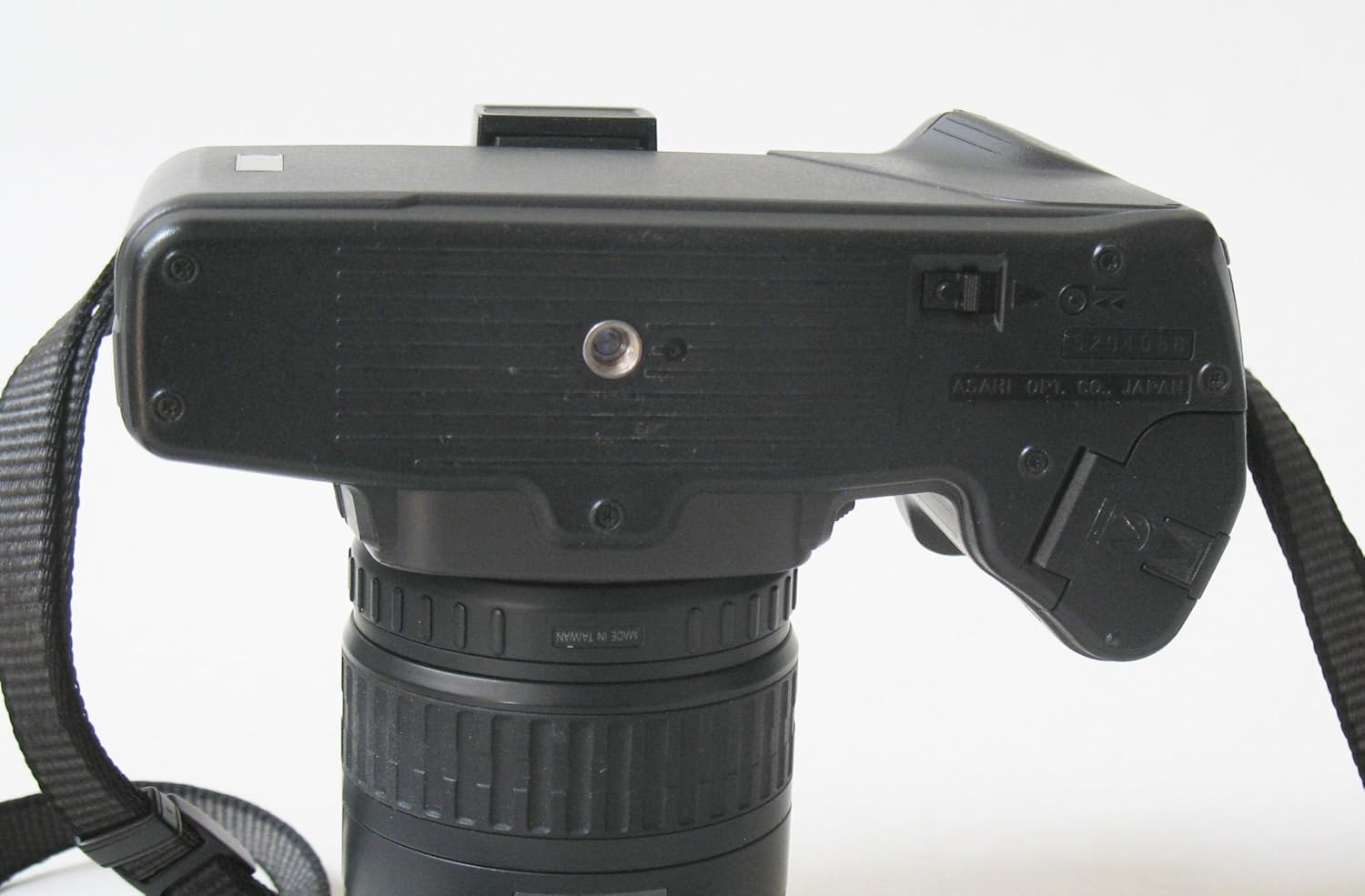
Figure 2: The bottom of the Pentax SF10 camera, illustrating the location of the battery compartment door and the tripod mounting thread.
2. Lens Attachment
Your camera comes with a Takumar F ZOOM 28-80mm lens. Follow these steps to attach it:
- Remove the rear lens cap and the camera body cap.
- Align the red dot on the lens barrel with the red dot on the camera's lens mount.
- Insert the lens into the camera mount and turn it clockwise until it locks into place with a click.
- To remove the lens, press the lens release button on the camera body and turn the lens counter-clockwise.

Figure 3: A detailed view of the Takumar 28-80mm lens, showing the focal length markings (28, 35, 50, 80mm) and aperture scale (3.5 to 22).
3. Film Loading
The Pentax SF10 features automatic film loading. Use standard 35mm film cartridges.
- Open the camera back by pulling up the film rewind knob.
- Place a new film cartridge into the film chamber.
- Pull the film leader across to the orange mark on the take-up spool.
- Close the camera back firmly. The camera will automatically advance the film to the first frame. The frame counter on the top LCD panel will display '1'.

Figure 4: The rear of the Pentax SF10 camera, showing the film door and the viewfinder eyepiece. A small plastic cover is detached, possibly for an accessory.
4. Strap Attachment
Attach the provided neck strap to the strap lugs on either side of the camera body for secure carrying.
Operating the Camera
1. Powering On/Off
The main power switch is located on the top plate of the camera. Slide it to the 'ON' position to power on the camera and to 'OFF' to power it down.

Figure 5: Top view of the Pentax SF10 camera, highlighting the LCD panel displaying "AUTO PROG. 2 EX.", the mode button, and the power switch.
2. Exposure Modes
The SF10 offers several exposure modes, selectable via the MODE button and control dial:
- Programmed AE (P): The camera automatically sets both aperture and shutter speed for optimal exposure.
- Shutter-Priority AE (Tv): You select the shutter speed, and the camera sets the appropriate aperture.
- Aperture-Priority AE (Av): You select the aperture, and the camera sets the appropriate shutter speed.
- Manual Exposure (M): You set both aperture and shutter speed independently.
3. Focusing
The camera features an autofocus system. To focus:
- Look through the viewfinder and center the subject within the autofocus frame.
- Press the shutter release button halfway down. The camera will autofocus, and a focus confirmation light will appear in the viewfinder.
- For manual focus, switch the lens to 'MF' (Manual Focus) and rotate the focusing ring on the lens until the image in the viewfinder is sharp.
4. Built-in Flash
The SF10 has a built-in pop-up flash. To activate it, press the flash release button. The flash will automatically fire in low-light conditions when in Programmed AE mode, or can be manually controlled in other modes.

Figure 6: Front-right view of the Pentax SF10 camera with the integrated pop-up flash in the raised position, ready for use.

Figure 7: A close-up of the top-left section of the Pentax SF10 camera, showing the flash release button and the mode selection controls.
5. Taking a Picture
- Power on the camera.
- Select your desired exposure mode.
- Frame your shot through the viewfinder.
- Press the shutter release button halfway to activate autofocus and exposure metering.
- Press the shutter release button fully to take the picture. The film will automatically advance to the next frame.
6. Film Rewinding
Once all frames on the film roll have been exposed, the camera will automatically rewind the film into the cartridge. If you need to rewind film mid-roll, locate the manual rewind button (usually on the bottom of the camera) and press it, then slide the rewind switch (if available) or follow specific instructions in the camera's original manual for manual mid-roll rewind.
The Pentax SF10 also supports a remote shutter release for stable shots, especially useful for long exposures or when avoiding camera shake.

Figure 8: A Pentax wired remote shutter release, which can be connected to the camera for remote operation, reducing camera shake.
Maintenance
1. Cleaning the Camera and Lens
- Camera Body: Use a soft, dry cloth to wipe the camera body. For stubborn dirt, slightly dampen the cloth with water. Avoid using solvents.
- Lens: Use a lens brush or blower to remove dust. For smudges, use a specialized lens cleaning solution and a microfiber cloth. Never touch the lens surface with your fingers.
- Viewfinder/LCD: Use a soft, dry cloth. Avoid excessive pressure.
2. Battery Care
- Remove batteries if the camera will not be used for an extended period to prevent leakage.
- Store batteries in a cool, dry place.
3. Storage
When not in use, store the camera in a cool, dry, and dust-free environment. It is recommended to keep the lens attached with both front and rear caps on, and the camera body cap on if the lens is removed. Avoid direct sunlight and high humidity.
Troubleshooting
- Camera does not power on:
- Check if the power switch is in the 'ON' position.
- Ensure batteries are correctly installed with correct polarity.
- Replace batteries with new ones if they are depleted.
- Film does not advance:
- Verify that the film leader is properly engaged with the take-up spool.
- Ensure the film door is securely closed.
- Check if the film cartridge is empty or incorrectly loaded.
- Autofocus is not working:
- Ensure the lens is set to 'AF' (Autofocus) mode.
- Check for sufficient light on the subject.
- Ensure the subject is within the camera's focusing range.
- Pictures are too dark/light:
- Check the selected exposure mode and settings (aperture, shutter speed).
- Ensure the film ISO setting (if manually set) matches the film in use.
- Verify flash operation in low light conditions.
Specifications
| Feature | Detail |
|---|---|
| Model Name | SF10 |
| Brand | Pentax |
| Item Weight | 2.3 Pounds |
| Zoom Type | manual |
| Exposure Control Type | Automatic |
| Manufacturer | Pentax |
| Date First Available | October 6, 2010 |
| Package Dimensions | 6.8 x 6.1 x 4.6 inches |
Warranty and Support
For information regarding warranty coverage, service, or technical support for your Pentax SF10 camera, please refer to the warranty card included with your product or visit the official Pentax (Ricoh Imaging) website. Contact details for customer support are typically provided in the product packaging or on the manufacturer's website.

Figure 9: The original instruction booklet for the Pentax SF10 camera, which contains detailed information on operation and warranty.

