
Introduction to Your Repair Manual
This document serves as a user guide for the 1990 Isuzu Amigo & Pickup Repair Shop Manual Original. This manual is an indispensable resource for owners, mechanics, and enthusiasts performing maintenance, service, and repair procedures on 1990 Isuzu Amigo and Pickup models. It provides detailed instructions, specifications, and diagrams directly from the manufacturer, ensuring accuracy and reliability for all listed procedures.
The original shop manual is designed to cover all aspects of vehicle service, from routine maintenance to complex system overhauls. Familiarizing yourself with its structure and content will significantly enhance your ability to diagnose issues and perform repairs correctly.
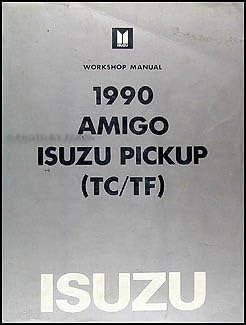
Image: Front cover of the 1990 Isuzu Amigo & Pickup Repair Shop Manual. This image displays the title "WORKSHOP MANUAL 1990 AMIGO ISUZU PICKUP (TC/TF)" and the Isuzu logo, indicating its official origin.
Vehicle Coverage
This repair shop manual specifically covers the following 1990 Isuzu vehicle models:
- Isuzu Amigo (1990 Model Year)
- Isuzu Pickup (1990 Model Year)
It is crucial to verify that your vehicle's model and year align with the manual's coverage to ensure the accuracy and applicability of the information provided. Procedures and specifications can vary significantly between model years and vehicle configurations.
Understanding the Manual's Structure
The 1990 Isuzu Repair Shop Manual is typically organized into distinct sections, each dedicated to a major vehicle system. While the exact chapter numbering may vary slightly, the general layout is designed for logical navigation:
- General Information: Introduction, safety precautions, general service procedures, and basic tool usage.
- Engine: Detailed information on engine components, diagnosis, removal, installation, and overhaul procedures. This includes fuel, ignition, and emission control systems.
- Drivetrain: Covers manual and automatic transmissions, transfer cases (if applicable), drive shafts, axles, and differentials.
- Chassis: Suspension, steering, brakes (including ABS if equipped), wheels, and tires.
- Electrical System: Comprehensive wiring diagrams, component locations, circuit descriptions, and diagnostic procedures for all electrical components.
- Body and Interior: Details on body panels, doors, windows, seats, interior trim, and heating/air conditioning systems.
- Specifications: Tables of torque values, fluid capacities, dimensions, and other critical technical data.
- Troubleshooting: Diagnostic charts and procedures to help identify the root cause of common vehicle problems.
Each section often begins with a general description of the system, followed by diagnostic procedures, removal/installation steps, inspection criteria, and repair instructions. Exploded views and detailed illustrations are frequently used to clarify complex assemblies.
Key Sections and Their Use
Setup and Preparation
Before beginning any repair, consult the General Information section. This section typically outlines essential safety precautions, proper lifting points, and general workshop practices. Always ensure you have the correct tools and safety equipment as specified.
Operating and Diagnostics
While this is a repair manual, not an operating manual for the vehicle, it contains crucial information for understanding how systems operate. The Troubleshooting section is vital for diagnosing issues. It often presents symptoms and guides you through a logical diagnostic flow chart to pinpoint the faulty component or system. Refer to the relevant system section (e.g., Engine, Electrical) for detailed component testing and repair procedures.
Maintenance Procedures
The manual provides detailed schedules and instructions for routine maintenance tasks. Look for sections dedicated to:
- Fluid checks and changes (engine oil, transmission fluid, coolant, brake fluid)
- Filter replacements (oil, air, fuel, cabin)
- Belt and hose inspections
- Brake system inspection and service
- Tire rotation and inspection
Following these guidelines helps ensure the longevity and reliable operation of your Isuzu vehicle.
Troubleshooting and Repair
When a problem arises, begin by consulting the Troubleshooting section. Once the likely cause is identified, navigate to the specific system section for detailed repair instructions. Pay close attention to:
- Torque Specifications: Always use a torque wrench to tighten fasteners to the specified values.
- Special Tools: Some procedures may require specialized tools. The manual will typically list these.
- Wiring Diagrams: Essential for electrical diagnostics. Understand how to read and interpret these diagrams.
- Component Identification: Use the provided illustrations to correctly identify parts.
Technical Specifications
A dedicated Specifications section provides critical data such as engine displacement, bore and stroke, compression ratios, fluid capacities, tire pressures, and alignment settings. These values are essential for accurate diagnosis and repair.
Important Considerations for Original Manuals
As an original 1990 manual, it reflects the technology and practices of its time. While highly accurate for its intended purpose, be aware of the following:
- Updates: There may have been minor service bulletins or updates issued by Isuzu after the manual's publication. These are typically not included in the original print.
- Condition: The physical condition of an original manual may vary. Handle with care to preserve its integrity.
- Safety Standards: Always adhere to modern safety practices in addition to those outlined in the manual.
Support and Additional Resources
This manual is a primary source of information. For further assistance or clarification on specific procedures, consider consulting:
- Certified Isuzu service centers or experienced automotive technicians.
- Online automotive forums and communities dedicated to Isuzu Amigo and Pickup models, where enthusiasts often share insights and solutions.
- Reputable automotive repair websites or video tutorials that may supplement the manual's instructions.
Note: This manual does not include warranty information for the vehicle itself, as that would have been provided with the original vehicle purchase. For information regarding the manual's condition or authenticity, please refer to the seller or publisher.