
Introduction
The Fender Blues Deluxe Reissue is a 40-watt tube amplifier designed for guitarists seeking classic blues, country, and rock tones. This amplifier features a 1x12-inch Special Design Eminence speaker, two 6L6 Groove Tubes output tubes, and three 12AX7 preamp tubes. It offers two channels (Normal with bright switch, and Drive) and includes Fender spring reverb and an effects loop. This manual provides essential information for the proper setup, operation, maintenance, and troubleshooting of your amplifier.

Front view of the Fender Blues Deluxe Reissue amplifier, showcasing its classic tweed covering and grille cloth.
Setup
- Unpacking: Carefully remove the amplifier from its packaging. Retain all packing materials for future transport or storage.
- Placement: Position the amplifier on a stable, level surface. Ensure adequate ventilation around the unit to prevent overheating. Avoid placing it near heat sources or in direct sunlight.
- Power Connection: Ensure the amplifier's power switch is in the OFF position. Connect the supplied power cord to the amplifier's AC inlet and then to a grounded electrical outlet.
- Instrument Connection: Connect your guitar to one of the input jacks on the front panel using a high-quality instrument cable. The amplifier features two inputs, typically for different impedance levels or signal strengths.
- Effects Loop (Optional): If using external effects pedals, connect them to the "PREAMP OUT" and "POWER AMP IN" jacks on the rear panel. Ensure the signal chain is correct (e.g., guitar -> preamp -> effects loop -> power amp -> speaker).
- Footswitch Connection: Connect the included two-button footswitch to the designated jack on the rear panel for remote control of channel switching and reverb.
- Initial Power-Up: With all connections secure and volume controls set to a low level, flip the power switch to ON. Allow a few moments for the tubes to warm up before engaging the standby switch (if present) or increasing volume.

Rear panel of the amplifier, showing power input, effects loop, and footswitch connections.
Operating Instructions
The Fender Blues Deluxe Reissue amplifier features a straightforward control layout designed for intuitive use.
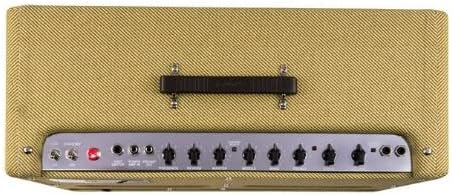
Top view of the amplifier's control panel, featuring knobs for volume, tone, reverb, and channel selection.
Controls Overview:
- Input Jacks: Connect your instrument here.
- Volume (Normal Channel): Controls the output level of the clean channel.
- Bright Switch: Adds high-end sparkle to the Normal channel.
- Drive: Controls the amount of gain/overdrive in the Drive channel.
- Master: Controls the overall output volume of the Drive channel.
- Treble, Mid, Bass: Tone controls for shaping the amplifier's frequency response.
- Reverb: Adjusts the intensity of the built-in spring reverb effect.
- Presence: Controls the amount of high-frequency boost in the power amp section, affecting overall brightness and cut.
- Channel Select Switch: Toggles between the Normal (clean) and Drive (overdriven) channels. This can also be controlled via the footswitch.
- Power Switch: Turns the amplifier ON or OFF.
Basic Operation:
- Power On: After connecting all cables, turn the Power switch ON. Allow approximately 30-60 seconds for the tubes to warm up.
- Channel Selection: Use the front panel switch or the footswitch to select between the Normal (clean) and Drive (overdriven) channels.
- Adjusting Volume: Start with the Volume (Normal) or Master (Drive) controls at a low setting and gradually increase to your desired level. This amplifier is capable of very high volumes.
- Tone Shaping: Experiment with the Treble, Mid, and Bass controls to find your preferred sound. The Presence control can further refine the amplifier's high-end response.
- Reverb: Adjust the Reverb knob to add depth and ambiance to your sound.
Maintenance
- Cleaning: Disconnect the amplifier from power before cleaning. Use a soft, dry cloth to wipe down the exterior. Avoid abrasive cleaners or solvents.
- Tube Care: Vacuum tubes have a finite lifespan and may need replacement over time. If you notice a decrease in performance, unusual noise, or a change in tone, consult a qualified technician for tube inspection and replacement. Always use tubes specified by Fender.
- Speaker Care: The speaker is a crucial component. Avoid exposing it to extreme temperatures or moisture. Do not attempt to repair a damaged speaker yourself.
- Reverb Tank: The spring reverb tank is sensitive to physical shock. If the amplifier is moved frequently, ensure the reverb tank is secured. If you experience unusual feedback or no reverb effect, check the springs within the tank for proper seating.
- Storage: When not in use, store the amplifier in a dry, temperature-controlled environment. Use a protective cover to prevent dust accumulation.
Troubleshooting
If you encounter issues with your amplifier, refer to the following common troubleshooting steps. For complex problems, contact Fender customer support or a qualified technician.
- No Sound:
- Ensure the amplifier is powered ON and the power cord is securely connected.
- Check that your instrument cable is fully inserted into both the guitar and the amplifier.
- Verify that all volume controls (Volume, Master) are not set to zero.
- Test with a different instrument cable and guitar to rule out external equipment issues.
- Allow sufficient warm-up time for the tubes.
- Humming or Unwanted Noise:
- Ensure the amplifier is connected to a grounded outlet.
- Try plugging the amplifier into a different electrical circuit.
- Check for loose connections in instrument cables or effects loop.
- Move the amplifier away from other electronic devices that may cause interference.
- Faulty tubes can cause humming; consult a technician.
- Reverb Issues (Feedback, No Effect):
- If the reverb produces loud feedback, the spring reverb tank may have been dislodged or a spring may be stuck. Gently inspect the reverb tank (located inside the cabinet) to ensure all springs are properly seated and the tank is not resting against the metal casing.
- If there is no reverb effect, ensure the Reverb knob is turned up and the footswitch (if used) is not disengaging the reverb.
- Check the cables connecting the reverb tank to the amplifier circuit board.
- Distorted or Weak Sound:
- Ensure the correct channel is selected (Normal for clean, Drive for overdrive).
- Check the condition of your tubes. Worn or faulty tubes can cause distortion or a weak signal.
- Verify that the speaker cable is securely connected.
Specifications
| Feature | Detail |
|---|---|
| Model Name | Blues Deluxe Reissue |
| Model Number | 2232200000 |
| Output Wattage | 40 Watts |
| Speaker | 1x12" Special Design Eminence |
| Preamp Tubes | 3 x 12AX7 |
| Power Tubes | 2 x 6L6 Groove Tubes |
| Channels | 2 (Normal with Bright Switch, Drive) |
| Reverb | Fender Spring Reverb |
| Effects Loop | Yes |
| Dimensions (H x W x D) | 26 x 20.5 x 12 inches (approximate) |
| Material (Chassis) | Stainless Steel |
| Covering | Tweed |
Warranty Information
Fender products are covered by a manufacturer's warranty. For specific details regarding the warranty period, coverage, and terms for your Blues Deluxe Reissue amplifier, please refer to the warranty card included with your purchase or visit the official Fender website. Keep your proof of purchase for warranty claims.
Customer Support
Should you require technical assistance, service, or have questions not covered in this manual, please contact Fender customer support.
- Online Support: Visit the official Fender website for FAQs, support articles, and contact information.
- Authorized Service Centers: For repairs, locate an authorized Fender service center near you through the Fender website.


