
1. Introduction
The Manhattan 158220 PCI Parallel Adapter Card is designed to add a single DB25 parallel port to a desktop computer system. This allows for connection and communication with various parallel peripheral devices. The card supports data transfer rates of up to 1.5 MBps and complies with PCI 2.3 specifications, ensuring efficient performance with most desktop computers and compatible parallel devices.
This manual provides detailed instructions for the proper installation, operation, and maintenance of your Manhattan 158220 PCI Parallel Adapter Card.
2. Package Contents
- Manhattan 158220 PCI Parallel Adapter Card
- Standard-height bracket (pre-installed)
- Low-profile bracket (for small form factor cases)
- Driver CD (may not be required for modern operating systems)
3. System Requirements
- Available PCI expansion slot (not PCI Express)
- Compatible operating system (e.g., Windows XP/Vista/7/8/10, Linux)
- Desktop computer with an accessible interior
4. Setup and Installation
4.1 Safety Precautions
- Always power off your computer and unplug it from the wall outlet before opening the case.
- Discharge any static electricity by touching a grounded metal object (e.g., the computer chassis) before handling internal components.
- Handle the PCI card by its edges to avoid touching the gold connectors or components.
4.2 Physical Installation
- Power off your computer and disconnect all cables.
- Open the computer case. Refer to your computer's manual for specific instructions on how to open it.
- Locate an available PCI expansion slot on your motherboard. These are typically white or cream-colored slots, distinct from shorter PCIe slots.
- Remove the metal slot cover corresponding to the chosen PCI slot from the back of your computer case.
- If necessary, replace the standard-height bracket on the card with the low-profile bracket provided, by unscrewing the two small screws holding the bracket to the card, swapping the brackets, and re-securing the screws.
- Carefully align the Manhattan 158220 PCI Parallel Adapter Card with the chosen PCI slot.
- Apply even, firm pressure to both ends of the card until it is fully seated in the slot. Ensure the gold connectors are completely inserted.
- Secure the card to the computer case using the screw from the removed slot cover or a similar screw.
- Close the computer case and reconnect all cables.
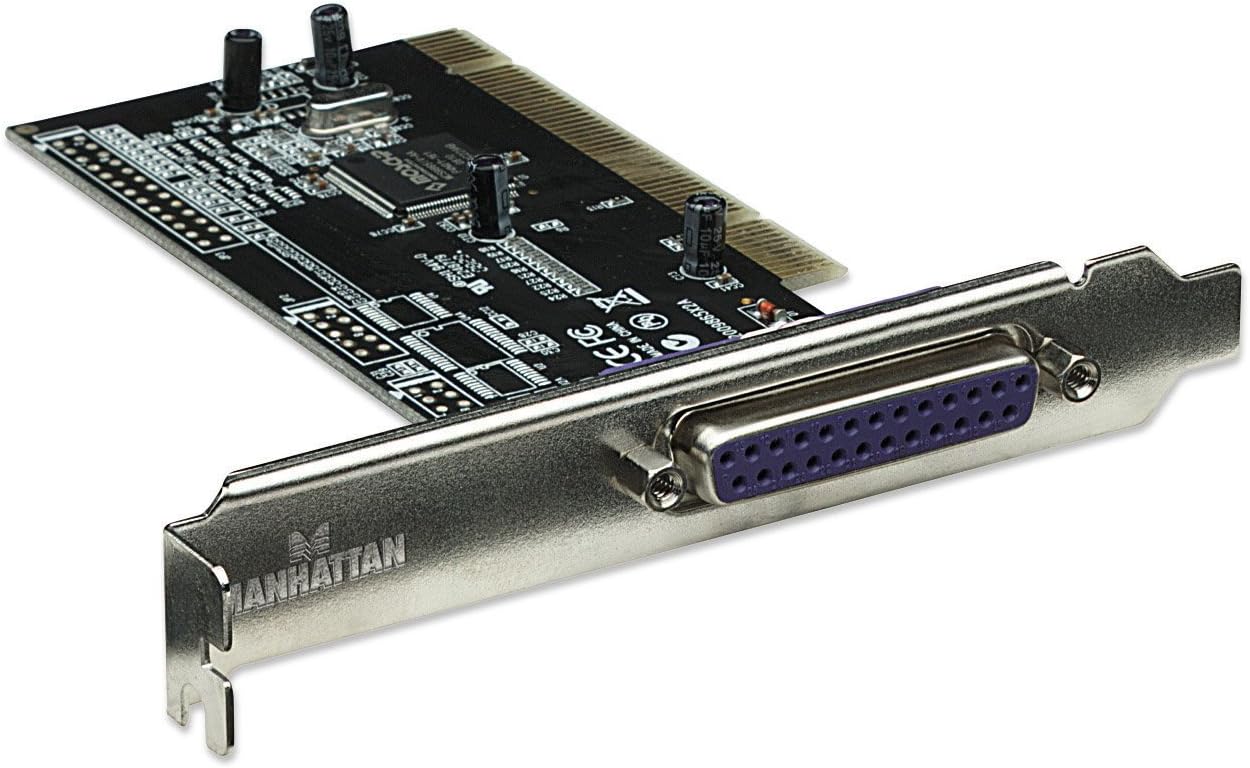
Figure 1: Front view of the Manhattan 158220 PCI Parallel Adapter Card, highlighting the DB25 port and the PCI connector.

Figure 2: Rear view of the adapter card, displaying the integrated circuits and the PCI interface pins.
4.3 Driver Installation
- Power on your computer.
- For most modern operating systems (e.g., Windows 7/8/10), the system should automatically detect the new hardware and install the necessary drivers. Allow the operating system to complete this process.
- If automatic driver installation fails or if you are using an older operating system, insert the provided driver CD into your computer's optical drive and follow the on-screen instructions. Alternatively, visit the Manhattan website for the latest drivers.
- After driver installation, it may be necessary to restart your computer for the changes to take effect.
5. Operating Instructions
Once the Manhattan 158220 PCI Parallel Adapter Card is successfully installed and its drivers are loaded, the parallel port will be available for use by your operating system and applications.
- Connect your parallel device: Plug the DB25 cable from your parallel peripheral (e.g., printer, scanner, CNC machine) into the DB25 port on the adapter card.
- Verify device recognition: Check your operating system's Device Manager (Windows) or equivalent utility to ensure the connected device is recognized and functioning correctly.
- Use with applications: Configure your software applications to use the newly installed parallel port for communication with your peripheral device.

Figure 3: Detailed view of the DB25 female connector on the adapter card's bracket.
6. Maintenance
The Manhattan 158220 PCI Parallel Adapter Card requires minimal maintenance. Follow these guidelines to ensure its longevity:
- Keep your computer's interior clean and free of dust to prevent overheating and component failure.
- Ensure proper airflow within your computer case.
- Avoid physical shock or excessive vibration to the computer.
- Do not attempt to repair the card yourself. Refer to the warranty information for service.
7. Troubleshooting
If you encounter issues with your Manhattan 158220 PCI Parallel Adapter Card, consider the following troubleshooting steps:
- Card Not Detected:
- Ensure the card is fully seated in the PCI slot.
- Try installing the card in a different PCI slot.
- Verify that your motherboard's BIOS settings allow for PCI device detection.
- Device Not Working:
- Confirm that the parallel device is properly connected to the card.
- Check the device's own power and connection status.
- Verify that the correct drivers for both the adapter card and the peripheral device are installed and up to date.
- Ensure your operating system is compatible with the card and the peripheral. Some older hardware may have limited compatibility with newer operating systems like Windows 11.
- Driver Issues:
- Uninstall existing drivers for the card from Device Manager and attempt a fresh installation.
- Download the latest drivers directly from the Manhattan website if the provided CD drivers are outdated or incompatible.
8. Specifications
| Product Name | 158220 1-port PCI Parallel Adapter |
| Model Number | 158220 |
| Brand | MANHATTAN |
| Hardware Interface | PCI |
| Ports | 1 x 25-pin DB-25 Female IEEE 1284 Parallel |
| Form Factor | Plug-in Card |
| Data Transfer Rate | Up to 1.5 MBps |
| Dimensions (H x W x D) | 4.8" x 4.9" x 0.9" (approximate) |
| Item Weight | 0.14 Pounds (approximate) |
| Compatible Devices | Personal Computer |
9. Warranty and Support
Manhattan products are designed for reliability and performance. This product may be covered by a lifetime warranty, as indicated by some user feedback. For specific warranty terms and conditions, please refer to the documentation included with your purchase or visit the official Manhattan website.
For technical support, driver downloads, or further assistance, please visit the Manhattan support website or contact their customer service department. Contact information can typically be found on the product packaging or the official brand website.

Figure 4: Manhattan brand logo.

