
1. Introduction
This manual provides essential information for the proper installation, operation, and maintenance of your VDO Temperature Sender, Model 323-478. This sensor is designed to accurately measure temperatures within a range of 32°F to 250°F (0°C to 120°C) and transmit an electrical signal to a compatible gauge or control unit. It features a 1/2-14 NPTF thread for secure mounting and a floating ground design for versatile electrical integration.
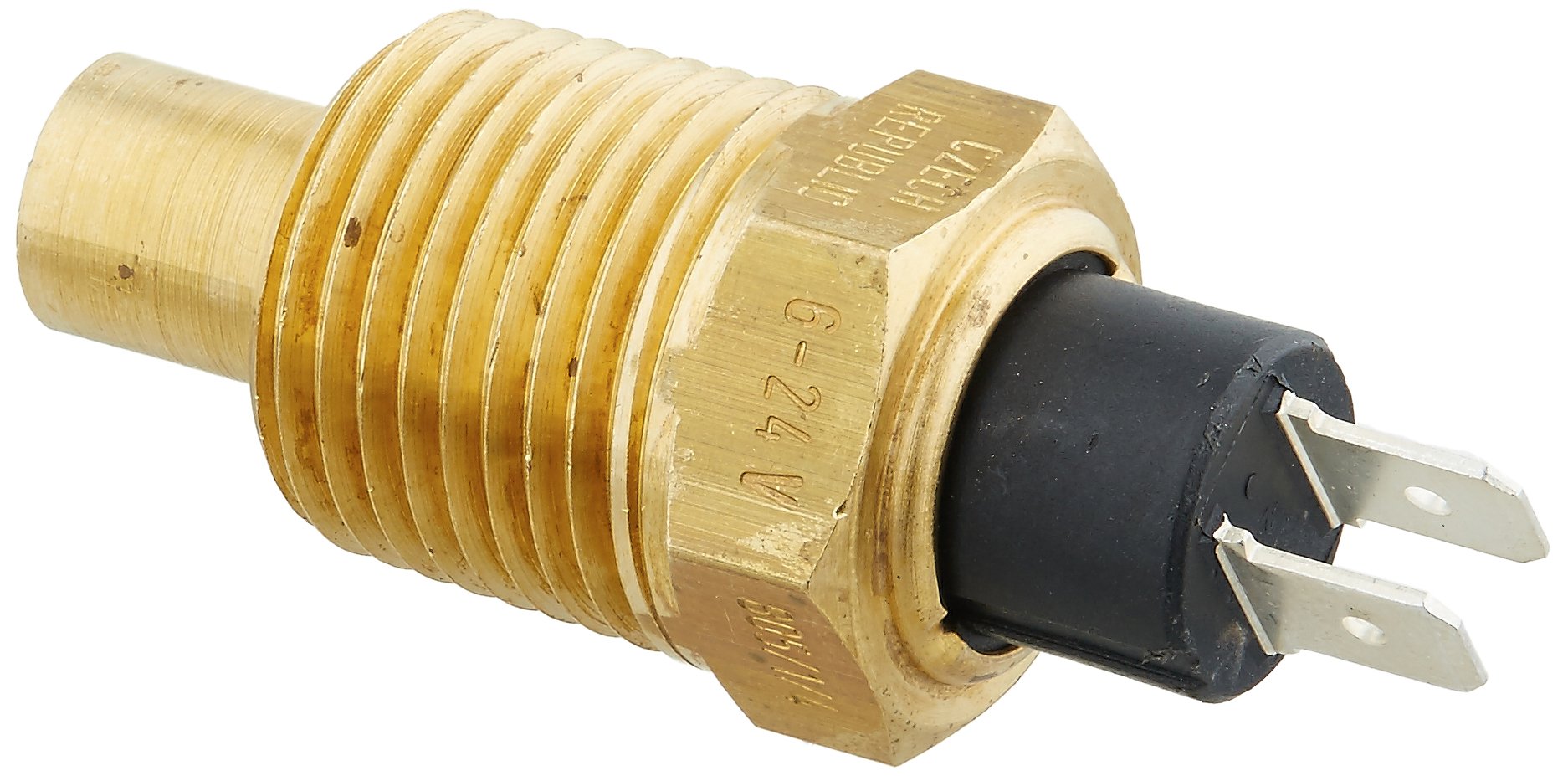
Figure 1: VDO Temperature Sender. A close-up view of the VDO Temperature Sender, showing its brass threaded body, hexagonal base, and the black electrical connector with two flat terminals. Markings 'CZECH REPUBLIC' and '6-24 V' are visible on the hexagonal part.
2. Specifications
| Attribute | Value |
|---|---|
| Brand | VDO |
| Model Name | 323-478 |
| Part Number | 323 478 |
| Measuring Range | 32°F - 250°F / 0°C - 120°C |
| Lower Temperature Rating | 120 Degrees Celsius |
| Upper Temperature Rating | 250 Degrees Fahrenheit |
| Mounting Type | Flange Mount (1/2-14 NPTF thread) |
| Output Type | Electrical Signal |
| Material | Plastic (connector), Brass (body) |
| Item Weight | 2.88 ounces |
| Item Dimensions (L x W x H) | 7.5 x 5 x 1 inches |
| Suggested Users | Unisex-Adult |
| UPC | 754059002972 |
3. Setup and Installation
Proper installation is crucial for the accurate and reliable operation of your VDO Temperature Sender. Always ensure safety precautions are followed.
3.1 Safety Precautions
- Disconnect the vehicle's battery or power source before beginning any electrical work.
- Allow the engine or system to cool down completely if installing in a hot environment (e.g., engine coolant system).
- Wear appropriate personal protective equipment (PPE), such as gloves and eye protection.
3.2 Mounting Location
Identify a suitable mounting location that provides an accurate temperature reading of the fluid or component you wish to monitor. This typically involves a threaded port in the engine block, cylinder head, radiator, or a dedicated temperature sensor adapter.
3.3 Mechanical Installation
- Ensure the mounting port is clean and free of debris.
- Apply a suitable thread sealant (e.g., PTFE tape or liquid thread sealant) to the 1/2-14 NPTF threads of the sender. This helps prevent leaks and ensures a good seal.
- Carefully thread the sender into the mounting port by hand to avoid cross-threading.
- Using an appropriate wrench on the hexagonal base, tighten the sender until snug. Do not overtighten, as this can damage the sender or the mounting port. Refer to the vehicle or system's service manual for specific torque specifications if available.
3.4 Electrical Connection
The VDO Temperature Sender features a floating ground design, meaning its electrical connection is isolated from the sender's body. This allows for flexible wiring configurations.
- Connect the appropriate wiring harness to the two flat terminals on the sender's electrical connector. Ensure a secure connection.
- Connect the other end of the wiring harness to your compatible temperature gauge or control unit, following its specific wiring diagram. Typically, one terminal connects to the gauge's signal input, and the other connects to a dedicated ground or the gauge's ground reference.
- Verify all connections are secure and properly insulated to prevent short circuits.
3.5 Post-Installation Check
- Reconnect the battery or power source.
- Start the engine or activate the system and check for any leaks around the sender's mounting point.
- Monitor the temperature gauge or display to ensure it is providing accurate and stable readings.
4. Operating Instructions
The VDO Temperature Sender operates by converting the measured temperature into a variable electrical resistance. This resistance change is then interpreted by a connected temperature gauge or electronic control unit (ECU) to display the temperature reading.
- Temperature Measurement: The sensor's internal thermistor changes its electrical resistance in response to temperature fluctuations.
- Signal Output: This resistance change generates a corresponding electrical signal (typically a voltage or current variation) that is sent to the connected display or control system.
- Compatibility: Ensure the connected gauge or ECU is compatible with the VDO sender's resistance curve for accurate readings. VDO gauges are designed to work seamlessly with VDO senders.
- Operating Voltage: The sender is designed to operate within a 6-24V electrical system.
Once installed and connected, the sender continuously provides temperature data as long as the system is powered and operating within its specified temperature range.
5. Maintenance
The VDO Temperature Sender is designed for long-term, reliable operation with minimal maintenance. However, periodic checks can help ensure its continued performance.
- Visual Inspection: Periodically inspect the sender and its wiring for any signs of physical damage, corrosion, or leaks around the mounting point.
- Electrical Connections: Ensure that the electrical connections to the sender remain clean, tight, and free of corrosion. Loose or corroded connections can lead to inaccurate readings or intermittent operation.
- Cleaning: If necessary, gently clean the exterior of the sender with a soft cloth. Avoid using harsh chemicals or abrasive materials that could damage the sensor or its housing.
- No User-Serviceable Parts: The VDO Temperature Sender contains no user-serviceable parts. Do not attempt to disassemble or repair the unit. If the sender is faulty, it should be replaced.
6. Troubleshooting
If you experience issues with your VDO Temperature Sender, refer to the following troubleshooting guide:
| Problem | Possible Cause | Solution |
|---|---|---|
| Inaccurate Temperature Reading |
|
|
| No Temperature Reading |
|
|
| Temperature Reading Stuck at Max/Min |
|
|
| Fluid Leak at Sender Mount |
|
|
If troubleshooting steps do not resolve the issue, it is recommended to consult a qualified technician or contact VDO customer support.
7. Warranty
This VDO Temperature Sender comes with a manufacturer's warranty. For specific details regarding the warranty period, coverage, and claims process, please refer to the warranty documentation included with your purchase or visit the official VDO website. Keep your proof of purchase for warranty claims.
8. Support
For technical assistance, product inquiries, or warranty support, please contact VDO customer service. You can typically find contact information on the official VDO website or through your product retailer.
When contacting support, please have the following information ready:
- Product Model: 323-478
- Product UPC: 754059002972
- Date of Purchase
- Detailed description of the issue
