
Introduction
This manual provides essential information for the proper installation, operation, and maintenance of the MEI 5764 A/C Compressor. This compressor is designed for Peterbilt trucks and utilizes a Sanden-style configuration. Adhering to these instructions will help ensure optimal performance and longevity of the unit.
For safety and proper function, it is highly recommended that installation and any complex maintenance procedures be performed by a qualified automotive air conditioning technician.
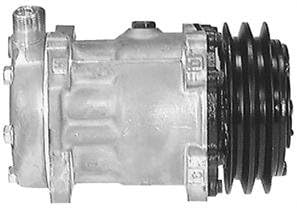
This image displays the MEI 5764 A/C Compressor. It features a robust metal housing and a multi-ribbed pulley on one end, designed for belt drive. The compressor includes ports for refrigerant lines and mounting points for secure installation in a vehicle's air conditioning system.
Safety Information
- Always wear appropriate personal protective equipment (PPE), including safety glasses and gloves, when working with automotive air conditioning systems.
- Refrigerants are under high pressure and can cause severe injury or frostbite. Do not attempt to open or disconnect refrigerant lines without proper training and equipment to safely discharge the system.
- Ensure the vehicle's battery is disconnected before beginning any installation or maintenance work to prevent electrical hazards.
- Work in a well-ventilated area.
- Refer to the vehicle manufacturer's service manual for specific procedures and torque specifications.
Setup and Installation
Installation of an A/C compressor requires specialized tools and knowledge of automotive air conditioning systems. Professional installation is strongly recommended.
General Installation Steps:
- System Evacuation: Before removing the old compressor, the A/C system must be properly evacuated of all refrigerant by a certified technician using approved recovery equipment.
- Disconnect Battery: Disconnect the negative terminal of the vehicle's battery.
- Remove Old Compressor: Disconnect electrical connectors, refrigerant lines, and mounting bolts from the old compressor. Carefully remove the old unit.
- Inspect System Components: Inspect other A/C system components (condenser, evaporator, expansion valve/orifice tube, receiver/drier) for damage or contamination. It is often recommended to replace the receiver/drier or accumulator and expansion device when replacing the compressor.
- Install New Compressor: Mount the MEI 5764 compressor in its designated location, ensuring all mounting bolts are torqued to the vehicle manufacturer's specifications. Connect refrigerant lines with new O-rings, ensuring they are properly lubricated with compatible A/C oil. Connect electrical connectors.
- Add A/C Oil: Add the correct type and amount of A/C compressor oil as specified by the vehicle manufacturer or compressor specifications.
- Vacuum System: Evacuate the entire A/C system using a vacuum pump to remove air and moisture. Maintain a deep vacuum for at least 30-60 minutes.
- Recharge System: Recharge the system with the correct type and amount of refrigerant (e.g., R-134a) according to the vehicle manufacturer's specifications.
- Leak Test: Perform a leak test using an electronic leak detector or UV dye to ensure there are no refrigerant leaks.
- Reconnect Battery: Reconnect the vehicle's battery.
Operating
Once properly installed and charged, the MEI 5764 A/C Compressor operates automatically as part of the vehicle's air conditioning system. When the A/C system is activated by the vehicle's controls, the compressor clutch engages, allowing the compressor to circulate refrigerant. Ensure the vehicle's engine is running and the A/C system is turned on to verify proper operation.
Listen for any unusual noises during operation and observe the cooling performance. Consistent and adequate cooling indicates proper function.
Maintenance
Regular maintenance of your vehicle's A/C system, including the compressor, is crucial for optimal performance and longevity.
- Regular System Checks: Periodically inspect the compressor and its connections for any signs of leaks (oily residue), corrosion, or damage.
- Refrigerant Level: Have the refrigerant level checked annually by a qualified technician. Low refrigerant can lead to compressor overwork and failure.
- Drive Belt Inspection: Check the serpentine belt that drives the compressor for proper tension, cracks, or wear. Replace if necessary according to vehicle manufacturer recommendations.
- Condenser Cleaning: Ensure the condenser (located in front of the radiator) is free of debris (leaves, dirt, bugs) to allow for efficient heat exchange.
- Cabin Air Filter: Replace the cabin air filter regularly to maintain good airflow and prevent strain on the A/C system.
Troubleshooting
If you experience issues with your A/C system, consider the following common problems and potential causes. For complex issues, consult a professional technician.
| Symptom | Possible Cause | Action |
|---|---|---|
| No cold air | Low refrigerant charge, faulty compressor clutch, electrical issue, clogged expansion valve/orifice tube. | Check refrigerant level, inspect clutch engagement, verify electrical connections. Professional diagnosis recommended. |
| Weak cooling | Slightly low refrigerant, dirty condenser, failing compressor, restricted airflow. | Check refrigerant, clean condenser, inspect cabin air filter. |
| Unusual noise from compressor | Low A/C oil, internal compressor failure, loose mounting, worn clutch bearing. | Have system inspected immediately by a professional to prevent further damage. |
| Compressor clutch not engaging | Low refrigerant pressure (safety switch), electrical fault, faulty clutch coil, seized compressor. | Check refrigerant pressure, inspect electrical connections and fuses. Professional diagnosis. |
Specifications
- Brand: MEI
- Model Number: 5764
- Manufacturer Part Number: 5764
- Item Weight: Approximately 18 pounds
- ASIN: B002BB7T3M
- Style: Sanden Style
- Application: Peterbilt Truck A/C Systems
Warranty and Support
Specific warranty details and direct support contact information for the MEI 5764 A/C Compressor are not provided within this document. For warranty claims, technical support, or further assistance, please refer to the original purchase documentation or contact the seller or manufacturer directly.