
1. Introduction
This instruction manual provides essential information for the safe and efficient operation, setup, maintenance, and troubleshooting of your Einhell BG-SP 250 submersible pump. Please read this manual thoroughly before using the pump for the first time. Keep this manual in a safe place for future reference.
The Einhell BG-SP 250 is designed for pumping clear or slightly contaminated water from various sources such as ponds, wells, or flooded basements. It is not suitable for pumping corrosive, flammable, or explosive liquids, nor for drinking water.
2. Safety Instructions
Always observe the following safety precautions to prevent injury or damage:
- Ensure the pump is connected to a properly grounded power outlet with a residual current device (RCD) having a tripping current of no more than 30 mA.
- Never operate the pump without water. Dry running can cause severe damage.
- Do not lift or transport the pump by its power cable. Use the integrated carrying handle or a suitable rope attached to it.
- Keep children and unauthorized persons away from the operating pump.
- Before any maintenance or cleaning, always disconnect the pump from the power supply.
- Do not pump liquids with temperatures exceeding 35°C (95°F).
- Regularly inspect the power cable and plug for damage. Do not use a damaged cable.
3. Setup
3.1 Unpacking
Carefully remove the pump and all accessories from the packaging. Check for any signs of transport damage. Dispose of packaging materials responsibly.
3.2 Connecting the Discharge Hose
Attach a suitable discharge hose to the pump's pressure connection. Ensure a tight and secure fit to prevent leaks. The pump is equipped with a universal connection for various hose sizes.
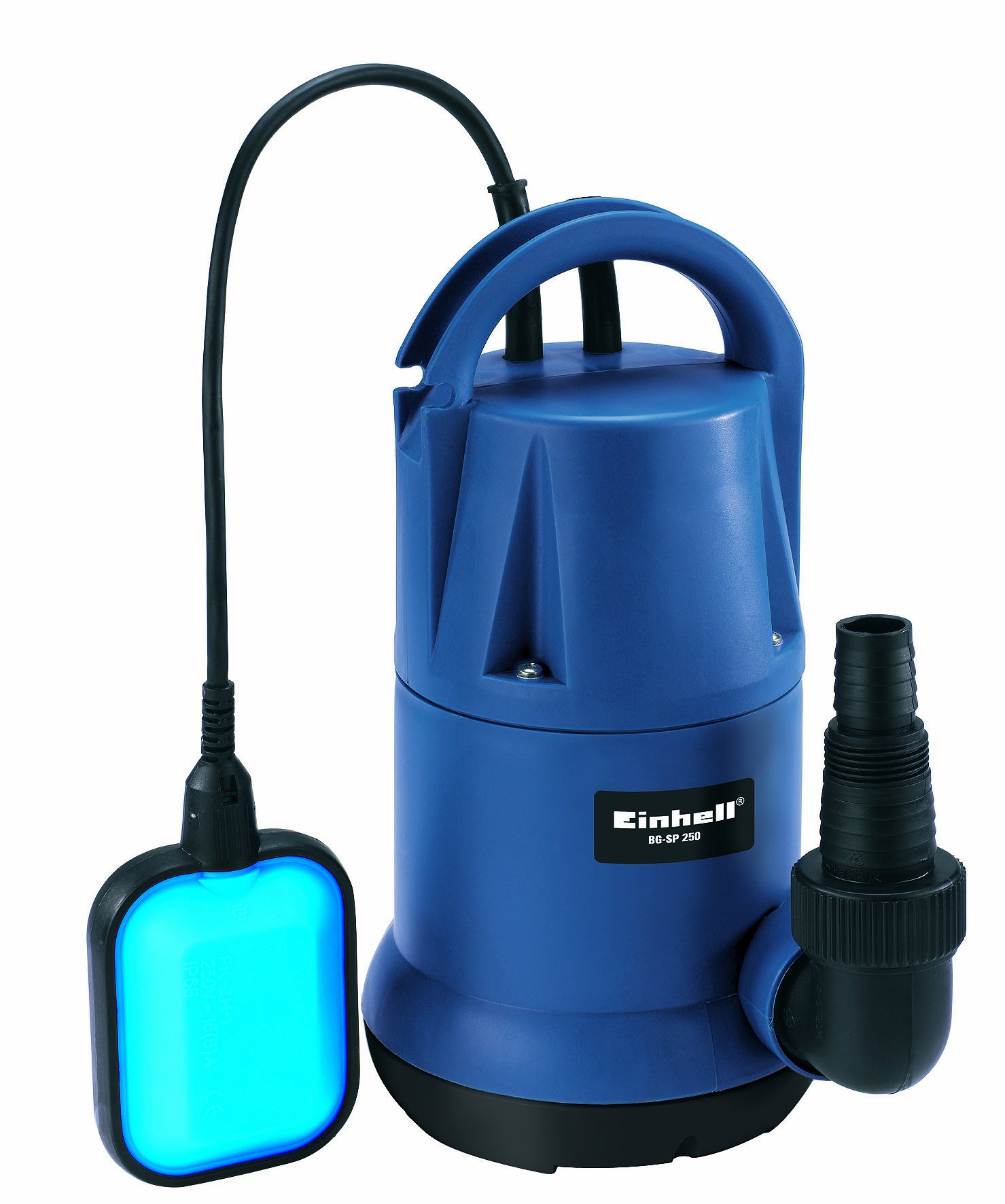
Figure 1: The Einhell BG-SP 250 submersible pump, illustrating the main body and the discharge outlet where a hose would be connected. This image shows the robust construction and the general appearance of the pump, ready for hose attachment.
3.3 Electrical Connection
Connect the pump's power plug to a grounded electrical outlet. Ensure the voltage matches the pump's specifications (230V ~ 50Hz). The use of an RCD is mandatory for safety.
3.4 Placement of the Pump
Place the pump on a stable, level surface in the water. Ensure the suction opening is clear of debris. The pump must be fully submerged for proper operation. For automatic operation, ensure the float switch can move freely.
4. Operating the Pump
4.1 Starting the Pump
Once the pump is correctly positioned and connected, plug it into the power outlet. If the float switch is set to automatic mode, the pump will start when the water level rises sufficiently to lift the float switch. For manual operation (if available), ensure the float switch is secured in an upward position.
4.2 Monitoring Operation
During operation, regularly check the discharge flow and listen for any unusual noises. Ensure the pump remains submerged and the water level does not drop below the minimum operating level to prevent dry running.
4.3 Stopping the Pump
In automatic mode, the pump will stop when the water level drops and the float switch falls to its lowest position. To stop the pump manually, simply unplug it from the power outlet.
5. Maintenance
Always disconnect the pump from the power supply before performing any maintenance or cleaning tasks.
5.1 Cleaning the Pump
After each use, especially when pumping dirty water, rinse the pump thoroughly with clean water. Remove any debris or foreign objects that may have accumulated around the suction opening or the impeller area. A soft brush can be used for stubborn dirt.
5.2 Checking for Wear
Periodically inspect the power cable, plug, and pump housing for any signs of damage or wear. Check the float switch for free movement. If any damage is found, do not use the pump and contact qualified service personnel.
5.3 Winter Storage
Before the first frost, thoroughly clean the pump and drain all water from it. Store the pump in a frost-free, dry place. Do not allow water to freeze inside the pump, as this can cause irreparable damage.
6. Troubleshooting
| Problem | Possible Cause | Solution |
|---|---|---|
| Pump does not start | No power supply Float switch not activated Impeller blocked | Check power connection and RCD Ensure water level is sufficient or manually lift float switch Disconnect power, clean impeller area |
| Low pumping capacity | Suction opening blocked Hose kinked or too small Air in the pump | Disconnect power, clean suction area Check hose for kinks, use appropriate diameter Ensure pump is fully submerged and vent if necessary |
| Pump runs but no water is discharged | Pump not fully submerged Air lock Discharge hose blocked | Ensure pump is fully in water Tilt pump slightly to release air Check and clear discharge hose |
| Pump stops unexpectedly | Thermal overload protection activated Float switch dropped due to low water level | Allow pump to cool down, check for blockages Check water level, ensure float switch moves freely |
7. Technical Specifications
- Brand: Einhell
- Model: BG-SP 250
- Material: Stainless steel (drive shaft)
- Power Source: Corded Electric
- GTIN: 04006825549355
- Manufacturer: Einhell
- Feature: Powerful pump with stainless steel drive shaft
Note: Specific performance data such as motor power, max. flow rate, and max. delivery height can be found on the product label or original packaging.
8. Warranty and Support
Einhell products are manufactured to high-quality standards and undergo strict quality controls. This product is covered by a manufacturer's warranty. Please refer to the warranty card included with your product for specific terms and conditions, including the warranty period and claim procedures.
For technical support, spare parts, or warranty claims, please contact your authorized Einhell dealer or visit the official Einhell website for customer service contact information. When contacting support, please have your model number (BG-SP 250) and GTIN (04006825549355) ready.


