
Kimball B0018PWIV0
Kimball Swinger Organ Course Part One: Performance Guide
A Beautiful Way To Express Yourself
Introduction
Welcome to the Kimball Swinger Organ Course Part One: Performance Guide. This comprehensive sheet music book is designed to help you explore and master the art of playing the Kimball Swinger Organ. It provides a structured approach to learning, featuring a collection of popular songs and guidance on performance techniques.
This guide is intended for organ enthusiasts looking to enhance their musical skills and express themselves through the unique sound of the Swinger Organ. It focuses on practical application and enjoyment of music.
Getting Started
Before you begin, ensure you have access to a Kimball Swinger Organ or a compatible electronic organ. While this guide is designed to be accessible, a basic understanding of music notation (notes, rhythms, clefs) will be beneficial for a smoother learning experience.
- Organ Setup: Ensure your organ is properly powered on and all connections (speakers, pedals) are secure.
- Comfortable Environment: Choose a quiet space where you can practice without distractions. Adjust your seating to a comfortable height relative to the organ keys and pedals.
- Familiarize Yourself: Briefly review the layout of your organ, including the keyboard, drawbars/tabs, and pedalboard.
Understanding the Guide
This performance guide is structured to lead you through various musical pieces, building your skills progressively. Each song includes standard sheet music notation, often with specific instructions or suggestions for Swinger Organ settings.
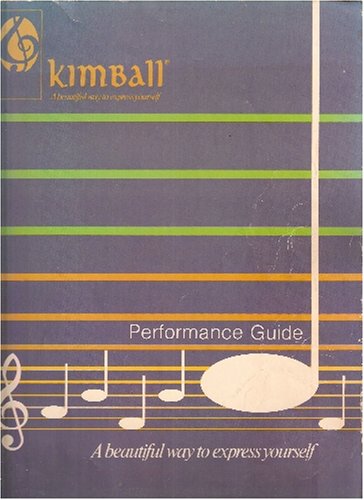
Image: Front cover of the Kimball Swinger Organ Course Part One: Performance Guide. The cover is dark blue with horizontal green and yellow lines. The Kimball logo and title "Performance Guide" are prominently displayed. A musical staff with a treble clef and several notes, including a large whole note, is at the bottom.
- Notation: Standard musical notation is used for melody, harmony, and rhythm. Pay attention to key signatures, time signatures, and dynamics.
- Organ Settings: Where applicable, specific organ settings (e.g., vibrato, sustain, specific voices) may be suggested to achieve the intended sound for a piece. Experiment with these settings to find what sounds best on your instrument.
- Fingerings and Pedaling: Some pieces may include suggested fingerings or pedal markings to assist with execution.
Performance Techniques
To get the most out of this guide, consider the following performance tips:
- Start Slowly: Begin practicing new pieces at a slow tempo, focusing on accuracy of notes and rhythm. Gradually increase speed as you become more comfortable.
- Section by Section: Break down longer pieces into smaller, manageable sections. Master each section before combining them.
- Listen Actively: Pay attention to the sound you are producing. Adjust your touch, dynamics, and organ settings to achieve the desired musical expression.
- Use Pedals: If your organ has a pedalboard, integrate its use as indicated or as appropriate for the piece to add depth and bass.
- Rhythm and Timing: Use a metronome to develop a steady sense of rhythm and improve your timing.
Song List and Practice Tips
This guide features 20 songs designed to enhance your playing experience. The selection includes a variety of styles to broaden your repertoire.
Included Songs:
- Merrily We Roll Along
- Marianne
- Kumbaya
- Snowbird
- When the Saints Go Marching In
- Tourelay
- Born to Lose
- Down in the Valley
- Ramblin' Rose
- Swanee River
- Aura Lee
- And many more...
Practice Tips:
- Consistency is Key: Regular, even short, practice sessions are more effective than infrequent long ones.
- Set Goals: For each practice session, set specific, achievable goals, such as mastering a particular measure or improving a specific technique.
- Record Yourself: Occasionally record your playing and listen back. This can help you identify areas for improvement.
- Enjoy the Process: Remember that learning music should be an enjoyable journey. Celebrate your progress and have fun!
Care and Storage
To ensure the longevity of your Kimball Swinger Organ Course Part One: Performance Guide, follow these care instructions:
- Handle with Care: Turn pages gently to avoid tearing or creasing.
- Storage: Store the book flat or upright on a bookshelf in a cool, dry place away from direct sunlight and excessive humidity.
- Avoid Spills: Keep liquids away from the book to prevent damage to the paper and ink.
- Cleanliness: Keep your hands clean when handling the book to prevent smudges and dirt accumulation.
Product Specifications
| Attribute | Detail |
|---|---|
| Title | Kimball Swinger Organ Course Part One: Performance Guide (A Beautiful Way To Express Yourself) |
| Author/Brand | Kimball |
| Format | Sheet music |
| Publisher | Hal Leonard |
| Publication Date | January 1, 1977 |
| Language | English |
| Print Length | 96 pages |
| Item Weight | 0.353 ounces |
| ASIN (Model) | B0018PWIV0 |
Support and Additional Resources
For further assistance or inquiries regarding this publication, please contact the publisher, Hal Leonard. Specific warranty information for sheet music is typically not applicable, as it is a consumable educational product.
Consider exploring other volumes in the Kimball Swinger Organ Course series to continue your musical journey.
Ask a question about this manual
Ask about setup, troubleshooting, compatibility, parts, safety, or missing instructions. Manuals+ will review the question and use this page’s manual context to help answer it.