
Introduction
This owner's manual is designed to provide 1999 Ford F-250 and F-350 truck owners with essential information regarding the safe operation, proper maintenance, and general care of their vehicle. Familiarizing yourself with the contents of this manual will help ensure a safe driving experience and prolong the life of your truck.
Please read this manual thoroughly and keep it in your vehicle for quick reference. It contains important details about your truck's features, controls, and recommended service schedules.
Safety Information
Your safety and the safety of your passengers are paramount. This section outlines critical safety precautions and features of your Ford F-250/F-350.
- Seat Belts: Always ensure all occupants are properly restrained with seat belts.
- Airbags: Understand the location and function of the airbag system. Do not place objects over airbag deployment areas.
- Child Safety: Use appropriate child safety seats and restraints as per local regulations and manufacturer guidelines.
- Driving Safely: Always adhere to traffic laws, maintain a safe distance from other vehicles, and avoid distractions while driving.
- Vehicle Warnings: Pay attention to dashboard warning lights and messages. Consult the troubleshooting section or a qualified technician if a warning light illuminates.
Vehicle Overview and Controls
This section provides an overview of your truck's interior and exterior features, including the dashboard layout, steering wheel controls, and various switches.
Dashboard Layout
Familiarize yourself with the instrument cluster, including the speedometer, tachometer, fuel gauge, and temperature gauge. Understand the function of each indicator light.
Steering Wheel Controls
Learn about the controls located on your steering wheel, which may include cruise control, horn, and audio system adjustments.
Lighting and Wipers
Understand how to operate the headlights, turn signals, hazard lights, and windshield wipers for various conditions.
Operating Your Vehicle
Detailed instructions for starting, driving, and parking your 1999 Ford F-250 or F-350.
Starting the Engine
- Ensure the transmission is in Park (P) or Neutral (N).
- Insert the key into the ignition and turn it to the START position.
- Release the key once the engine starts.
Transmission Operation
Understand the different gear selections for automatic and manual transmissions, including Drive (D), Reverse (R), Neutral (N), and Park (P).
Braking System
Information on the proper use of the foot brake and parking brake. Ensure regular inspection of brake fluid levels and pad wear.
Maintenance Schedule
Regular maintenance is crucial for the longevity and performance of your Ford truck. Adhere to the recommended service intervals.
| Service Item | Interval (Approx.) |
|---|---|
| Engine Oil and Filter Change | Every 3,000 - 5,000 miles or 3-6 months |
| Tire Rotation | Every 5,000 - 7,500 miles |
| Air Filter Inspection/Replacement | Every 15,000 - 30,000 miles |
| Brake System Inspection | Every 12,000 miles or 12 months |
| Fluid Level Checks (Coolant, Brake, Power Steering, Washer) | Monthly or every fuel fill-up |
Note: Always refer to the detailed maintenance schedule within your physical owner's manual for precise intervals based on your driving conditions.
Troubleshooting Common Issues
This section addresses common problems you might encounter with your truck and provides basic solutions.
- Engine Won't Start: Check battery terminals, ensure transmission is in Park/Neutral, check fuel level.
- Warning Light On: Consult the manual for specific light meanings. Do not ignore critical warnings like oil pressure or temperature.
- Flat Tire: Instructions for safely changing a flat tire, including locating the spare tire and jack.
- Overheating: Pull over safely, turn off the engine, and allow it to cool. Do not open the radiator cap when hot.
For complex issues, it is recommended to consult a certified Ford service technician.
Specifications
Key specifications for the 1999 Ford F-250 and F-350 models. These values are general and may vary based on specific configurations (e.g., engine type, drivetrain, body style).
- Engine Options: Typically V8 gasoline (e.g., 5.4L Triton, 6.8L Triton) or V8 diesel (e.g., 7.3L Power Stroke).
- Transmission: Manual or Automatic.
- Drivetrain: 2WD (Two-Wheel Drive) or 4WD (Four-Wheel Drive).
- Fuel Tank Capacity: Varies by model and wheelbase, typically ranging from 29 to 38 gallons.
- Towing Capacity: Varies significantly by configuration, engine, and hitch type. Refer to your specific vehicle's documentation.
- Dimensions: Length, width, and height vary by cab style (Regular Cab, SuperCab, Crew Cab) and bed length.
For precise specifications for your particular vehicle, consult the original owner's manual or your vehicle's documentation.
Product Image
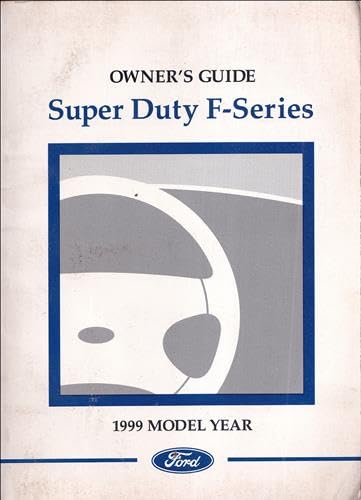
Image: Front cover of the official 1999 Ford F-250 F-350 Owners Manual. The cover typically features the Ford logo and the title of the manual, providing a visual reference for the document itself.