
Philco Training Manual on Shop Practices
Philco Training Manual on Shop Practices
Comprehensive Guide to Essential Shop Practices
Introduction
This manual serves as a foundational guide to essential shop practices, designed for individuals seeking to understand and apply fundamental techniques in a workshop environment. It covers a range of topics from basic safety to advanced troubleshooting, ensuring a comprehensive learning experience.
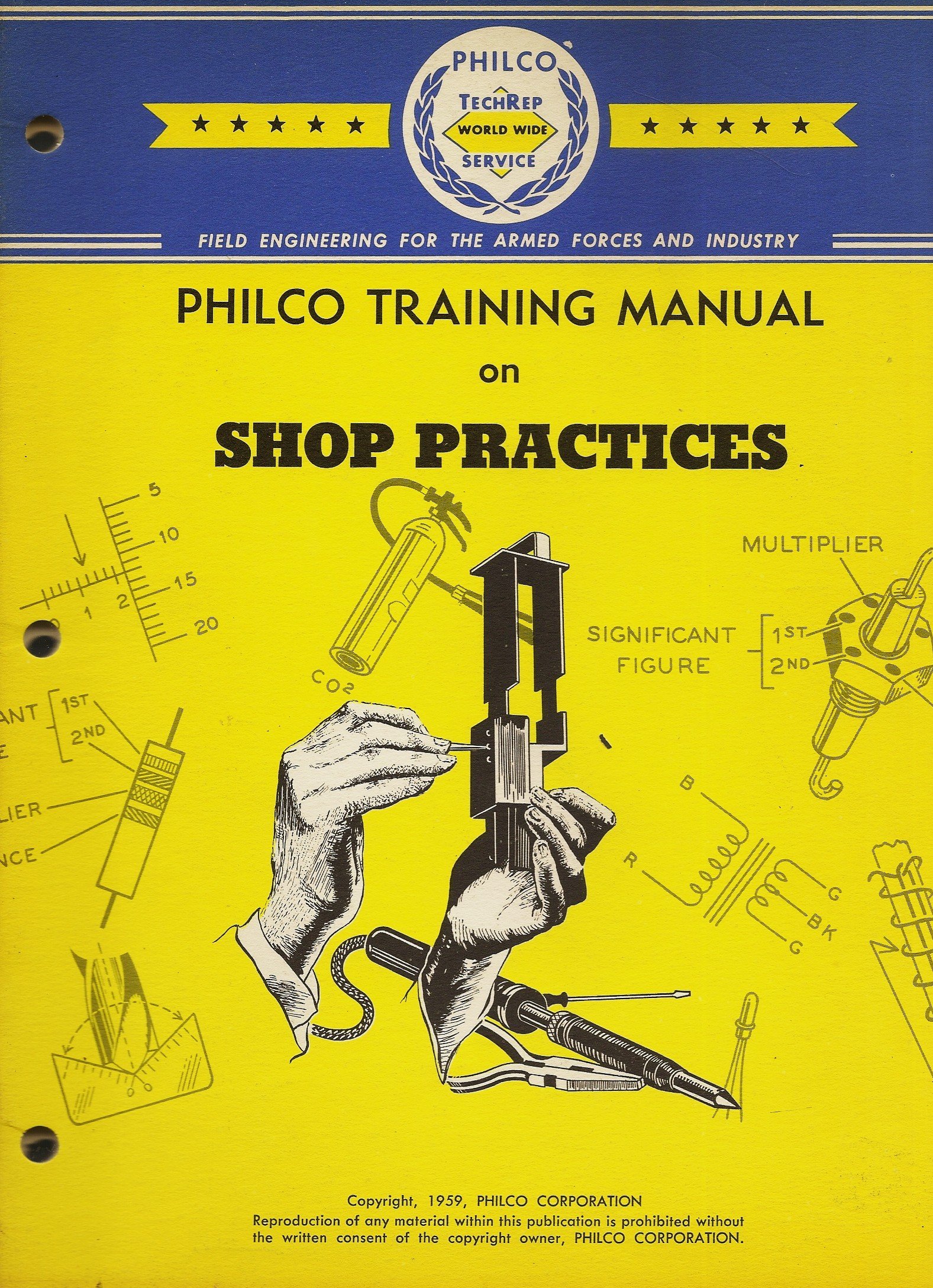
Image: Front cover of the Philco Training Manual on Shop Practices. This image displays the title and a classic design, indicating the manual's focus on practical skills.
Setup: Preparing Your Workspace
Before commencing any work, it is crucial to establish a safe and organized workspace. This section outlines the initial steps for setting up your shop environment.
General Shop Safety Precautions
- Ensure adequate lighting and ventilation.
- Keep the workspace clean and free of clutter.
- Wear appropriate personal protective equipment (PPE), such as safety glasses and gloves.
- Familiarize yourself with the location of emergency exits and first-aid kits.
- Understand the operation and safety features of all machinery and tools before use.
Operating: Tool Usage and Techniques
This section details the correct handling and application of various tools and techniques essential for shop practices.
Care and Use of Common Hand Tools
Proper care extends tool life and ensures safe operation. Always select the correct tool for the task.
- Wrenches: Use the correct size to prevent slippage and damage.
- Screwdrivers: Match the tip to the screw head to avoid stripping.
- Pliers: Select the appropriate type for gripping, cutting, or bending.
- Hammers: Ensure a firm grip and strike squarely.
Special Tools for Drilling, Tapping, Threading, and Punching
These specialized tools require specific techniques for accurate and safe use.
- Drills: Secure the workpiece, select the correct drill bit, and apply steady pressure.
- Taps and Dies: Use appropriate cutting fluid and turn slowly to create threads.
- Punches: Mark the center accurately before punching.
Measuring Tools and Gauges
Accuracy in measurement is paramount for quality work.
- Calipers: Learn to read both vernier and digital calipers for precise internal and external measurements.
- Micrometers: Understand how to use micrometers for highly accurate small measurements.
- Rulers and Tapes: Ensure proper alignment and avoid parallax errors.
Soldering Irons
Effective soldering requires a clean tip, proper temperature, and good technique.
- Heat the joint, not the solder.
- Apply solder to the heated joint, allowing it to flow evenly.
- Ensure good ventilation to avoid inhaling fumes.
Wire Stripping, Cable Wiring, and Chassis Construction
These skills are fundamental for electrical and electronic assembly.
- Wire Stripping: Use the correct gauge stripper to avoid damaging wire strands.
- Cable Wiring: Follow wiring diagrams carefully, ensuring secure connections.
- Chassis Construction: Plan layout, drill holes accurately, and ensure structural integrity.
Maintenance: Care of Equipment
Regular maintenance ensures the longevity and reliability of your tools and test equipment.
Care and Use of Basic Test Equipment
- Multimeters: Store in a dry place, replace batteries as needed, and use correct range settings.
- Power Supplies: Avoid overloading and ensure proper ventilation.
- Signal Generators: Handle with care, protect from dust and moisture.
Care and Use of Advanced Test Equipment
- Oscilloscopes: Calibrate regularly, protect probes, and avoid static discharge.
- Spectrum Analyzers: Follow manufacturer guidelines for operation and storage.
- Logic Analyzers: Ensure proper connection and power sequencing.
Troubleshooting Techniques
Systematic troubleshooting is key to identifying and resolving issues efficiently.
- Define the Problem: Clearly describe the symptoms and conditions under which the problem occurs.
- Gather Information: Collect data, check schematics, and review previous work.
- Isolate the Cause: Systematically test components or sections to narrow down the fault.
- Implement Solution: Repair or replace faulty parts.
- Verify Repair: Test the system to ensure the problem is resolved and no new issues have been introduced.
Specifications
This section provides key details about the manual itself.
| Title | Philco Training Manual on Shop Practices |
| Author/Publisher | Philco Corporation |
| Publication Date | January 1, 1959 |
| Language | English |
| ASIN | B000ZAH3AA |
Warranty Information
As this product is a training manual, it does not typically come with a traditional product warranty. However, if you purchased this manual from a retailer and received a damaged or incorrect copy, please refer to the retailer's return and exchange policy. For issues related to the content or publication, please contact the publisher directly.
Support and Contact
For further inquiries regarding the content of this manual or for general support, please contact the original publisher:
Publisher: Philco Corporation
Please note that contact information for a publication from 1959 may be outdated. We recommend searching for current contact details for Philco Corporation or its successors for the most up-to-date information.
Ask a question about this manual
Ask about setup, troubleshooting, compatibility, parts, safety, or missing instructions. Manuals+ will review the question and use this page’s manual context to help answer it.