1. Product Overview
The OTC 2510A Stinger Air/Hydraulic Pump is a foot-operated unit designed to provide up to 10,000 PSI of hydraulic pressure. It utilizes shop air as its energy source, making it suitable for various automotive and industrial applications, including operating hydraulic rams, presses, and pullers. This pump features a robust design with a 98 cubic inch usable oil capacity and a two-stage release mechanism for controlled ram return.
Key Features:
- Generates 10,000 PSI hydraulic pressure at 100 PSI air pressure.
- Foot pedal control for pumping, holding, and releasing loads.
- Integrated internal relief valve protects hydraulic components.
- Two-stage release mechanism for fast or metered ram return.
- 98 cubic inch usable oil capacity.
- Equipped with a 3/8 NPT oil port and 1/4 inch NPT air inlet.

2. Safety Information
WARNING: To avoid personal injury or damage to equipment, read, understand, and follow all safety precautions and operating instructions before using this pump. Failure to do so may result in serious injury or property damage.
General Safety Precautions:
- Always wear eye protection that meets ANSI Z87.1 and OSHA requirements.
- Before operating the pump, tighten all hose connections using proper tools. Do not overtighten.
- Do not exceed the PSI hydraulic pressure rating or tamper with the internal high-pressure relief valve.
- Before operating, check the oil level. Maintain the system to prevent overfilling the pump reservoir.
- Bleed air from the system to reduce hydraulic shock.
- Shut off and disconnect air supply when pump is not in use or before breaking any connection in the system.
- Ensure the pump is placed on a stable, level surface during operation.
- Keep hands and feet clear of moving parts and hydraulic lines during operation.

3. Components and Controls
Familiarize yourself with the main components and controls of the OTC 2510A pump before operation.
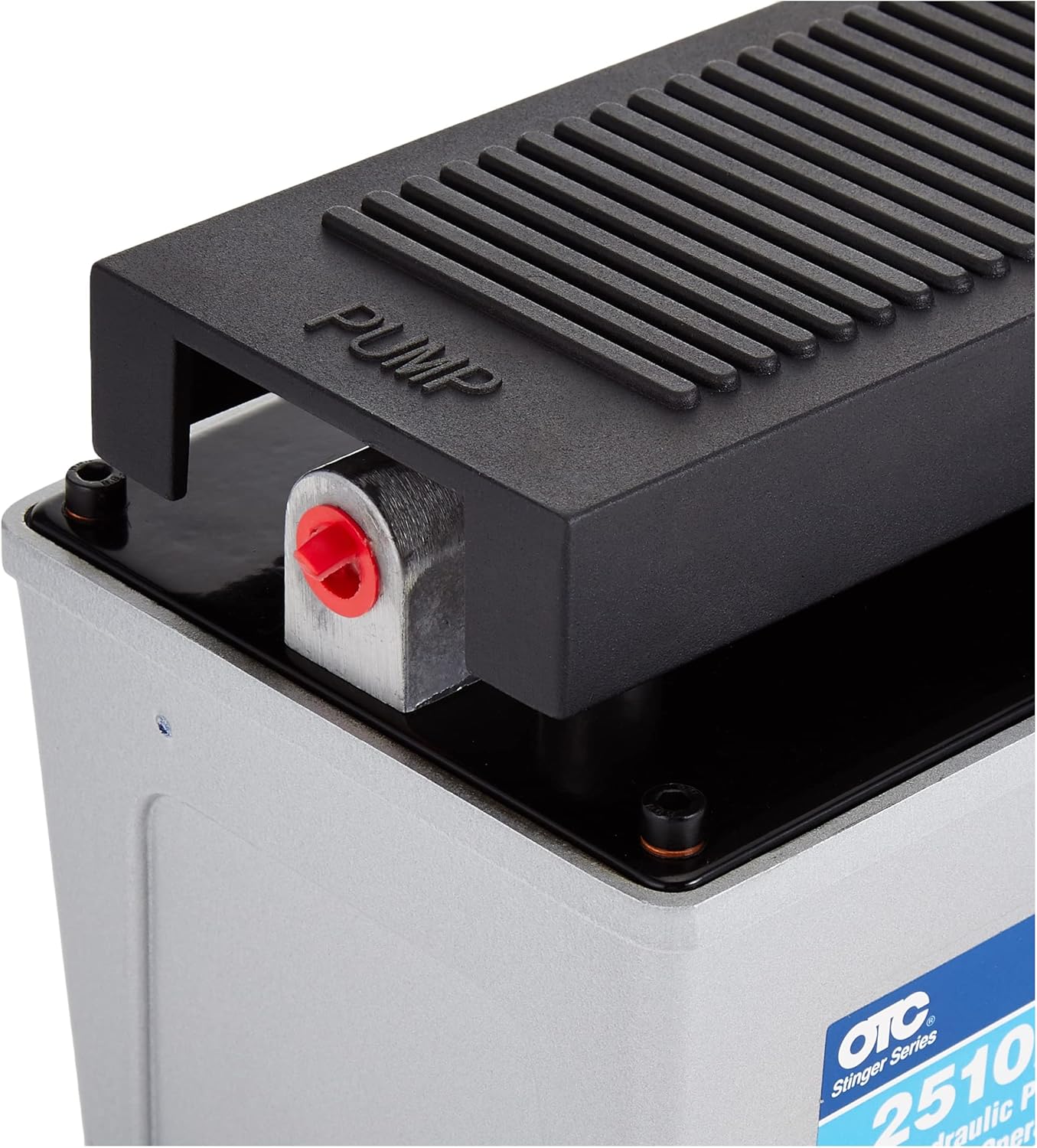
- Pump Pedal: The larger pedal used to actuate the pump and build hydraulic pressure.
- Release Pedal: The smaller pedal used to release hydraulic pressure and retract the ram.
- Air Inlet: Connection point for the compressed air supply (1/4 inch NPT).
- Hydraulic Outlet: Connection point for hydraulic lines to rams, presses, or pullers (3/8 NPT oil port).
- Oil Fill/Level Plug: Used for checking and adding hydraulic fluid.

4. Setup
Proper setup is crucial for safe and efficient operation of the hydraulic pump.
4.1 Air Supply Connection
- Ensure the air supply is turned off before connecting.
- Connect a compressed air line to the 1/4 inch NPT air inlet port on the pump.
- The pump requires a minimum of 9 CFM at 100 PSI air pressure for optimal performance.
- Use appropriate fittings and ensure all connections are secure to prevent air leaks.
4.2 Hydraulic Line Connection
- Connect the hydraulic hose from your ram, press, or puller to the 3/8 NPT oil port on the pump.
- Ensure all hydraulic connections are tight and free from leaks.
- Verify that the hydraulic system is rated for 10,000 PSI to prevent damage.
4.3 Checking Hydraulic Fluid Level
- Before first use and periodically thereafter, check the hydraulic fluid level.
- Refer to the pump's oil fill/level plug location.
- If fluid is low, add high-quality hydraulic oil suitable for 10,000 PSI systems. Do not overfill.
5. Operation
Follow these steps for safe and effective operation of the OTC 2510A pump.
5.1 Building Pressure
- Ensure all connections are secure and the air supply is connected and turned on.
- Place your foot on the pump pedal (the larger pedal).
- Press down on the pump pedal repeatedly to build hydraulic pressure and extend the ram.
- Continue pumping until the desired pressure is reached or the ram has fully extended.
5.2 Holding Pressure
Once the desired pressure is achieved, simply remove your foot from the pump pedal. The internal check valve will hold the pressure in the hydraulic system.
5.3 Releasing Pressure
The pump features a two-stage release mechanism for controlled ram retraction.
- Place your foot on the release pedal (the smaller pedal).
- For metered release: Gently press down on the release pedal to slowly retract the ram and gradually reduce hydraulic pressure.
- For fast release: Press the release pedal fully down to quickly retract the ram.
- Always ensure the load is safely supported before fully releasing pressure.
6. Maintenance
Regular maintenance ensures the longevity and reliable performance of your OTC 2510A pump.
6.1 Hydraulic Fluid
- Check hydraulic fluid level before each use.
- Replace hydraulic fluid annually or more frequently with heavy use. Use only recommended hydraulic oil.
- Dispose of old hydraulic fluid according to local regulations.
6.2 Air System
- Ensure the air supply is clean and dry to prevent moisture from entering the pump.
- Periodically check air line connections for leaks.
6.3 General Cleaning and Inspection
- Keep the pump clean and free from dirt, grease, and debris.
- Inspect hydraulic hoses and fittings for wear, damage, or leaks. Replace any damaged components immediately.
- Store the pump in a clean, dry environment when not in use.
7. Troubleshooting
This section addresses common issues you might encounter with your OTC 2510A pump.
7.1 Pump Not Building Pressure
- Check Air Supply: Ensure adequate air pressure (100 PSI) and flow (9 CFM) are supplied to the pump. Verify air line is connected and not kinked.
- Check Hydraulic Fluid Level: Low fluid can prevent pressure buildup. Refer to Section 4.3.
- Inspect for Leaks: Check all hydraulic connections and hoses for visible leaks. Tighten or replace as necessary.
- Air in System: Air trapped in the hydraulic system can cause spongy operation. Cycle the pump and ram several times to bleed air.
7.2 Slow Ram Extension/Retraction
- Air Supply: Insufficient air pressure or flow can lead to slow operation.
- Hydraulic Fluid: Old, contaminated, or incorrect type of hydraulic fluid can affect performance.
- Internal Issues: If the above checks do not resolve the issue, internal pump components may require inspection by a qualified technician.
7.3 Hydraulic Fluid Leaks
- Loose Connections: Tighten all hydraulic fittings and hose connections.
- Damaged Hoses/Seals: Inspect hoses for cracks or abrasions. Check seals around ports and the pump body. Replace damaged components.
For issues not covered here or if troubleshooting steps do not resolve the problem, contact OTC customer support or a qualified service technician.
8. Specifications
| Specification | Value |
|---|---|
| Model | OTC 2510A |
| Maximum Hydraulic Pressure | 10,000 PSI |
| Required Air Pressure | 100 PSI |
| Required Air Flow | 9 CFM |
| Usable Oil Capacity | 98 cubic inches |
| Air Inlet Port | 1/4 inch NPT |
| Hydraulic Oil Port | 3/8 NPT |
| Item Weight | 7.2 ounces |
| Product Dimensions | 12.4 x 10.63 x 8.28 inches |
| Exterior Material | Steel |
9. Support
For technical assistance, warranty information, or to order replacement parts, please contact OTC customer support. Refer to the official OTC website or product packaging for the most current contact information.
Manufacturer: OTC Tools


