
1. Introduction and Product Overview
This manual provides essential information for the safe and effective use of the General Electric THQL1125 Circuit Breaker. This 120-volt, 25-amp, single-pole, thick series replacement circuit breaker is designed for use in General Electric load centers. It is intended to protect electrical circuits from overcurrents and short circuits, ensuring the safety of your electrical system and connected appliances.
Typical applications for this breaker, up to 2,200 watts, include kitchen circuits, branch circuits, wall receptacles, electric heaters (up to 1,650 watts), dishwashers, refrigerators, freezers, washing machines, window air conditioners (110V, up to 5,500 BTU), and electric motors (3/4 hp to 1-1/4 hp). These are suggested applications; always verify compliance with local electrical codes before commencing any electrical project.
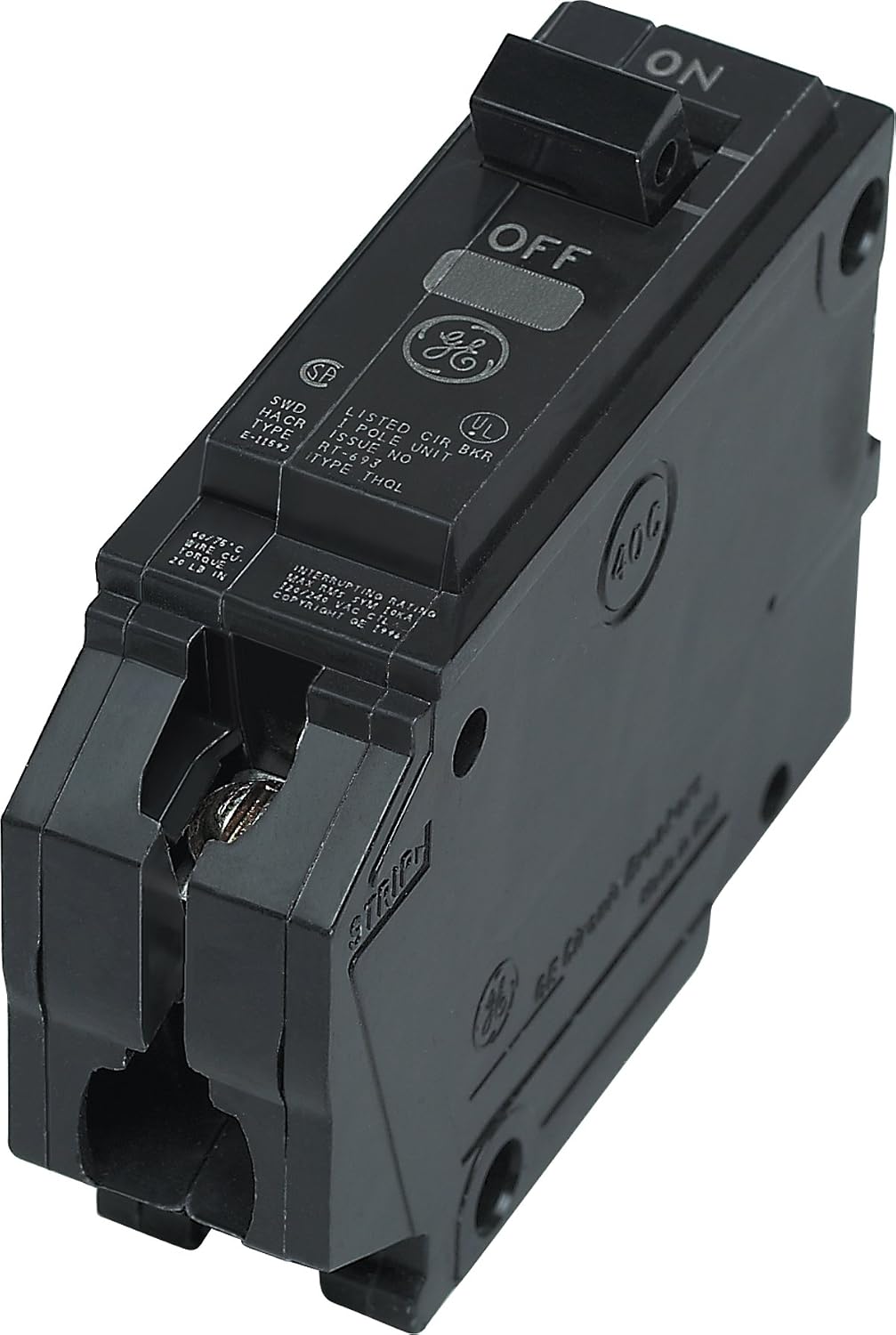
Figure 1: General Electric THQL1125 Circuit Breaker. This image displays the front view of the circuit breaker, highlighting the ON/OFF toggle switch, the GE logo, and the terminal screw for wire connection. The breaker is black with white markings indicating its specifications and operational status.
2. Safety Information
WARNING: Electrical work can be hazardous. Installation, maintenance, and troubleshooting of circuit breakers should only be performed by qualified and licensed electricians in accordance with all applicable national and local electrical codes. Failure to follow these instructions can result in serious injury, death, or property damage.
- Always disconnect power at the main service panel before working on any electrical circuits or equipment.
- Use appropriate personal protective equipment (PPE), including insulated gloves and safety glasses.
- Verify that the circuit breaker rating (amperage and voltage) matches the requirements of the circuit it will protect.
- Ensure proper wire gauge is used for the circuit's current requirements.
- Do not bypass or tamper with the circuit breaker's protective mechanisms.
- Check local electrical codes before starting any electrical project to ensure compliance.
3. Product Features
- Type THQL: Designed for use in General Electric load centers.
- 1-Pole, 25-Amp: Provides protection for a single 120V circuit with a maximum current of 25 amperes.
- Thick Series: Requires one 1-inch space within the load center.
- SWD (Switching Duty) Rated: Suitable for switching fluorescent lighting loads.
- HACR (Heating, Air Conditioning, and Refrigeration) Rated: Approved for use with HVAC equipment.
- UL Listed: Certified for safety by Underwriters Laboratories.
- Wire Compatibility: Designed for 40/75°C copper wire.
- Interrupting Rating: Maximum RMS Symmetrical 10kA.
4. Specifications
| Specification | Detail |
|---|---|
| Model Number | THQL1125 |
| Current Rating | 25 Amps |
| Number of Poles | 1 |
| Voltage Rating | 120 Volts |
| Circuit Breaker Type | Standard, Type THQL |
| Mounting Type | 1 Inch Plug-In |
| Product Dimensions (D x W x H) | 2.38" x 1" x 3.28" |
| Item Weight | 2.4 ounces |
| Material | Copper (for terminals) |
| Wire Torque Specification | 20 LB IN (for 40/75°C CU wire) |
| Interrupting Rating | 10kA (Maximum RMS Symmetrical) |
| UPC | 783164131628 |
5. Installation (Setup)
IMPORTANT: Installation must be performed by a qualified electrician. Ensure all power to the electrical panel is OFF before proceeding.
- Power Disconnection: Locate the main service panel and turn off the main breaker to completely de-energize the panel. Verify with a voltage tester that no power is present.
- Panel Access: Carefully remove the cover of the electrical panel.
- Breaker Placement: Identify an available 1-inch space in the General Electric load center.
- Wire Preparation: Strip the insulation from the circuit wire according to the "STRIP" gauge marking on the breaker. Ensure the wire is clean and free of damage.
- Wire Connection: Insert the prepared circuit wire into the terminal opening of the THQL1125 breaker. Tighten the terminal screw to the specified torque of 20 LB IN. Ensure the connection is secure and the wire is fully seated.
- Mounting the Breaker: Hook the rear of the breaker onto the retaining clip in the load center, then firmly push the front of the breaker onto the bus bar until it clicks securely into place.
- Panel Reassembly: Replace the electrical panel cover.
- Power Restoration: Turn the main breaker back ON at the service panel.
- Testing: Test the circuit to ensure proper operation and that the breaker holds the load without tripping under normal conditions.
6. Operation
The General Electric THQL1125 Circuit Breaker operates as a protective device for your electrical circuits.
- ON Position: When the toggle switch is in the "ON" position, power is supplied to the connected circuit.
- OFF Position: When the toggle switch is in the "OFF" position, power to the connected circuit is interrupted. This position is used for manual disconnection of the circuit.
- Tripped Position: In the event of an overcurrent or short circuit, the breaker will automatically trip to an intermediate position (often between ON and OFF) to protect the circuit. To reset a tripped breaker, first move the toggle completely to the "OFF" position, then push it firmly to the "ON" position. If the breaker immediately trips again, there is likely a persistent fault in the circuit that requires investigation.
7. Maintenance
Circuit breakers generally require minimal maintenance. However, periodic inspection can help ensure continued reliable operation.
- Visual Inspection: Periodically, a qualified electrician should visually inspect the circuit breaker and its connections for any signs of damage, overheating (discoloration), or loose wiring.
- Clearance: Ensure that the area around the circuit breaker and electrical panel remains clear of obstructions to allow for proper ventilation and access.
- Cleaning: If necessary, gently clean the exterior of the breaker with a dry, non-abrasive cloth. Do not use liquids or sprays directly on the breaker or inside the electrical panel.
8. Troubleshooting
If your General Electric THQL1125 Circuit Breaker is not functioning as expected, consider the following:
- Breaker Trips Immediately After Reset: This indicates a persistent fault, such as a short circuit or severe overload, on the connected circuit. Disconnect all appliances from the circuit and try resetting the breaker. If it still trips, contact a qualified electrician to diagnose and repair the fault.
- Breaker Trips Frequently: Frequent tripping under normal load conditions may suggest an intermittent fault, an overloaded circuit, or a weakening breaker. Reduce the load on the circuit or consult an electrician to assess the circuit and breaker condition.
- No Power, Breaker Not Tripped: Check the main breaker in the service panel. If the main breaker is ON and the individual breaker is ON but there's no power, there might be a loose connection or a fault in the wiring. Contact a qualified electrician.
Note: Do not attempt to force a breaker into the ON position if it continues to trip. This can cause further damage or create a fire hazard.
9. Warranty and Support
This General Electric THQL1125 Circuit Breaker comes with a 2-year warranty from the date of purchase, covering defects in materials and workmanship under normal use. For warranty claims or technical support, please refer to the contact information provided by your retailer or the manufacturer, General Electric.
For further assistance or if you have questions regarding installation or operation, it is recommended to consult a qualified and licensed electrician.


