
Introduction
This manual provides essential information for the proper installation, function, maintenance, and troubleshooting of your Cardone Industries 18-4915 Disc Brake Caliper. Adhering to these instructions will help ensure optimal performance and longevity of the component. Always prioritize safety and consult a qualified automotive technician if you are unsure about any procedure.
Safety Precautions
Working with vehicle braking systems requires careful attention to safety. Failure to follow proper safety procedures can result in serious injury or damage to the vehicle. Always observe the following:
- Wear appropriate personal protective equipment (PPE), including safety glasses and gloves.
- Ensure the vehicle is securely supported on jack stands on a level surface before beginning any work. Never rely solely on a jack.
- Disconnect the vehicle's battery if working near electrical components.
- Use proper tools for each task.
- Keep brake fluid away from painted surfaces, as it can damage paint.
- Dispose of old brake fluid and components responsibly according to local regulations.
Installation Guide
The following steps outline the general procedure for installing the Cardone 18-4915 Disc Brake Caliper. Specific vehicle models may have variations. Refer to your vehicle's service manual for detailed instructions.
- Preparation: Park the vehicle on a level surface, engage the parking brake, and block the wheels. Loosen the lug nuts on the wheel to be serviced, then raise the vehicle and secure it with jack stands. Remove the wheel.
- Old Caliper Removal: Place a drain pan under the caliper. Using a flare nut wrench, carefully disconnect the brake line from the old caliper. Be prepared for brake fluid to leak. Remove the caliper mounting bolts and slide the old caliper off the rotor.
- Rotor and Pad Inspection: Inspect the brake rotor for wear, scoring, or warping. Replace if necessary. Install new brake pads into the new caliper or prepare them for installation if the caliper is semi-loaded.
- New Caliper Installation: Position the new Cardone 18-4915 caliper over the brake rotor. Ensure the brake pads are correctly seated. Install the caliper mounting bolts and tighten them to the vehicle manufacturer's specified torque.
- Brake Line Connection: Connect the brake line to the new caliper. Use a new copper washer on each side of the banjo bolt (if applicable) and tighten to the specified torque.
- Bleeding the Brake System: This is a critical step. Air introduced into the brake system must be removed. Follow your vehicle's service manual for the correct brake bleeding procedure. This typically involves opening the bleeder screw while a helper depresses the brake pedal, then closing the screw before the pedal is released. Repeat until no air bubbles are visible in the fluid.
- Final Checks: Check for any brake fluid leaks. Reinstall the wheel and tighten lug nuts to specification. Lower the vehicle. Pump the brake pedal several times to ensure a firm pedal feel before driving. Test the brakes at low speed in a safe area.
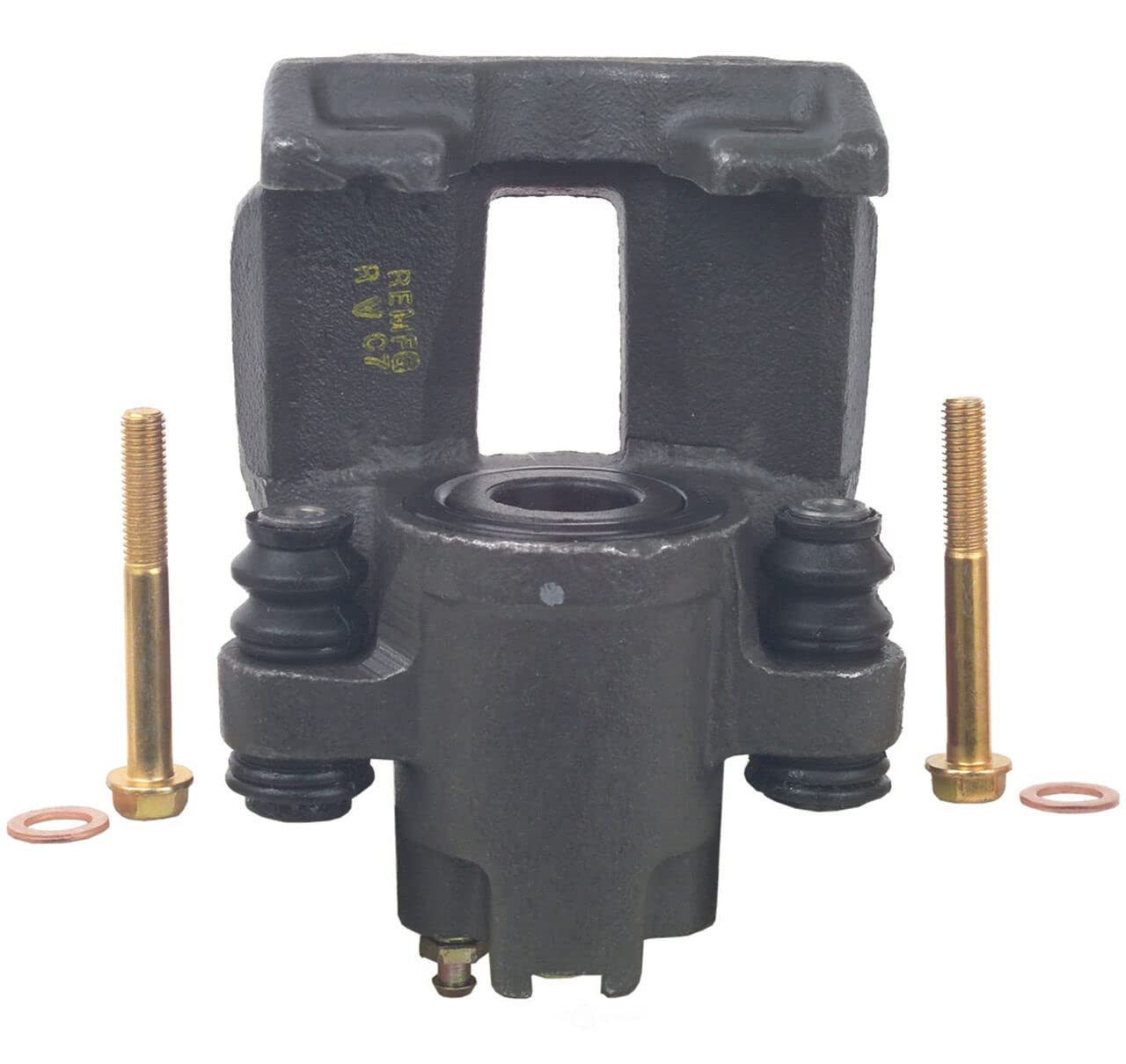
Figure 1: The Cardone Industries 18-4915 Disc Brake Caliper. This image displays the caliper in a dark finish, accompanied by two gold-colored mounting bolts and copper washers, indicating a complete assembly for installation. The caliper features a central piston bore and mounting points for brake pads.
Function and Operation
The Cardone 18-4915 Disc Brake Caliper is a vital component of your vehicle's disc braking system. Its primary function is to house the brake pads and pistons. When the brake pedal is pressed, hydraulic pressure from the master cylinder forces the caliper piston(s) to push the brake pads against the rotating brake rotor. This friction converts the vehicle's kinetic energy into heat, slowing and stopping the vehicle. Proper operation relies on a sealed hydraulic system and correctly functioning pistons and pads.
Maintenance
Regular inspection and maintenance of your brake calipers are crucial for safety and performance. Perform these checks as part of your vehicle's routine maintenance schedule, typically every 12,000 miles or annually.
- Visual Inspection: Check the caliper for any signs of brake fluid leaks, especially around the piston boots and brake line connections. Look for corrosion or damage to the caliper body.
- Brake Pad Wear: Monitor brake pad thickness. Replace pads before they wear down to their minimum specification.
- Rotor Condition: Inspect brake rotors for excessive wear, deep grooves, or warping. Replace or resurface as needed.
- Slide Pin Lubrication: Ensure the caliper slide pins move freely. If they are stiff or seized, clean and lubricate them with appropriate high-temperature brake grease. This prevents uneven pad wear and ensures proper caliper function.
- Brake Fluid Level and Condition: Check the brake fluid level in the master cylinder reservoir. Ensure it is between the MIN and MAX marks. Inspect the fluid for discoloration; dark or cloudy fluid may indicate contamination and require a brake fluid flush.
Troubleshooting Common Issues
This section addresses common problems associated with disc brake calipers. If you encounter issues not listed here or are unable to resolve a problem, consult a professional mechanic.
| Symptom | Possible Cause | Solution |
|---|---|---|
| Spongy Brake Pedal | Air in the brake lines; low brake fluid. | Bleed the brake system; check and top up brake fluid. |
| Brake Squeal/Grinding | Worn brake pads; foreign object; glazed rotors. | Inspect and replace brake pads; clean or replace rotors. |
| Vehicle Pulls to One Side During Braking | Seized caliper slide pin; faulty caliper piston; uneven pad wear. | Inspect and lubricate slide pins; replace faulty caliper; replace pads. |
| Brake Fluid Leak | Damaged brake line; worn piston seal; loose connection. | Inspect and replace damaged components; tighten connections. |
| Excessive Brake Pedal Travel | Air in system; worn pads; master cylinder issue. | Bleed brakes; replace pads; diagnose master cylinder. |
Specifications
Key specifications for the Cardone Industries 18-4915 Disc Brake Caliper:
- Manufacturer: A1 Cardone
- Brand: Cardone
- Model Number: 18-4915
- Item Weight: Approximately 7 pounds
- Product Dimensions: Approximately 8 x 5 x 5 inches
- Part Type: Semi-Loaded Disc Brake Caliper (without pads)
Warranty and Support
For specific warranty information regarding your Cardone Industries 18-4915 Disc Brake Caliper, please refer to the documentation provided with your purchase or visit the official Cardone website. For technical support or further inquiries, you may contact Cardone customer service directly or visit the Cardone Store on Amazon.