
Makita 4100NH
Makita 4100NH 4-3/8" Masonry Saw
Instruction Manual
Introduction
This instruction manual provides essential information for the safe and effective operation, maintenance, and troubleshooting of your Makita 4100NH 4-3/8" Masonry Saw. Please read this manual thoroughly before using the tool to ensure proper handling and to prevent injury or damage.
The Makita 4100NH is designed for cutting various masonry materials, including stone, tile, and concrete. It features a powerful 9.6 AMP motor, delivering 14,500 RPM for efficient cutting. Its compact and lightweight design enhances user comfort during operation.
Important Safety Information
Always follow basic safety precautions to reduce the risk of fire, electric shock, and personal injury when operating power tools. Keep this manual for future reference.
General Power Tool Safety Warnings
- Work Area Safety: Keep work area clean and well lit. Cluttered or dark areas invite accidents. Do not operate power tools in explosive atmospheres, such as in the presence of flammable liquids, gases or dust. Power tools create sparks which may ignite the dust or fumes.
- Electrical Safety: Power tool plugs must match the outlet. Never modify the plug in any way. Do not use any adapter plugs with earthed (grounded) power tools. Unmodified plugs and matching outlets will reduce risk of electric shock.
- Personal Safety: Always wear eye protection. Use personal protective equipment such as dust mask, non-skid safety shoes, hard hat, or hearing protection for appropriate conditions. Stay alert, watch what you are doing and use common sense when operating a power tool.
- Tool Use and Care: Do not force the power tool. Use the correct power tool for your application. It will do the job better and safer at the rate for which it was designed. Disconnect the plug from the power source before making any adjustments, changing accessories, or storing power tools.
- Service: Have your power tool serviced by a qualified repair person using only identical replacement parts. This will ensure that the safety of the power tool is maintained.
Specific Masonry Saw Safety Warnings
- Always use the appropriate blade for the material being cut.
- Ensure the blade guard is properly in place and functioning before operation.
- Secure the workpiece to prevent movement during cutting.
- Avoid cutting materials that contain metal or other foreign objects.
- Be aware of dust generation and use appropriate dust collection or respiratory protection.
Setup and Assembly
Unpacking
Carefully remove the saw and all accessories from the packaging. Inspect the tool for any damage that may have occurred during shipping. Retain the packaging for future storage or transport.
Components Overview
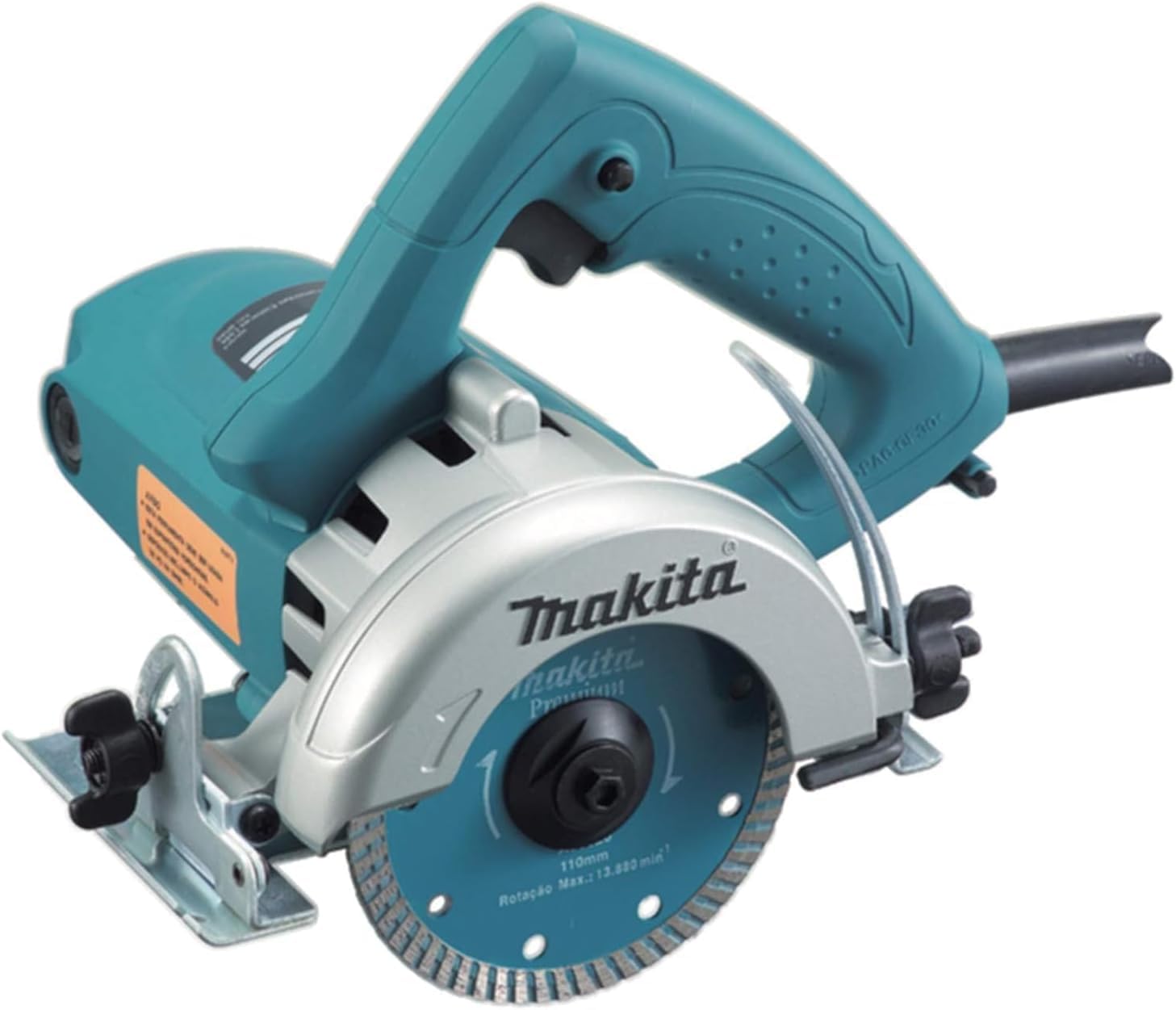
Figure 1: Overall view of the Makita 4100NH 4-3/8" Masonry Saw, showing the main body, handle, blade guard, and base plate.

Figure 2: Close-up of the saw's blade area, highlighting the blade, blade guard, and the depth adjustment knob. This view is crucial for understanding blade installation and depth setting.

Figure 3: Rear view of the saw, showing the flat motor housing design which facilitates easier blade changes, and the power cord connection point.
Blade Installation
- Ensure the saw is unplugged from the power source.
- Place the saw on a stable surface with the blade guard facing upwards.
- Loosen the blade guard screw and lift the guard to expose the blade arbor.
- Press the shaft lock button to secure the arbor.
- Using the provided wrench, loosen and remove the arbor nut and outer flange.
- Place the new 4-3/8" masonry blade onto the arbor, ensuring the rotation arrow on the blade matches the arrow on the saw.
- Replace the outer flange and arbor nut, then tighten securely with the wrench while holding the shaft lock button.
- Lower and secure the blade guard.
Adjusting Cutting Depth
The cutting depth can be adjusted to suit the thickness of the material. Loosen the depth adjustment knob (refer to Figure 2), slide the base plate to the desired depth, and then securely tighten the knob.
Operating Instructions
Before Operation
- Always wear appropriate personal protective equipment, including safety glasses, hearing protection, and a dust mask.
- Ensure the workpiece is stable and securely clamped.
- Check that the blade is correctly installed and tightened.
- Verify the power cord is in good condition and connected to a suitable power outlet.
Making a Cut

Figure 4: Side view of the saw positioned on a workpiece, demonstrating how the blade makes contact with the material. This illustrates the proper starting position for a cut.

Figure 5: A user demonstrating the cutting action with the Makita 4100NH, showing proper hand placement and the saw in motion during a cut. Note the dust generated, emphasizing the need for protective gear.
- Hold the saw firmly with both hands.
- Align the blade with your cutting line.
- Depress the lock-off button and then the trigger switch to start the saw. Allow the blade to reach full speed before beginning the cut.
- Slowly and steadily push the saw forward through the material. Do not force the saw; let the blade do the work.
- Maintain a consistent cutting speed.
- Once the cut is complete, release the trigger switch and allow the blade to stop completely before lifting the saw from the workpiece.
Lock-off Button
The Makita 4100NH is equipped with a lock-off button to prevent accidental starts. To operate the saw, you must first depress this button before pressing the trigger switch. This is a safety feature and should always be used.
Maintenance
Regular maintenance ensures the longevity and safe operation of your Makita 4100NH Masonry Saw. Always unplug the tool before performing any maintenance.
Cleaning
- After each use, clean the saw thoroughly. Use a dry cloth to wipe down the exterior.
- Remove any dust or debris from the blade guard, base plate, and motor vents using compressed air or a brush.
- Do not use solvents or abrasive cleaners, as they may damage plastic parts.
Blade Replacement
Replace the blade when it becomes dull or damaged. Refer to the "Blade Installation" section under "Setup and Assembly" for detailed instructions.
Carbon Brushes
The motor uses carbon brushes, which are consumable parts. Inspect them periodically and replace them when they are worn down to the limit mark. This should be performed by a qualified service technician to ensure proper installation and motor function.
Storage
Store the saw in a clean, dry place, out of reach of children. Protect the power cord from damage.
Troubleshooting
This section addresses common issues you might encounter with your Makita 4100NH Masonry Saw. For problems not listed here, contact a Makita authorized service center.
| Problem | Possible Cause | Solution |
|---|---|---|
| Saw does not start |
|
|
| Excessive vibration or noise |
|
|
| Saw cuts slowly or binds |
|
|
Specifications
| Feature | Detail |
|---|---|
| Model Number | 4100NH |
| Blade Diameter | 4-3/8 inches (110mm) |
| No Load Speed | 14,500 RPM |
| Amperage | 9.6 Amps |
| Wattage | 1152 watts |
| Max Cutting Capacity | 1-3/8 inches |
| Voltage | 120V AC (Standard US) |
| Item Weight | 6.5 lbs (2.95 kg) |
| Product Dimensions | 9.17 x 9.17 x 8.5 inches |
| Power Source | Corded Electric |
| Surface Recommendation | Tile, Stone, Concrete |
| Included Components | Makita 4100NH Masonry Saw |
Warranty and Support
Warranty Information
Makita power tools are typically covered by a limited warranty. For specific warranty terms and conditions applicable to your Makita 4100NH Masonry Saw, please refer to the warranty card included with your product or visit the official Makita website. Keep your purchase receipt as proof of purchase for warranty claims.
Customer Support
For technical assistance, service, or to locate an authorized service center, please contact Makita customer support. You can find contact information on the official Makita website or in the documentation provided with your tool.
Makita Official Website: www.makitatools.com
Related documents4100NH


Ask a question about this manual
Ask about setup, troubleshooting, compatibility, parts, safety, or missing instructions. Manuals+ will review the question and use this page’s manual context to help answer it.