1. Introduction and Overview
The OTC 6595 High Pressure Oil Line Disconnect Tool is specifically designed for use on 1998-2003 Ford trucks and vans equipped with 7.3L direct-injected, turbo-charged (DIT) diesel engines. This specialized tool facilitates the safe and efficient disconnection of the high-pressure oil line from the cylinder head, a critical step in various engine maintenance and repair procedures.
Constructed from durable metal, this tool is engineered for longevity and reliable performance in demanding automotive environments. Its design includes a convenient hanging hole, allowing for easy storage and preventing misplacement within a workshop or toolbox.
2. Safety Information
Always prioritize safety when working with automotive tools and components. Failure to follow safety precautions can result in serious injury or damage to the vehicle.
- Wear Safety Goggles: Always wear appropriate eye protection to shield against debris, fluids, or other hazards.
- Gloves: Use work gloves to protect hands from sharp edges, hot surfaces, and automotive fluids.
- Vehicle Stability: Ensure the vehicle is securely supported on a level surface using jack stands before working underneath. Never rely solely on a jack.
- Engine Cool Down: Allow the engine to cool completely before attempting any work on the high-pressure oil system to prevent burns.
- Pressure Release: Be aware that high-pressure oil lines may retain residual pressure. Consult the vehicle's service manual for proper pressure relief procedures before disconnecting any lines.
- Cleanliness: Maintain a clean work area to prevent contamination of fuel or oil systems.
3. Product Components
The OTC 6595 tool is a single, robust piece of metal designed for specific high-pressure oil line disconnection tasks. It features a U-shaped cutout at one end for engaging the oil line fitting and a small circular hole at the opposite end for convenient hanging storage.
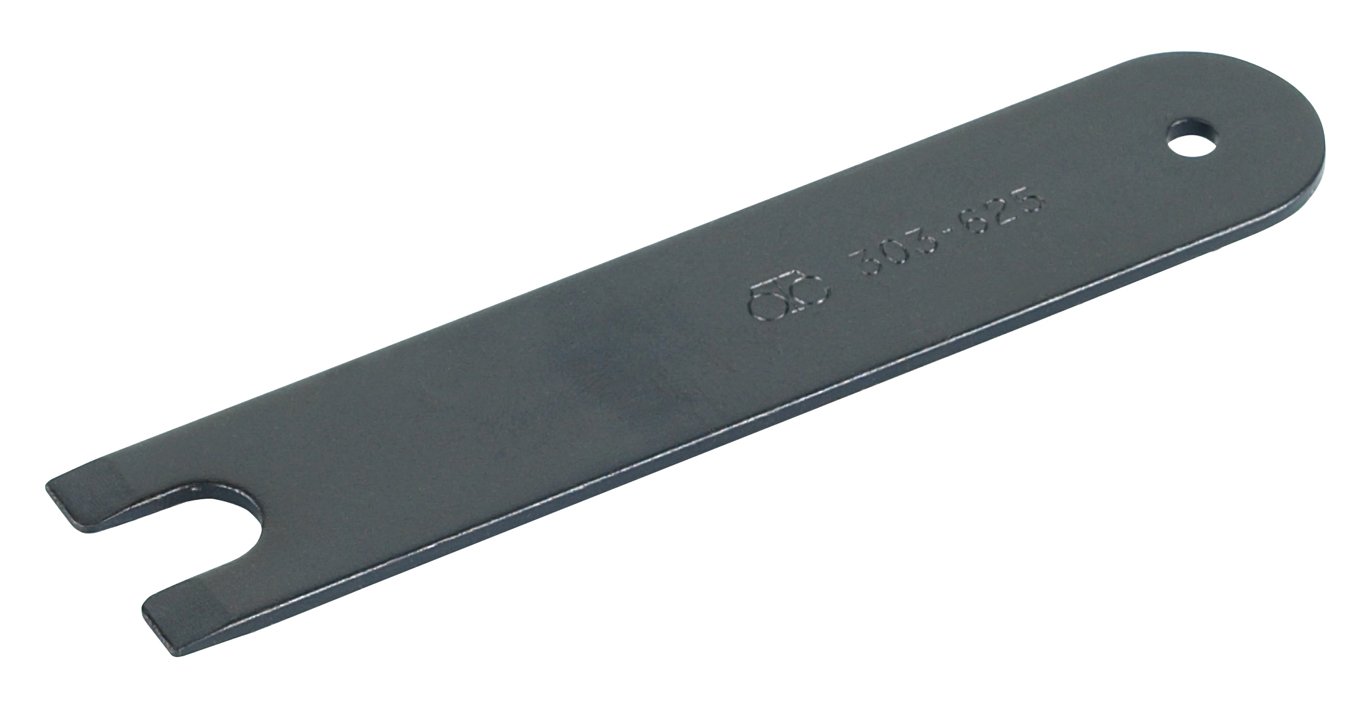
Image of the OTC 6595 High Pressure Oil Line Disconnect Tool, a flat metal tool with a U-shaped cutout at one end and a hanging hole at the other.
4. Setup
The OTC 6595 tool requires no assembly or complex setup. It is ready for immediate use upon removal from its packaging. Prior to use, ensure the tool is clean and free from any debris that could interfere with its function or contaminate the engine's oil system.
- Preparation: Before using the tool, ensure the vehicle's engine has cooled down and any necessary pressure relief procedures for the high-pressure oil system have been performed according to the vehicle manufacturer's service manual.
- Access: Gain appropriate access to the high-pressure oil line connection at the cylinder head. This may involve removing other engine components or working from underneath the vehicle.
5. Operating Instructions
The OTC 6595 tool is designed for a straightforward disconnection process. Its specific shape allows it to engage the unique fitting of the high-pressure oil line on compatible Ford 7.3L DIT diesel engines.
- Locate the Connection: Identify the high-pressure oil line connection at the cylinder head that needs to be disconnected.
- Position the Tool: Carefully slide the U-shaped end of the OTC 6595 tool over the high-pressure oil line fitting. The tool is designed to fit precisely around the collar of the fitting.
- Apply Pressure: Once the tool is properly seated, apply gentle, firm pressure to the tool, pushing it towards the cylinder head. This action will disengage the internal locking mechanism of the oil line fitting.
- Separate the Line: While maintaining pressure on the tool, carefully pull the high-pressure oil line away from the cylinder head connection. The line should separate smoothly once the fitting is disengaged.
- Remove Tool: Once the oil line is disconnected, remove the OTC 6595 tool from the fitting.
Note: Always refer to the specific vehicle service manual for detailed instructions and torque specifications when reassembling high-pressure oil lines.
6. Maintenance
Proper maintenance will ensure the longevity and continued effectiveness of your OTC 6595 tool.
- Cleaning: After each use, wipe the tool clean with a rag to remove any oil, grease, or dirt. A mild degreaser can be used if necessary.
- Drying: Ensure the tool is completely dry before storage to prevent rust.
- Storage: Store the tool in a dry environment. The integrated hanging hole allows for convenient storage on a pegboard or tool rack, keeping it accessible and protected.
- Inspection: Periodically inspect the tool for any signs of damage, bending, or wear. While designed for durability, extreme force or improper use can cause deformation. Replace the tool if it shows signs of damage that could affect its performance or safety.
7. Troubleshooting
The OTC 6595 is a simple mechanical tool, and most issues arise from improper application or external factors.
- Difficulty Disconnecting:
- Ensure the tool is fully seated around the fitting.
- Verify that you are working on the correct high-pressure oil line and engine type (1998-2003 Ford 7.3L DIT diesel engines).
- Check for any obstructions or corrosion preventing the fitting from releasing.
- Confirm that all residual pressure has been relieved from the system.
- Tool Bending/Damage:
- This indicates excessive force or improper leverage. The tool is designed for precise engagement, not brute force.
- Ensure the tool is aligned correctly with the fitting.
- If the tool is bent, it should be replaced to ensure proper function and prevent damage to the oil line fitting.
8. Specifications
| Attribute | Detail |
|---|---|
| Model Number | 6595 |
| Manufacturer | OTC |
| Product Dimensions | 5 x 0.1 x 3.5 inches |
| Item Weight | 3.2 ounces |
| Date First Available | October 4, 2004 |
| Application | 1998-2003 Ford trucks and vans with 7.3L direct-injected, turbo-charged (DIT) diesel engines |
9. Warranty and Support
OTC stands behind the quality of its products. Many OTC tools, including the 6595 High Pressure Oil Line Disconnect Tool, are backed by a Lifetime Warranty, reflecting the company's commitment to durability and performance.
For specific warranty details, technical assistance, or support, please refer to the official OTC website or contact OTC customer service directly. Contact information can typically be found on the product packaging or the manufacturer's official website.


