Introduction
This manual provides comprehensive instructions for the safe and effective use of your Louisville Ladder L-2094-17 Multipurpose Ladder. This versatile ladder is designed to function as a step ladder, extension ladder, stairway ladder, and as support for a plank system, offering a 300-pound duty rating (Type IA). Please read this manual thoroughly before initial use and retain it for future reference.

Image: The Louisville Ladder L-2094-17 shown in its A-frame step ladder configuration, highlighting its robust aluminum construction and multi-functional design.
Important Safety Information
Your safety is paramount. Always adhere to the following safety guidelines to prevent injury or damage. This ladder meets or exceeds the safety standards set by ANSI (American National Standards Institute) and OSHA (Occupational Safety and Health Administration).
- Inspect Before Each Use: Before using the ladder, visually inspect it for any damage, loose fasteners, or missing parts. Do not use a damaged ladder.
- Proper Footing: Ensure the ladder is placed on a firm, level, and non-slippery surface. Do not place on unstable objects.
- Maintain Three Points of Contact: Always maintain three points of contact (two hands and one foot, or two feet and one hand) when climbing or descending.
- Weight Capacity: Do not exceed the maximum load capacity of 300 pounds (Type IA duty rating), which includes the user and any tools or materials.
- Electrical Hazards: Avoid using the ladder near electrical wires or equipment. Aluminum conducts electricity.
- Proper Angle for Extension Ladder: When using as an extension ladder, ensure the base is placed at a distance from the wall equal to one-quarter of the working length of the ladder.
- Locking Mechanisms: Always ensure all locking mechanisms are fully engaged before climbing.
- Do Not Overreach: Keep your body centered between the side rails. Do not overreach, as this can cause the ladder to tip.
- One Person at a Time: Only one person should be on the ladder at a time, unless configured for plank support with appropriate safety measures.
- Wear Appropriate Footwear: Always wear slip-resistant footwear with good ankle support.
Components and Key Features
The Louisville Ladder L-2094-17 is constructed from durable aluminum and features several components designed for versatility and safety.
- Rungs: Horizontal steps for climbing.
- Side Rails: The main vertical supports of the ladder.
- Hinges/Locks: Articulating joints with locking pins that allow the ladder to be configured into different positions.
- Stabilizer Bars/Feet: Non-slip feet at the base of the ladder for stability.
- Multi-Position Design: Functions as a step ladder, extension ladder, stairway ladder, and scaffold base.
- Type IA Duty Rating: Rated for heavy-duty use, supporting up to 300 pounds.
- Compact Storage: Designed for convenient storage and transportation when folded.
Setup and Configuration
The L-2094-17 ladder offers multiple configurations. Always ensure the ladder is on a stable surface and all locking mechanisms are securely engaged before use.
1. Step Ladder Configuration (A-Frame)
To set up as a step ladder:
- Unfold the ladder sections until they form an 'A' shape.
- Ensure the hinge locks at the top are fully engaged and secured.
- Verify that all four feet are firmly on the ground and the ladder is stable.

Image: Two Louisville L-2094-17 ladders in use as A-frame step ladders, demonstrating their stability for various indoor tasks like painting or reaching high windows.
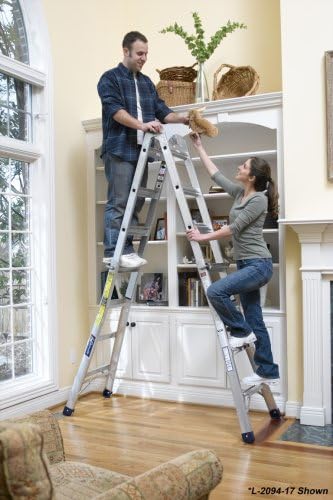
Image: A man and a woman using a Louisville L-2094-17 ladder in its A-frame configuration, illustrating its use for tasks requiring access to different heights simultaneously.
2. Extension Ladder Configuration
To use as an extension ladder:
- Fully extend the ladder sections until they are in a straight line.
- Engage all extension locks securely.
- Place the ladder against a stable surface, ensuring the 1:4 ratio (base distance from wall is one-quarter of the ladder's working height).
- Ensure the top of the ladder extends at least 3 feet above the landing surface.

Image: A man using the Louisville L-2094-17 ladder in its fully extended configuration to perform work at a high point on a wall, demonstrating its reach.
3. Stairway Ladder Configuration
For use on stairs or uneven surfaces:
- Adjust the length of each side rail independently to accommodate the height difference of the steps.
- Ensure all locking pins are fully engaged for each adjusted section.
- Verify the ladder is stable and level before climbing.
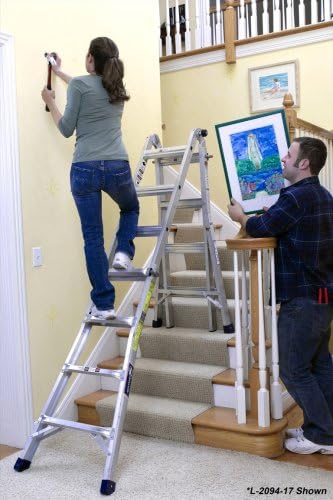
Image: A woman using the Louisville L-2094-17 ladder configured for use on a staircase, illustrating its adaptability for uneven surfaces.
4. Scaffold/Plank Support Configuration
To use as support for a plank (scaffold):
- Set up two L-2094-17 ladders (or other compatible supports) in the A-frame configuration.
- Ensure both ladders are stable and on a level surface.
- Place a sturdy, appropriately rated plank across the rungs of both ladders.
- Verify the plank is secure and cannot shift before stepping onto it. Adhere to plank manufacturer's instructions and weight limits.

Image: Two Louisville L-2094-17 ladders configured to support a plank, demonstrating their use as a stable base for a scaffold system, ideal for tasks requiring a wider work area.
Maintenance and Storage
Proper maintenance and storage will extend the life of your ladder and ensure its safe operation.
- Cleaning: Clean the ladder regularly with a damp cloth to remove dirt, grease, or paint. Avoid harsh abrasive cleaners.
- Inspection: Periodically inspect all components, including hinges, locks, rungs, and feet, for wear, damage, or corrosion. Pay close attention to the locking mechanisms to ensure they operate smoothly and engage fully.
- Lubrication: Apply a light lubricant to the hinge mechanisms if they become stiff, ensuring smooth operation of the locking pins.
- Storage: Store the ladder in a dry, protected area away from extreme temperatures and direct sunlight. Store it in its folded, compact form for convenience and to prevent accidental damage.
- Repairs: Do not attempt to repair damaged parts yourself. Contact Louisville Ladder customer support for authorized repairs or replacement parts.
Troubleshooting
This section addresses common issues you might encounter with your ladder.
| Problem | Possible Cause | Solution |
|---|---|---|
| Difficulty engaging/disengaging locks. | Dirt/debris in mechanism, lack of lubrication, minor misalignment. | Clean the locking mechanism. Apply a light lubricant. Gently adjust alignment if possible, or contact support if severe. |
| Ladder feels unstable or wobbly. | Uneven ground, locks not fully engaged, damaged feet. | Ensure ladder is on a firm, level surface. Verify all locks are fully engaged. Inspect feet for wear and replace if necessary. |
| Ladder is heavy to move. | This is a characteristic of a heavy-duty ladder. | While the ladder is designed for portability, its robust construction contributes to its weight. Use proper lifting techniques or seek assistance if needed. |
Technical Specifications
| Specification | Detail |
|---|---|
| Model Number | L-2094-17 |
| Manufacturer | Louisville Ladder |
| Material | Aluminum |
| Size | 17 feet (maximum extension) |
| Duty Rating | Type IA (300 pounds) |
| Color | Red/Yellow with Silver frame |
| Special Features | Heavy Duty, Multipurpose (Step, Extension, Stairway, Plank Support) |
| Number of Steps | 16 |
| UPC | 728865101273 |
Warranty Information
For detailed warranty information regarding your Louisville Ladder L-2094-17, please refer to the documentation included with your purchase or visit the official Louisville Ladder website. Warranty terms and conditions may vary.
Customer Support
If you have any questions, require assistance, or need to order replacement parts for your Louisville Ladder L-2094-17, please contact Louisville Ladder customer support. You can typically find contact information on the manufacturer's official website or through the retailer where the product was purchased.
For more information, visit: www.louisvilleladder.com


