
1. Introduction
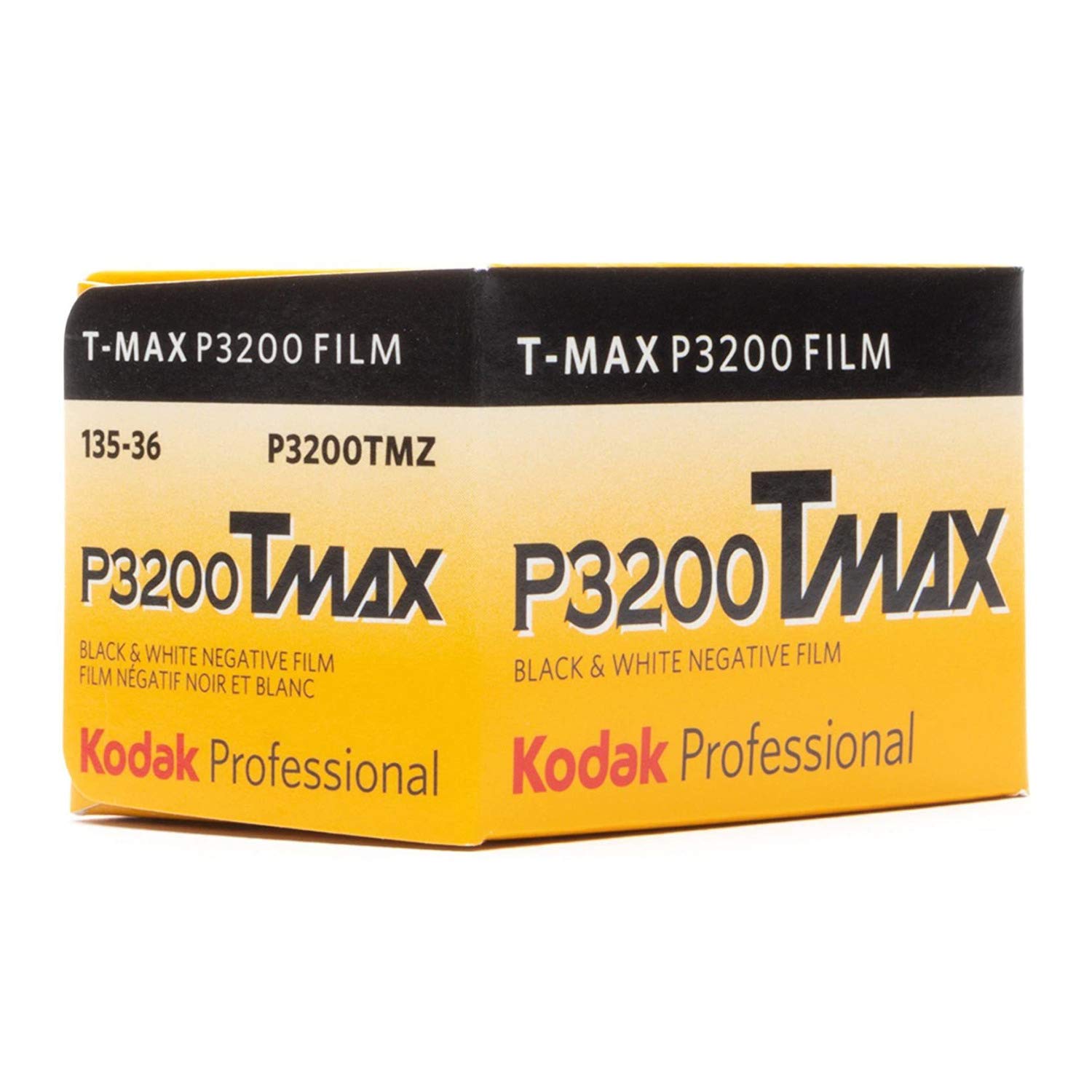
The Kodak P3200 TMAX Professional is a high-speed, continuous-tone panchromatic black-and-white negative film designed for challenging photographic conditions. It offers a unique combination of high to ultra-high film speeds with a finer grain structure compared to other fast black-and-white films, making it suitable for low-light environments and fast-action photography.
2. Product Features
- Great for capturing very fast action.
- Excellent for dimly lit scenes where flash is not desired.
- Suitable for subjects requiring good depth of field with fast shutter speeds.
- Ideal for handholding telephoto lenses in low light or for fast action.
3. Setup and Loading
Loading 35mm film into your camera requires careful attention to avoid exposing the film to light. Perform this process in subdued light or shade to prevent fogging.
- Open the camera back according to your camera's instructions.
- Place the film cassette into the film chamber, ensuring it is seated correctly.
- Pull the film leader across to the take-up spool and ensure it engages properly with the sprocket teeth.
- Close the camera back firmly.
- Advance the film using the winding lever or motor drive until the frame counter shows '1'. This ensures any film exposed during loading is advanced past the film gate.
4. Operating Instructions (Exposure)
Kodak P3200 TMAX Professional film is rated at ISO 3200. However, it is an incredibly versatile film that can be exposed at various effective speeds (EI) depending on the desired aesthetic and lighting conditions.
- Standard Exposure: For general use, expose the film at its box speed of ISO 3200.
- Push Processing: This film is designed to be pushed. It can be exposed at higher effective speeds (e.g., EI 6400 or EI 12800) with appropriate development adjustments for extremely low light or specific creative effects.
- Pull Processing: Some photographers achieve excellent results by exposing it at lower effective speeds, such as EI 800 or EI 1600, and adjusting development accordingly. This can influence grain and contrast, often resulting in finer grain and smoother tones.
- Metering: Use an accurate light meter. For challenging lighting, consider bracketing exposures (taking multiple shots at different exposure settings) to ensure a usable image.
- Grain Characteristics: This film is known for its characteristic grain due to its high speed. This grain can be a creative asset, especially in low-light photography, contributing to a distinct aesthetic.
5. Development
Developing Kodak P3200 TMAX Professional film requires specific black-and-white film developers. For optimal results, Kodak T-MAX developers are highly recommended, as they are formulated to optimize the film's characteristics, including grain and tonal rendition.
- Developer Choice: While T-MAX developers are recommended, other black-and-white film developers can also be used. Consult the developer manufacturer's data sheet for specific dilution, time, and temperature recommendations for P3200 TMAX film.
- Temperature Control: Maintain consistent developer temperature throughout the process. Variations can lead to inconsistent density and contrast.
- Agitation: Follow recommended agitation patterns (e.g., initial agitation, then periodic agitation) to ensure even development and prevent streaks.
- Stop Bath and Fixer: After development, use a stop bath to halt the development process, followed by a fixer to make the image permanent. Wash thoroughly to remove residual chemicals.
6. Maintenance and Storage
Proper handling and storage are essential to preserve the quality of your Kodak P3200 TMAX Professional film, both before and after exposure.
- Unexposed Film Storage: Store unexposed film in a cool, dry place, ideally refrigerated (but not frozen) to maintain its sensitivity and prevent fogging. Allow refrigerated film to warm to room temperature before use to prevent condensation.
- Exposed Film Storage: Develop exposed film as soon as practical. If immediate development is not possible, store exposed film in a cool, dry environment, protected from light. Avoid prolonged storage of exposed but undeveloped film.
- Handling: Always handle film by the edges to prevent fingerprints, dust, and scratches. Load and unload film in subdued light.
- X-ray Precautions: Film can be damaged by X-ray scanners, such as those found at airports. Request a hand inspection for your film when traveling.
7. Troubleshooting
Here are some common issues and potential solutions when working with Kodak P3200 TMAX Professional film:
- Excessive Grain: This film is inherently grainy due to its high speed. If grain is excessively prominent or undesirable, consider exposing at a lower effective ISO (e.g., EI 800 or 1600) and adjusting development times, or using a fine-grain developer.
- Lack of Detail in Shadows/Highlights: High-speed films like P3200 TMAX have a specific exposure latitude. Ensure accurate exposure metering. Underexposure can lead to lost shadow detail, while overexposure can blow out highlights. Bracketing exposures in challenging light can be beneficial.
- Uneven Development: Ensure consistent temperature and agitation during the development process. Inconsistent processing can lead to uneven density or streaks on the negatives.
- Film Fogging: This is often caused by light leaks in the camera or during loading/unloading, or by improper storage (heat, humidity, X-rays). Always handle film in appropriate light conditions and store it correctly.
8. Specifications
| Film Type | Panchromatic Black-and-White Negative Film |
| Film Format | 35mm (135) |
| ISO Speed | 3200 |
| Exposures per Roll | 36 |
| Product Dimensions | 1.5 x 2.5 x 1.5 inches |
| Item Weight | 0.8 ounces |
| Item Model Number | 151 6798 |
| Brand | KODAK |
| Manufacturer | Kodak Consumer |
| Date First Available | September 3, 2007 |
9. Warranty and Support
For information regarding warranty, technical support, or further assistance with Kodak P3200 TMAX Professional film, please refer to the official KODAK website or contact KODAK customer service directly. Keep your purchase receipt for warranty claims. Contact details can typically be found on the product packaging or the official KODAK corporate website.