
Introduction
This manual provides essential information for the proper use, maintenance, and care of your Cammenga Phosphorescent Lensatic Military Compass, Model 27. Designed for durability and precision, this compass is a reliable tool for navigation in various environments.
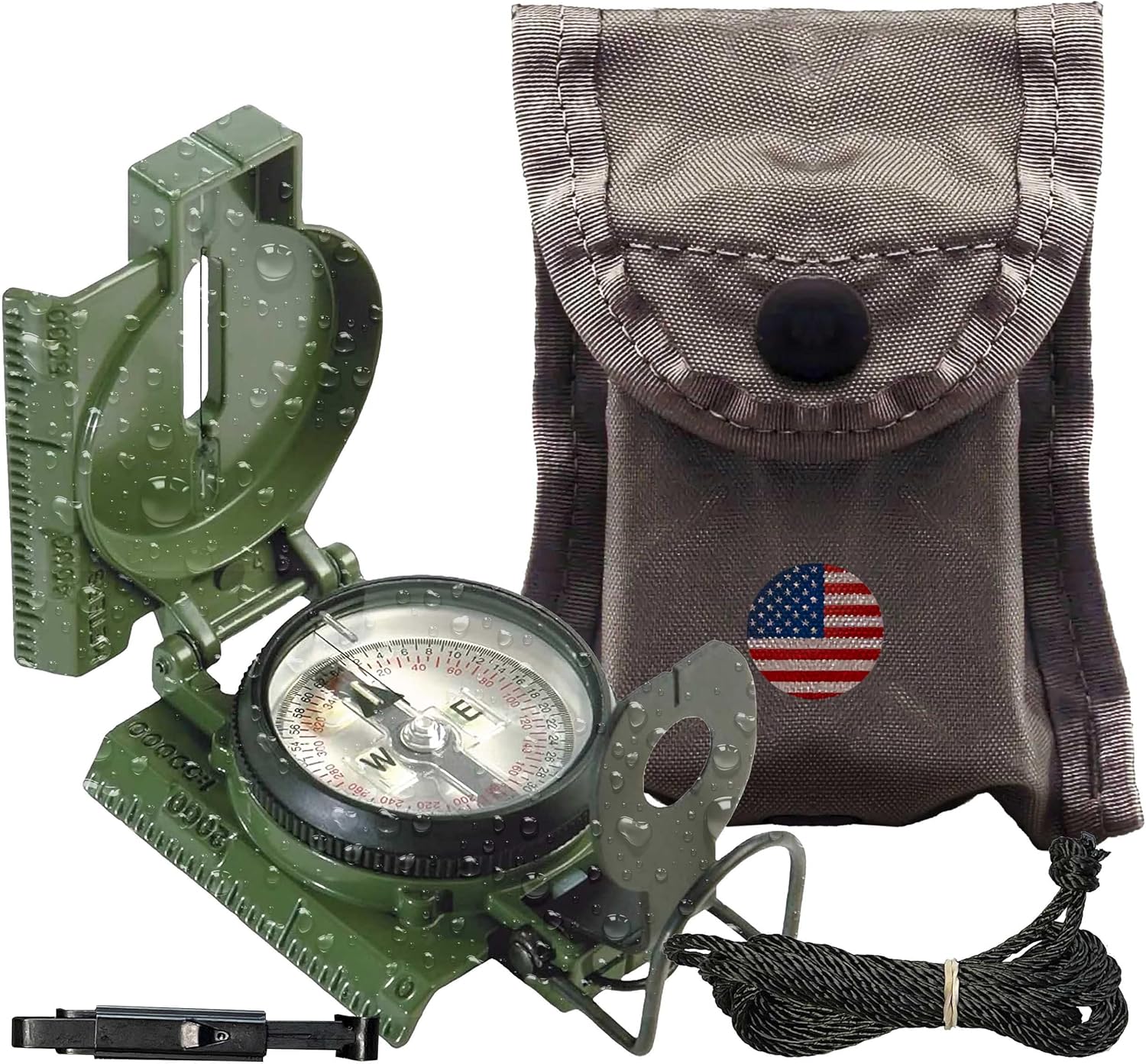
Image: The Cammenga Phosphorescent Lensatic Military Compass, Model 27, shown with its included olive drab carrying pouch. The compass is open, displaying its dial and lensatic features, ready for use.
Key Features
- Manufactured in the USA with a durable aluminum frame.
- Accurate to +/- 40 mils, performing reliably in extreme temperatures from -50°F to 150°F.
- Official US Military Compass design, shockproof and damage-resistant.
- Phosphorescent markings on the dial for low-light visibility after exposure to light.
- Water and sand resistant, built with a powder-coated aluminum frame.
- Multi-purpose use for hiking, camping, surveying, hunting, scouting, boating, and general orientation.
- Equipped with a magnifying lens, sight wire, and dial graduations in both degrees and mils for accurate readings.
Package Contents
Upon opening your package, please ensure all the following items are present:
- Cammenga Phosphorescent Lensatic Military Compass (Model 27)
- Rugged Carrying Pouch with Belt Clip
- Braided Nylon Lanyard
- Instruction Booklet (this manual)
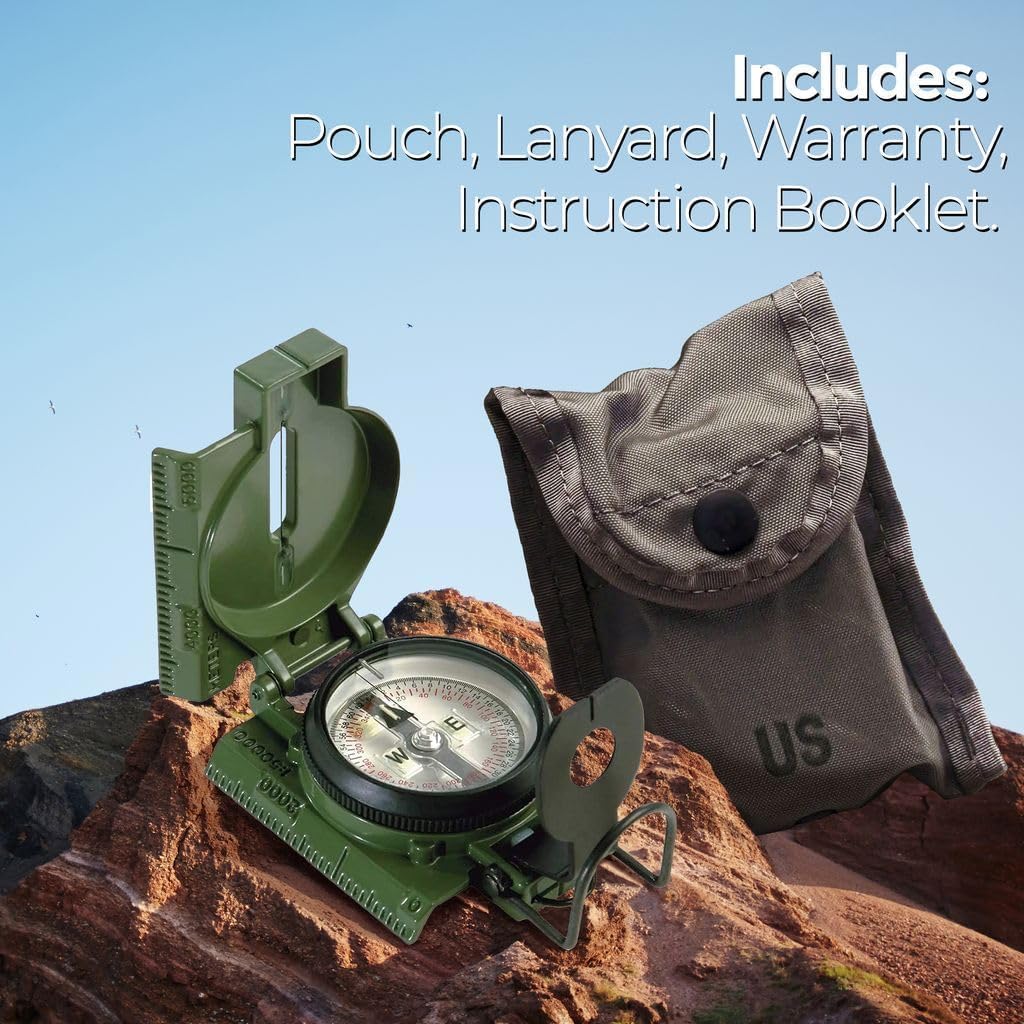
Image: The Cammenga compass, its carrying pouch, and a braided nylon lanyard, representing the typical contents included with the product.
Setup
The Cammenga Lensatic Compass is designed for immediate use with minimal setup. No batteries are required for its operation.
Attaching the Lanyard
- Locate the small loop or hole on the base of the compass.
- Thread one end of the braided nylon lanyard through this loop.
- Secure the lanyard by tying a knot or using any provided attachment mechanism to prevent loss.
Using the Carrying Pouch
The rugged carrying pouch protects your compass and allows for easy transport. It features a belt clip for secure attachment to your gear.
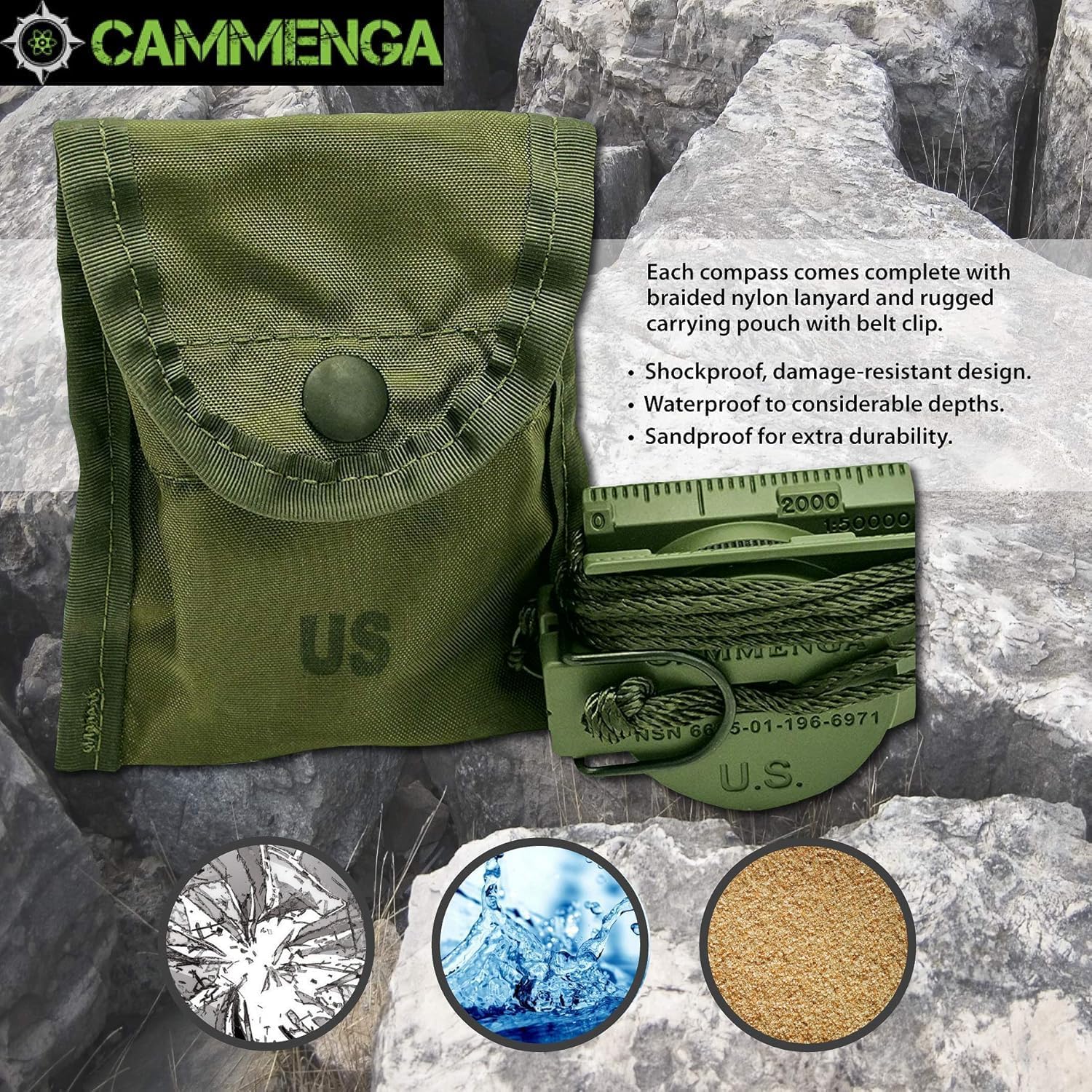
Image: The Cammenga compass and its carrying pouch, highlighting the braided nylon lanyard and the pouch's robust construction, suitable for outdoor use.
Operating Instructions
Understanding the components and proper techniques is crucial for accurate navigation with your lensatic compass.
Compass Components

Image: A detailed view of the Cammenga compass, illustrating the magnifying lens, sight wire, and the precise dial graduations in both degrees and mils, essential for accurate readings.
- Cover: Protects the compass and contains the sighting wire.
- Base: The main body of the compass, housing the dial.
- Thumb Loop: Used to hold the compass steady during sighting.
- Sighting Wire: Located in the cover, used for aiming at distant objects.
- Lens (Rear Sight): Used to read the compass dial while sighting.
- Compass Dial: Rotates freely, indicating magnetic north. Features both degree and mil graduations.
- Phosphorescent Markings: Luminous paint on the dial and needle that glows in the dark after exposure to light.
Taking a Bearing
- Open the compass fully so the cover is perpendicular to the base and the rear sight is extended.
- Hold the compass level at eye level, using the thumb loop for stability.
- Align the sighting wire in the cover with your target.
- Simultaneously, look through the magnifying lens (rear sight) to read the bearing on the compass dial. The reading directly under the sighting wire is your bearing.
- Allow the compass needle to settle completely before taking a reading. The copper induction-damping ring helps the needle settle quickly.

Image: The Cammenga compass positioned on a map, highlighting its internal copper induction-damping ring which ensures the needle settles quickly and steadily for accurate readings.
Using Phosphorescent Markings
To utilize the phosphorescent markings in low-light conditions, expose the compass dial and needle to a bright light source (e.g., flashlight, sunlight) for a few seconds. The markings will then glow, providing temporary illumination for night navigation.
Maintenance
Your Cammenga compass is built for durability and requires minimal maintenance to ensure long-lasting performance.
- Cleaning: Wipe the compass with a soft, damp cloth to remove dirt or debris. Avoid harsh chemicals or abrasive materials.
- Storage: Store the compass in its carrying pouch when not in use to protect it from scratches and impacts. Keep it away from strong magnetic fields (e.g., magnets, large electronic devices) which can affect its accuracy.
- Inspection: Periodically inspect the compass for any signs of damage to the casing, lens, or moving parts.
The compass is designed to be water and sand resistant. However, prolonged submersion or exposure to fine abrasive particles should be avoided to maintain optimal performance.
Troubleshooting
| Problem | Possible Cause | Solution |
|---|---|---|
| Compass needle does not settle or points incorrectly. | Proximity to magnetic objects (e.g., metal, electronics, power lines). | Move away from any potential magnetic interference. Re-test in an open area. |
| Phosphorescent markings are dim or not glowing. | Insufficient exposure to light. | Expose the compass dial to a bright light source (sunlight, flashlight) for several seconds to recharge the phosphorescent material. |
| Physical damage to casing or lens. | Impact or rough handling. | While durable, severe impacts can cause damage. If functionality is impaired, contact customer support. |
Specifications
| Feature | Detail |
|---|---|
| Model | Model 27 |
| Brand | Cammenga |
| Material | Aluminum (powder-coated frame) |
| Color | Olive Drab |
| Accuracy | +/- 40 mils |
| Temperature Range | -50°F to 150°F (-45°C to 65°C) |
| Illumination | Phosphorescent (requires light exposure) |
| Resistance | Waterproof, Sandproof, Shockproof, Damage-resistant |
| Map Scale | 1:50000 |
| Power Source | None (no batteries required) |
| Approx. Package Dimensions | 19.1 x 14 x 5.51 cm |
| Approx. Package Weight | 208.65 grams |

Image: A close-up of the Cammenga Phosphorescent Lensatic Compass, highlighting its Olive Drab color and robust construction.

Image: A visual comparison illustrating the superior features of the Cammenga compass, such as its aluminum frame, accurate aiming, non-liquid interior, military-grade construction, and all-weather readiness, compared to typical alternatives.
Warranty and Support
The product is designed for longevity and reliability. For information regarding warranty coverage or technical support, please refer to the official Cammenga website or contact their customer service directly. The included instruction booklet (this manual) may contain specific warranty details.
As per the product information, the compass is built to demanding specifications and is U.S. Made.

Image: The Cammenga compass alongside a silhouette of soldiers, emphasizing its "U.S. MADE" origin and adherence to military specifications.
