
1. Introduction
This manual provides detailed instructions for the installation, operation, and maintenance of your Holley 12-327-11 Mechanical Fuel Pump. This high-output fuel pump is designed to deliver 110 GPH (gallons per hour) free flow, with a pre-set shutoff pressure between 6.5 and 8 psi, eliminating the need for an external fuel pressure regulator. Its heavy-duty construction ensures reliable performance for continuous high RPM operation.
Please read these instructions thoroughly before proceeding with installation or operation to ensure proper function and safety.

Figure 1: Holley 12-327-11 Mechanical Fuel Pump, main view. This image shows the chrome-plated body of the fuel pump with its inlet and outlet ports visible, along with the mounting arm.
2. Safety Information
WARNING: Fuel systems operate under pressure and contain flammable liquids. Improper installation or handling can lead to fire, explosion, serious injury, or death. Always follow these safety guidelines:
- Always disconnect the vehicle's battery before working on the fuel system.
- Ensure the work area is well-ventilated and free from open flames, sparks, or other ignition sources.
- Wear appropriate personal protective equipment, including safety glasses and gloves.
- Have a fire extinguisher readily available.
- Relieve fuel system pressure before disconnecting any fuel lines.
- Dispose of fuel and related materials according to local regulations.
- If you are unsure about any part of the installation process, consult a qualified automotive technician.
3. Package Contents
Verify that all components are present before beginning installation:
- Holley 12-327-11 Mechanical Fuel Pump (1)
- Mounting Gasket (1)

Figure 2: Holley Mechanical Fuel Pump with included mounting gasket. This image displays the fuel pump from a side angle, highlighting the mounting surface and the separate gasket.
4. Installation
This Holley mechanical fuel pump is designed for vehicle-specific fitment, particularly for Small Block Chevy V8s and marine carbureted applications. Ensure compatibility with your vehicle before installation.
4.1 Tools Required
- Wrenches (appropriate sizes for fuel lines and mounting bolts)
- Screwdriver (if applicable for mounting)
- Fuel line clamps or plugs
- Drain pan for fuel
- Thread sealant (fuel-resistant)
4.2 Installation Steps
- Prepare Vehicle: Park the vehicle on a level surface. Allow the engine to cool. Disconnect the negative terminal of the battery.
- Relieve Fuel Pressure: Consult your vehicle's service manual for the proper procedure to relieve fuel system pressure.
- Disconnect Fuel Lines: Place a drain pan beneath the fuel pump. Carefully disconnect the inlet and outlet fuel lines from the existing fuel pump. Be prepared for fuel spillage. Use appropriate plugs or clamps to prevent further fuel leakage from the lines.
- Remove Old Pump: Unbolt and remove the old mechanical fuel pump from the engine block. Note the orientation of the old pump for reference.
- Prepare New Pump: Ensure the mounting surface on the engine block is clean and free of old gasket material. Apply a thin layer of fuel-resistant thread sealant to the threaded inlet and outlet ports of the new Holley fuel pump before attaching fittings. The inlet and outlet connection sizes are 0.38 inches.
- Install New Pump: Position the new Holley 12-327-11 fuel pump with the provided gasket onto the engine block. Ensure the pump's operating arm engages correctly with the camshaft eccentric. Secure the pump with the mounting bolts, tightening them to the manufacturer's specifications (refer to your vehicle's service manual for torque values).
- Connect Fuel Lines: Reconnect the inlet and outlet fuel lines to the new pump. Ensure all connections are tight and leak-free.
- Final Checks: Reconnect the negative battery terminal. Turn the ignition to the "ON" position (without starting the engine) to allow the fuel system to prime and check for any leaks. Start the engine and carefully inspect all fuel connections for leaks.
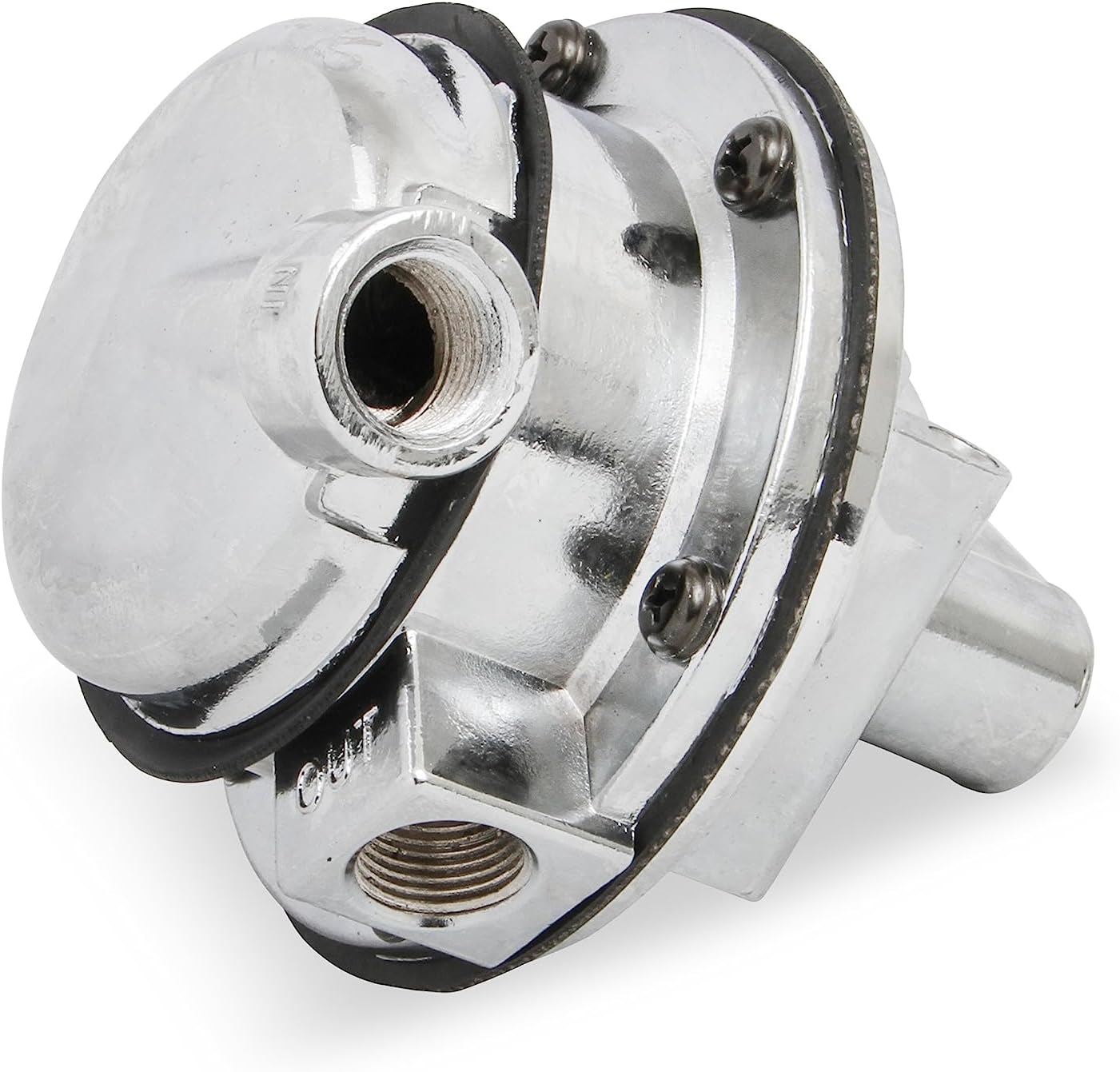
Figure 3: Close-up view of the Holley Mechanical Fuel Pump showing the threaded inlet and outlet ports. The "IN" and "OUT" markings are visible, indicating fuel flow direction.
5. Operation
The Holley 12-327-11 Mechanical Fuel Pump operates by converting the rotational motion of the engine's camshaft into a reciprocating motion that drives a diaphragm within the pump. This action creates suction to draw fuel from the tank and pressure to deliver it to the carburetor or fuel injection system.
- This pump is designed to deliver a consistent fuel flow of 110 GPH (free flow).
- The shutoff pressure is pre-set between 6.5 and 8 psi, eliminating the need for an external fuel pressure regulator in most applications.
- It is suitable for continuous high RPM operation due to its heavy-duty construction.
After installation, ensure the engine starts and runs smoothly. Monitor fuel pressure if you have an aftermarket gauge. Any unusual noises or fuel delivery issues should be investigated immediately.
6. Maintenance
The Holley 12-327-11 Mechanical Fuel Pump is designed for durability and typically requires minimal maintenance. However, periodic checks are recommended:
- Inspect for Leaks: Regularly check all fuel lines and connections around the pump for any signs of fuel leaks. Address any leaks immediately.
- Check Mounting: Periodically verify that the pump is securely mounted and that mounting bolts are tightened to specification.
- Fuel Filter: Ensure your vehicle's fuel filter is clean and replaced according to the vehicle manufacturer's recommendations. A clogged fuel filter can restrict flow and put undue strain on the fuel pump.
- General Condition: Inspect the pump body for any physical damage or corrosion.
7. Troubleshooting
If you experience issues with your fuel pump, consider the following common problems and solutions:
| Problem | Possible Cause | Solution |
|---|---|---|
| Engine Cranks but Won't Start (No Fuel) |
|
|
| Low Fuel Pressure / Engine Stumbles at High RPM |
|
|
| Fuel Leaks |
|
|
If troubleshooting steps do not resolve the issue, contact Holley technical support or a qualified mechanic.
8. Specifications
| Brand | Holley |
| Model Number | 12-327-11 |
| Flow Rate | 110 GPH (Free Flow) |
| Shutoff Pressure | 6.5 - 8 psi (Pre-set) |
| Operation Mode | Mechanical |
| Material | Aluminum |
| Inlet Connection Size | 0.38 Inches |
| Outlet Connection Size | 0.38 Inches |
| Fit Type | Vehicle Specific Fit |
| Vehicle Service Type | Marine Carbureted Applications, Small Block Chevy V8s |
| Item Weight | 1.5 Pounds |
| UPC | 090127483992 |
9. Warranty and Support
For warranty information and technical support regarding your Holley 12-327-11 Mechanical Fuel Pump, please refer to the official Holley website or contact Holley customer service directly. Keep your purchase receipt for warranty claims.
Holley Contact Information:
- Website: www.holley.com (This is a general link, specific support contact might be found there)
- Refer to product packaging or the Holley website for the most current contact details.

Figure 4: The official Holley brand logo, typically found on product packaging and documentation.


