
Walker 15042
Walker Standard EPA 15042 Universal Catalytic Converter User Manual
Model: 15042 | Brand: Walker
Introduction
This manual provides essential information for the installation, operation, and maintenance of your Walker Standard EPA 15042 Universal Catalytic Converter. Designed to meet EPA emissions requirements for pre-OBDII vehicles (1995 and older), this converter ensures compliance and optimal performance. Please read these instructions carefully before proceeding with installation to ensure proper function and safety.
Product Overview
The Walker Standard EPA 15042 Universal Catalytic Converter is engineered for durability and performance. Key features include:
- EPA Compliant: Specifically designed for pre-OBDII vehicles (1995 and older) to ensure compliance with emissions regulations.
- Durable Construction: Features a stainless-steel body with aluminized pipe and heat shields for enhanced longevity and corrosion resistance.
- Flexible Solution: Customizable design with expandable bushings allows for easy fitment, potentially requiring specialized fabrication or welding.
- No Break-In Required: Ready for immediate operation due to application-specific converter shell design and mat compression.
- OE-Style Design: Includes aluminized heat shields, where originally equipped, to protect the vehicle's undercarriage from heat generated by the converter.
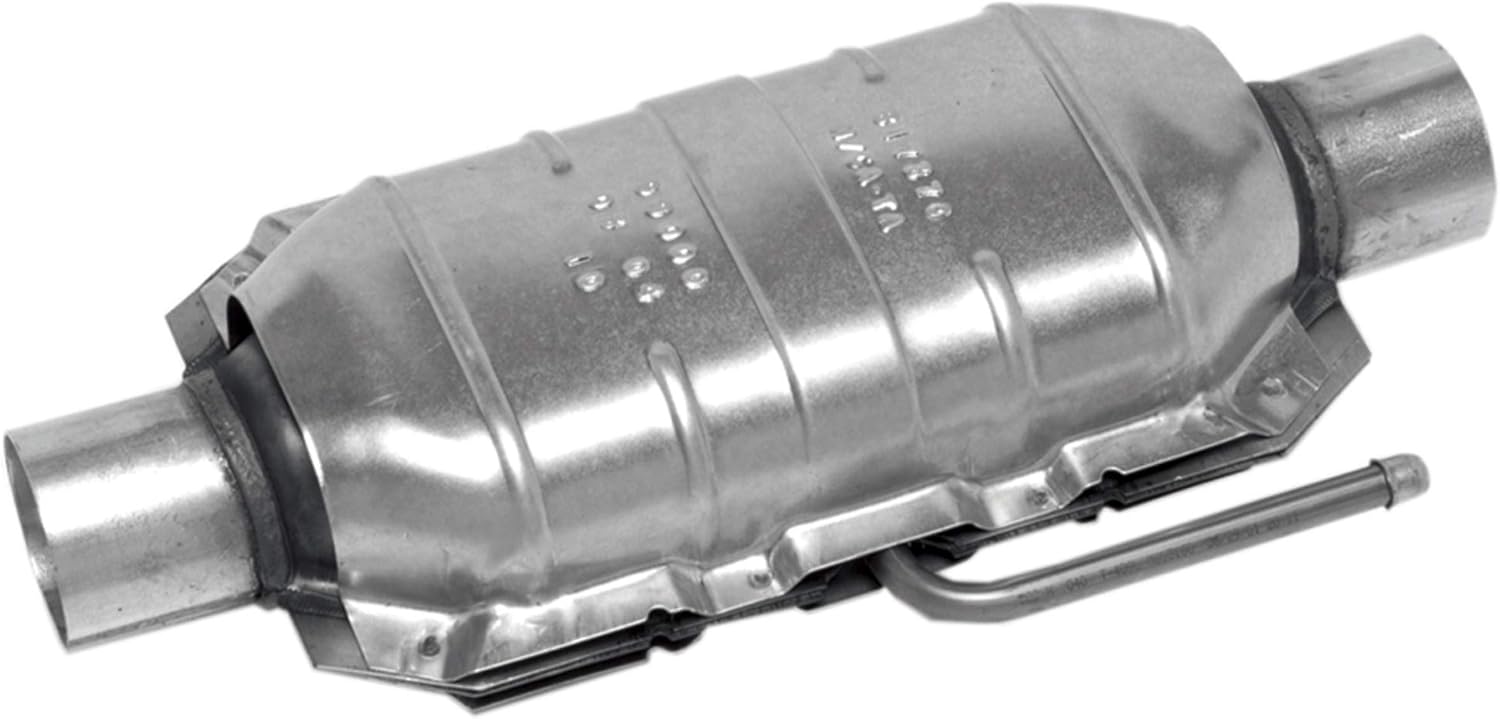
Image: The Walker Standard EPA 15042 Universal Catalytic Converter, showcasing its robust design and inlet/outlet pipes.

Image: A technician inspecting an exhaust component, representing the assured fit testing of the product.
Compatibility
This universal catalytic converter is designed for a wide range of pre-OBDII vehicles (1995 and older). It is crucial to verify compatibility with your specific vehicle before purchase and installation.
Important: Before purchasing, research to ensure that the part will fit your vehicle. Enter all vehicle information (year, make, model, engine, and trim) for compatibility and check qualifier notes. Consult your state's aftermarket converter regulations for details on EPA compliance.
Known compatible vehicles include, but are not limited to:
- 1990-1991 Chrysler Town & Country
- 1992-1993 Chrysler Town & Country
- 1994-1995 Chrysler Town & Country
- 1995 Dodge B1500
- 1987 Dodge B250
- 1994 Dodge B250
- 1995 Dodge B3500
- 1987 Dodge B350
- 1994 Dodge B-series
Setup and Installation
Installation of a catalytic converter typically requires specialized tools and expertise. It is highly recommended that installation be performed by a qualified automotive technician.
- Preparation: Ensure the vehicle is safely lifted and secured. Allow the exhaust system to cool completely before beginning work.
- Removal of Old Converter: Carefully remove the existing catalytic converter. This may involve cutting or unbolting the old unit.
- Fitment: The Walker 15042 features expandable bushings for flexible fitment. Depending on your vehicle, specialized fabrication and/or welding may be required to ensure a secure and leak-free connection.
- Installation: Position the new converter and secure it using appropriate clamps, bolts, or welding techniques. Ensure proper alignment to prevent exhaust leaks and maintain optimal flow.
- Final Checks: After installation, inspect all connections for leaks. The converter is ready to operate immediately; no break-in period is required.

Image: A technician welding a catalytic converter, illustrating the customizable fit feature.

Image: A technician installing the catalytic converter under a vehicle, demonstrating the process.

Image: A close-up view of the catalytic converter flanges, showing connection points.
Operation
Once installed, the Walker Standard EPA 15042 Universal Catalytic Converter functions automatically as part of your vehicle's exhaust system. It converts harmful pollutants (carbon monoxide, hydrocarbons, and nitrogen oxides) into less harmful substances (carbon dioxide, water vapor, and nitrogen) through chemical reactions.
The converter is designed for immediate operation without a break-in period, ensuring your vehicle meets emissions standards from the moment of installation.

Image: A close-up of the catalytic converter, highlighting that no break-in is required after installation.
Maintenance
Catalytic converters are generally maintenance-free components. However, their longevity and efficiency depend on the overall health of your vehicle's engine and exhaust system. Adhering to regular vehicle maintenance schedules is crucial.
- Regular Engine Maintenance: Ensure your engine is properly tuned and maintained. Misfires, excessive oil consumption, or rich fuel mixtures can lead to converter overheating and damage.
- Check for Leaks: Periodically inspect the entire exhaust system for any leaks, especially around the converter connections. Leaks can reduce converter efficiency and cause diagnostic trouble codes.
- Avoid Contaminants: Prevent leaded fuel or certain fuel additives from entering the exhaust system, as these can poison the catalyst and render it ineffective.
Troubleshooting
If you experience issues after installing your catalytic converter, consider the following common problems and solutions:
- Check Engine Light (CEL): If the CEL illuminates after installation, it may indicate an issue with oxygen sensors, exhaust leaks, or other engine problems. A diagnostic scan tool can help identify the specific trouble code. Address underlying engine issues first.
- Exhaust Leaks: Listen for hissing or puffing sounds, which indicate exhaust leaks. These can affect converter efficiency and trigger the CEL. Inspect and seal all connections.
- Rattling Noise: A rattling sound from the converter may indicate internal damage to the catalyst substrate, often due to impact or extreme heat. This typically requires replacement.
- Reduced Performance/Strong Odor: If your vehicle experiences a significant drop in power, poor fuel economy, or emits a strong sulfur smell (like rotten eggs), the converter may be clogged or failing. This often points to an underlying engine problem causing the converter to overheat.
For persistent or complex issues, consult a certified automotive technician for professional diagnosis and repair.
Specifications
| Attribute | Detail |
|---|---|
| Brand | Walker |
| Model Number | 15042 |
| Inlet Connection Size | 2.5 Inches (ID) |
| Outlet Connection Size | 2.5 Inches (ID) |
| Product Dimensions (L x W x H) | 21.5 x 9.5 x 5 inches |
| Item Weight | 1.5 pounds |
| Vehicle Service Type | Car |
| EPA Compliant | For pre-OBDII vehicles (1995 and older) |
| Manufacturer | Tenneco (Dynomax, Walker, Thrush) |
| UPC | 086387150422 |
Warranty Information
Walker products are manufactured to high standards and typically come with a manufacturer's warranty. While specific warranty terms may vary, many Walker catalytic converters offer a 5-year warranty. Please retain your proof of purchase. For detailed warranty information and claims, refer to the official Walker website or contact their customer support directly.
Support and Contact
For technical assistance, installation guidance, or warranty inquiries, please contact Walker customer support or visit their official website.
Website: www.walkerexhaust.com (Note: This is a general manufacturer website. Please refer to official product packaging or documentation for the most accurate support contacts.)
Manufacturer: Tenneco (Dynomax, Walker, Thrush)
Ask a question about this manual
Ask about setup, troubleshooting, compatibility, parts, safety, or missing instructions. Manuals+ will review the question and use this page’s manual context to help answer it.