
1. Introduction
The CycleOps Fluid 2 Bike Trainer is designed to provide a realistic and effective indoor cycling experience. It features a fluid resistance unit that offers a wide range of resistance, mimicking outdoor riding conditions. This manual provides essential information for the proper setup, operation, and maintenance of your trainer.
2. Safety Information
Please read and understand all safety instructions before using the CycleOps Fluid 2 Bike Trainer. Failure to follow these instructions may result in injury or damage to the product.
- Ensure the trainer is placed on a stable, level surface to prevent tipping.
- Always check that your bicycle is securely mounted to the trainer before beginning a workout.
- Keep hands, feet, and clothing clear of all moving parts during operation.
- The resistance unit can become very warm during extended use. Avoid touching it immediately after a workout.
- Do not allow children or pets near the trainer during operation.
- Use appropriate cycling attire, including cycling shoes, for optimal safety and performance.
3. Setup
3.1 Unpacking and Initial Assembly
Carefully remove all components from the packaging. The CycleOps Fluid 2 Trainer is designed for quick assembly. The main frame and resistance unit are largely pre-assembled.
- Unfold the trainer frame until it locks into position.
- Ensure the leveling feet are properly adjusted for stability on your floor surface.
3.2 Mounting Your Bicycle
The Fluid 2 Trainer is compatible with most road and mountain bikes with 26", 27", 700c, and most 29" wheel sizes. It is designed to work with standard quick-release skewers.
- Important Note for Disc Brakes: If your bicycle has disc brakes, the standard quick-release skewer provided with the trainer may not fit correctly. You may need to acquire a compatible skewer designed for disc brake clearance.
- Replace your bike's rear quick-release skewer with the one provided with the trainer. This ensures a secure fit.
- Position your bicycle so the rear wheel is centered over the resistance unit roller.
- Engage the quick-release clamping mechanism on the trainer to secure the bike's rear axle. Ensure it is tightened firmly but do not overtighten.
- Adjust the resistance unit knob until the roller makes firm contact with the rear tire. The tire should be slightly compressed.
- Front Wheel Support: For optimal stability and a level riding position, it is highly recommended to use a front wheel riser block (sold separately). This prevents the bike from leaning forward and reduces strain on your arms.
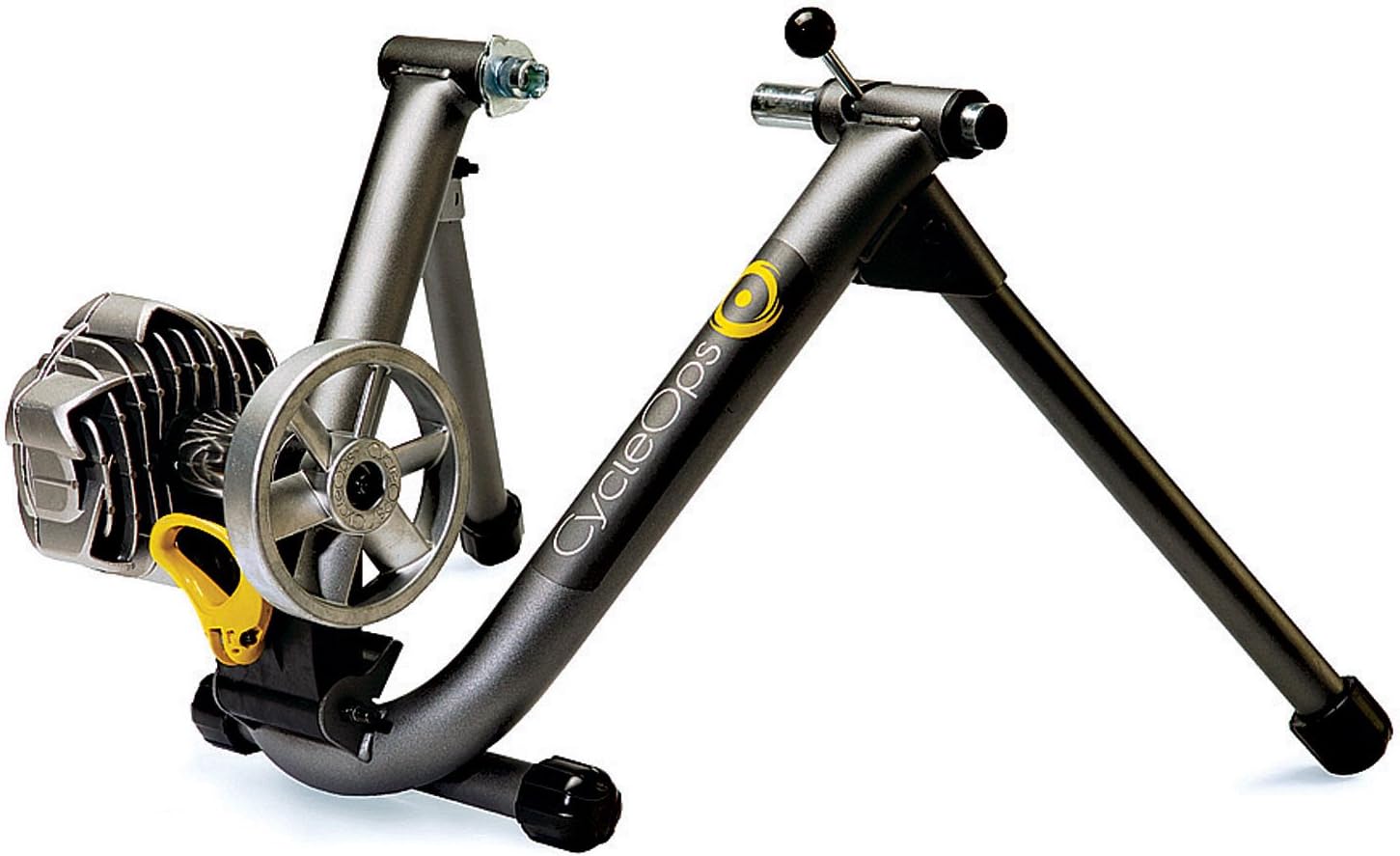
Figure 3.2.1: A bicycle securely mounted on the CycleOps Fluid 2 Trainer, ready for use. The rear wheel rests on the resistance unit roller, and the trainer's frame provides stable support.
4. Operation
4.1 Understanding Fluid Resistance
The CycleOps Fluid 2 Trainer utilizes a fluid resistance unit. This technology provides a progressive resistance curve, meaning that as your wheel speed increases, the resistance automatically increases. This simulates the feel of riding on the road, where higher speeds require more effort.
4.2 Adjusting Resistance
Unlike some trainers with external resistance controls, the Fluid 2's resistance is primarily controlled by your bicycle's gears. By shifting gears on your bike, you can effectively change the effort required to maintain a certain speed, just as you would outdoors.
- Use higher gears for increased resistance and a more challenging workout.
- Use lower gears for easier spinning and recovery.
4.3 Performance Features
- Flywheel: The larger flywheel provides increased inertia, contributing to a smoother, more road-like feel during your ride.
- Power Band Technology: This technology ensures a wide resistance range, accommodating everything from easy spins to intense climbing simulations.
- Self-Cooling Mechanism: The patented fan design helps dissipate heat from the resistance unit, ensuring consistent performance and extending the unit's lifespan.
- Quiet Operation: The Fluid 2 is designed to operate quietly, allowing for a more enjoyable indoor training experience.
5. Maintenance
Regular maintenance ensures the longevity and optimal performance of your CycleOps Fluid 2 Bike Trainer.
- Cleaning: Wipe down the trainer frame and resistance unit with a damp cloth after each use to remove sweat and dust. Avoid using abrasive cleaners.
- Check Connections: Periodically inspect all bolts and quick-release mechanisms to ensure they are securely tightened.
- Tire Pressure: Maintain proper tire pressure on your bicycle's rear wheel for consistent contact with the resistance roller and to minimize tire wear.
- Heat Management: The resistance unit can become very warm during intense or prolonged use. While it has self-cooling features, ensure adequate ventilation around the trainer. Avoid touching the resistance unit immediately after a workout.
6. Troubleshooting
This section addresses common issues you might encounter with your CycleOps Fluid 2 Bike Trainer.
- Issue: Trainer feels unstable.
- Solution: Ensure the trainer is on a flat, level surface. Adjust the leveling feet on the trainer's legs. Verify that the bicycle's quick-release is securely tightened in the trainer clamps. Consider using a front wheel riser block for added stability.
- Issue: Excessive noise during operation.
- Solution: Check that the resistance roller is making firm contact with the tire. Ensure your tire is properly inflated. A smooth, slick road tire will generally be quieter than a knobby mountain bike tire. Consider using a trainer-specific tire to reduce noise and wear.
- Issue: Resistance feels inconsistent or too low/high.
- Solution: Verify that the resistance unit knob is tightened sufficiently so the roller firmly presses against the tire. Ensure your tire pressure is correct. Remember that resistance is primarily controlled by your bike's gears.
- Issue: Quick-release skewer does not fit with disc brakes.
- Solution: The standard quick-release skewer may not clear disc brake calipers. You will need to purchase a longer or specially designed quick-release skewer that is compatible with your disc brake setup and the trainer.
7. Specifications
| Feature | Detail |
|---|---|
| Brand | CycleOps |
| Model | Fluid 2 Trainer (Part No. 700.CO9302F) |
| Resistance Mechanism | Fluid |
| Compatible Wheel Sizes | 26", 27", 700c, most 29" |
| Frame Material | Metal (Aluminum body for resistance unit) |
| Item Weight | 18 Pounds (approx. 8.16 kg) |
| Item Dimensions (LxWxH) | 28 x 21.5 x 15.7 inches (approx. 71.1 x 54.6 x 39.9 cm) |
| UPC | 012527001613 |

Figure 7.1.1: The CycleOps Fluid 2 Trainer shown as a standalone unit, highlighting its robust frame and fluid resistance mechanism.
8. Customer Support and Warranty
For technical assistance, replacement parts, or warranty inquiries, please contact CycleOps customer support. Refer to the official CycleOps website for the most current contact information and warranty details.
Note: Specific warranty terms and conditions may vary by region and purchase date. Please retain your proof of purchase for warranty claims.

