
1. Introduction
This manual provides essential information for the installation, operation, maintenance, and troubleshooting of your NGK PFR6J-11 Laser Platinum Spark Plug. Designed for optimal performance, these spark plugs offer superior ignition and enhanced throttle response, built to OEM specifications for durability and efficiency.
2. Product Overview
Key Features
- Engineered for excellent fuel ignition and enhanced throttle response.
- Built to OEM specifications for reliable performance.
- Features trivalent metal plating for long-lasting durability and protection against anti-seizing.
- Includes a laser welded platinum center electrode tip for faster starts and quicker acceleration.
- Platinum disc welded behind the ground electrode for enhanced fuel economy and reduced emissions.
What's in the Box
- NGK PFR6J-11 Laser Platinum Spark Plug (Pack of 1)

Figure 2.1: NGK PFR6J-11 Laser Platinum Spark Plug and its packaging. The spark plug features a white ceramic insulator and a metallic threaded body, while the box highlights 'NGK Laser Platinum' branding.
3. Installation Guide
General Installation Steps
Note: Always consult your vehicle's service manual for specific instructions and torque specifications. Incorrect installation can lead to engine damage. If you are unsure, seek professional assistance.
- Safety First: Ensure the engine is cool. Disconnect the negative terminal of the vehicle's battery to prevent accidental starting or electrical shorts.
- Identify and Access: Locate the spark plugs, typically found on the cylinder head. You may need to remove engine covers or other components to gain access.
- Remove Old Plugs: Carefully disconnect the spark plug wires or coil packs. Use a spark plug socket to loosen and remove the old spark plugs. Keep track of which wire/coil goes to which cylinder.
- Inspect and Gap (if necessary): While NGK Laser Platinum spark plugs are typically pre-gapped for common applications, it is good practice to verify the gap using a wire-type feeler gauge according to your vehicle's specifications. Adjust only if necessary and with extreme care to avoid damaging the platinum tip.
- Install New Plugs: Hand-thread the new NGK PFR6J-11 spark plugs into the cylinder head to avoid cross-threading. Once finger-tight, use a torque wrench to tighten them to the manufacturer's specified torque.
- Reconnect: Reattach the spark plug wires or coil packs, ensuring they are securely connected. Reconnect the negative battery terminal.

Figure 3.1: Close-up view of the NGK spark plug's electrode tip, showing the central platinum electrode and the ground electrode. This area is crucial for spark generation.
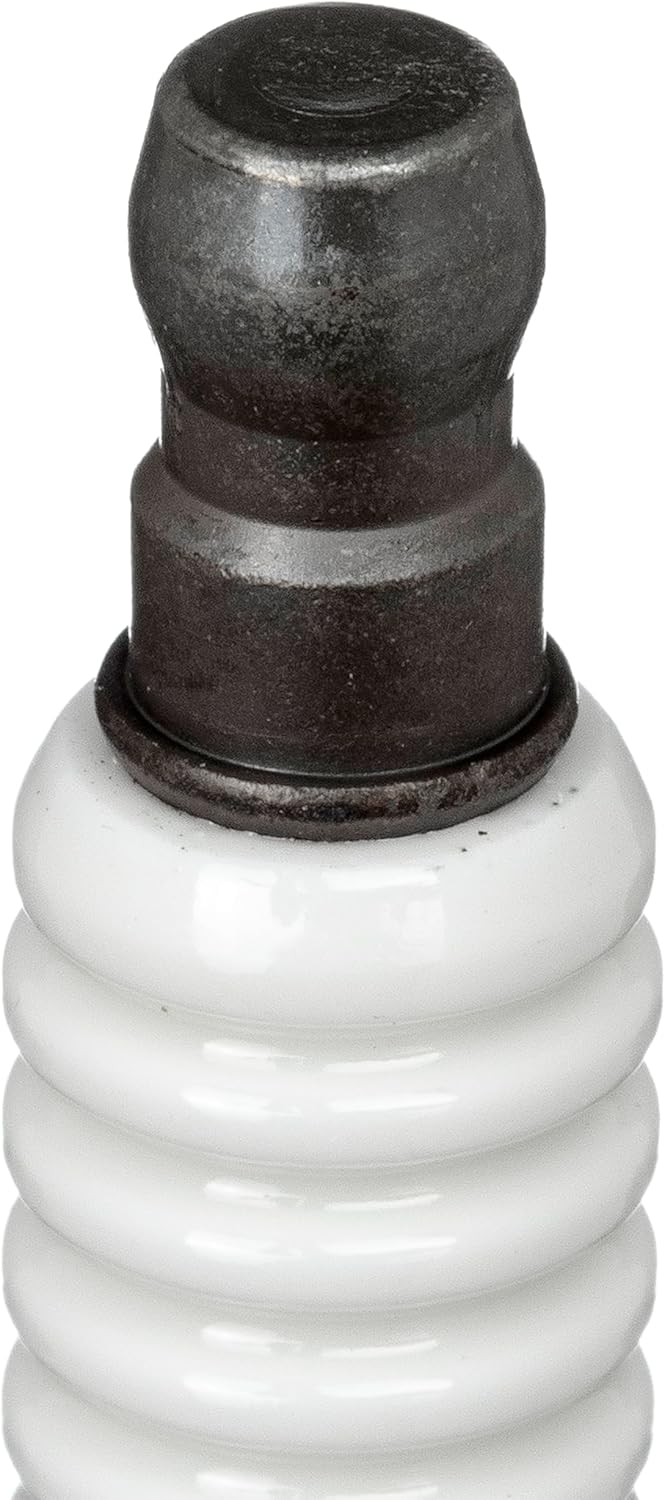
Figure 3.2: Close-up view of the NGK spark plug's ceramic insulator and terminal end. The ribbed design of the insulator helps prevent flashover.
4. Operation Principles
Spark plugs are critical components in gasoline engines, responsible for igniting the air-fuel mixture in the combustion chamber. The NGK PFR6J-11 Laser Platinum Spark Plug achieves this by creating an electrical spark across its electrodes. The platinum construction ensures a consistent, powerful spark over a longer lifespan, contributing to efficient combustion, improved fuel economy, and reduced emissions.
5. Maintenance
Inspection
Regular inspection of spark plugs can provide insights into engine health. Look for:
- Electrode Wear: Excessive wear on the center or ground electrode indicates it's time for replacement.
- Deposits: Black, oily, or white powdery deposits can indicate engine issues (e.g., rich fuel mixture, oil burning, lean mixture).
- Cracks or Damage: Inspect the ceramic insulator for any cracks or chips, which can lead to misfires.
Replacement Interval
While Laser Platinum spark plugs offer extended life, always adhere to your vehicle manufacturer's recommended service intervals for spark plug replacement. This typically ranges from 60,000 to 100,000 miles, but can vary based on driving conditions and engine type.
6. Troubleshooting
Common issues related to spark plugs and potential causes:
| Symptom | Possible Cause | Solution |
|---|---|---|
| Engine Misfire / Rough Idling | Worn or fouled spark plug, incorrect gap, faulty ignition coil/wire. | Inspect/replace spark plugs, check gap, test ignition system components. |
| Poor Fuel Economy | Inefficient combustion due to worn spark plugs. | Replace spark plugs at recommended intervals. |
| Hard Starting | Weak spark from worn electrodes. | Replace spark plugs. |
| Reduced Engine Power | Incomplete combustion. | Inspect and replace spark plugs if necessary. |
7. Specifications
| Attribute | Detail |
|---|---|
| Brand | NGK |
| Model | PFR6J-11 |
| OEM Part Number | 2743 |
| Core Material | Platinum |
| Top Material Type | Metal |
| Vehicle Service Type | Car |
| Global Trade Identification Number (GTIN) | 00087295127438 |
| UPC | 087295027431, 087295127438 |
| Item Weight | 1.59 ounces |
| Product Dimensions | 4.35 x 2.24 x 2.08 inches |
8. Safety Information
WARNING: This product can expose you to chemicals including carbon black, which is known to the State of California to cause cancer, and lead, which is known to the State of California to cause birth defects or other reproductive harm. For more information go to www.P65Warnings.ca.gov.
Always handle spark plugs with care. Avoid contact with hot engine components. Wear appropriate personal protective equipment, including gloves and eye protection, during installation and maintenance.


