
1. Introduction
The Hasbro Gaming Mastermind board game is a classic game of logic and deduction for two or more players. One player, the Codemaker, creates a secret code using colored pegs. The other player, the Codebreaker, attempts to guess the code in a limited number of turns, receiving clues from the Codemaker after each guess. This manual provides detailed instructions for setting up and playing the game, primarily focusing on the classic two-player mode.
2. Components
Before starting, ensure all components are present:
- 1 Mastermind Game Board
- 1 Code Shield
- Colored Pegs (typically 6 colors, multiple pegs of each color)
- Key Pegs (small pegs, typically black and white)
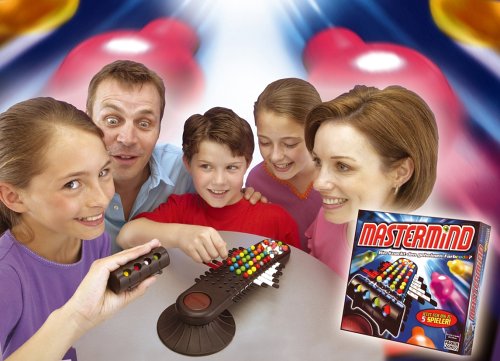
Image: All game components including the board, various colored pegs, and key pegs.
3. Setup
- Place the Mastermind game board on a flat surface between the two players.
- Each player chooses a role: one will be the Codemaker and the other the Codebreaker.
- The Codemaker takes the Code Shield and places it at one end of the board, facing them. This shield will conceal the secret code.
- The Codemaker secretly selects four colored pegs and places them in the four holes behind the Code Shield. Duplicate colors are allowed, and the order matters.
- The remaining colored pegs and all key pegs should be placed within easy reach of both players.

Image: The Mastermind game board with pegs in place, illustrating a typical setup.
4. How to Play
4.1. Codemaker's Role
- The Codemaker's primary task is to create a secret code and provide accurate feedback to the Codebreaker.
- After the Codebreaker makes a guess, the Codemaker provides feedback using the key pegs:
- Black Key Peg: Indicates a colored peg is correct in both color and position.
- White Key Peg: Indicates a colored peg is correct in color but in the wrong position.
- No Key Peg: Indicates a colored peg is not in the secret code at all.
- The order of the key pegs does not correspond to the order of the guessed pegs. For example, if the first guessed peg is correct in color and position, the Codemaker places a black peg, but it doesn't necessarily go in the first key peg hole.
- The Codemaker places the key pegs in the small holes next to the Codebreaker's guess.
4.2. Codebreaker's Role
- The Codebreaker's goal is to guess the Codemaker's secret code within a maximum of 10 turns.
- For each turn, the Codebreaker places four colored pegs in one of the rows on the game board.
- After receiving feedback from the Codemaker, the Codebreaker uses this information to refine their next guess.
- The Codebreaker wins if they guess the exact color and position of all four pegs in the secret code within the allowed turns.
4.3. Game End
- The game ends when:
- The Codebreaker successfully guesses the secret code (four black key pegs are given). The Codebreaker wins.
- The Codebreaker fails to guess the secret code after all 10 rows have been used. The Codemaker wins.
- Players can switch roles and play multiple rounds. The player who wins the most rounds or reaches a predetermined score first is the overall winner.
5. Maintenance
- Cleaning: Wipe the game board and pegs with a soft, dry cloth. Avoid using abrasive cleaners or solvents.
- Storage: Store all game components in their original box or a suitable container to prevent loss or damage. Keep in a cool, dry place away from direct sunlight.
- Handling: Handle pegs and the game board with care to avoid bending or breaking.
6. Troubleshooting
- Missing Pegs: If pegs are missing, check the game box thoroughly. Replacement pegs may be available from the manufacturer or third-party suppliers.
- Confusion with Key Pegs: Ensure the Codemaker understands the difference between black (correct color and position) and white (correct color, wrong position) key pegs. Remember, the order of key pegs does not matter.
- Difficulty Understanding Rules: Re-read the "How to Play" section carefully. Consider watching an official gameplay video if available (though none are provided in this manual).
7. Specifications
| Feature | Detail |
|---|---|
| Brand | Hasbro Gaming |
| Model Number | 44220 |
| Product Dimensions | 26.7 x 26.7 x 6.3 cm |
| Product Weight | 618 Grams |
| Material | Cardboard (packaging/internal components, main game is plastic) |
| Number of Players | 2 to 5 |
| Batteries Required | No |
| Theme | Educational, Logic |
8. Warranty and Support
For information regarding product warranty or customer support, please refer to the packaging or contact Hasbro Gaming directly through their official website. Specific warranty details are not provided within this manual.