
Introduction
This manual provides essential information for the setup, operation, and maintenance of your John Boos KIB02-O Kitchen Island. This robust kitchen island features a durable maple edge grain butcher block top, an integrated drop leaf for extended workspace, a utensil drawer, and two storage shelves. Please read these instructions carefully to ensure proper use and longevity of your product.
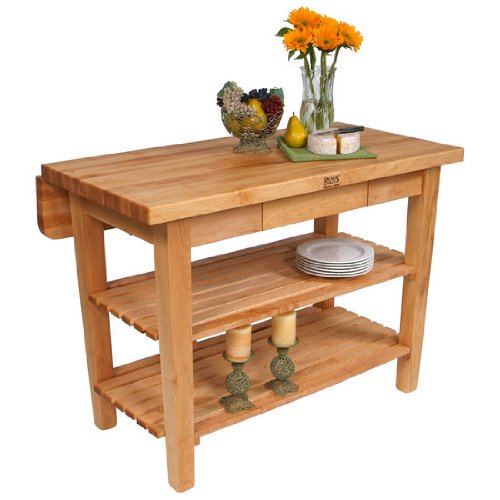
Image: The John Boos KIB02-O Kitchen Island, showcasing its natural maple butcher block top, drop leaf, and storage features.
Product Features
- Butcher Block Top: 1-1/2 inch thick maple edge grain butcher block top, pre-finished with Boos Board Cream for protection.
- Drop Leaf: An 8-inch drop leaf with radius corners, designed to extend the depth of the island to 32 inches when in use.
- Utensil Drawer: A 15-inch wide drawer for convenient storage of kitchen utensils and small items.
- Storage Shelves: Two slatted wooden storage shelves provide additional space for kitchen essentials.
Setup and Assembly
The John Boos KIB02-O Kitchen Island requires some assembly. Please follow these general guidelines:
- Unpack Components: Carefully remove all parts from the packaging. Verify that all components and hardware are present according to the packing list (not provided in this manual, refer to product packaging).
- Assemble Base: Construct the base frame of the island, ensuring all connections are secure and stable.
- Install Shelves: Insert the two slatted wooden shelves into their designated positions within the base.
- Attach Drawer: Install the 15-inch utensil drawer into its housing, ensuring smooth operation.
- Secure Butcher Block Top: Carefully place the maple butcher block top onto the assembled base and secure it using the provided fasteners.
- Attach Drop Leaf: Mount the 8-inch drop leaf to the main butcher block top using the hinge mechanism. Test its functionality to ensure it extends and retracts smoothly.
- Positioning: Place the assembled island on a level, stable surface in your desired kitchen location.
Note: For detailed, step-by-step assembly instructions, please refer to the specific guide included with your product packaging.
Operating Instructions
- Butcher Block Surface: The maple butcher block top is designed for food preparation, including chopping, slicing, and dicing. Always use sharp knives to prevent damage to the wood surface.
- Extending the Drop Leaf: To extend the workspace, gently lift the drop leaf and pull it outwards until it locks into its horizontal position. Ensure it is fully supported before placing items on it.
- Retracting the Drop Leaf: To retract, disengage the locking mechanism (if present) and carefully lower the leaf back into its vertical position against the island.
- Utensil Drawer: Use the 15-inch drawer for organized storage of kitchen tools, cutlery, or other small items. Avoid overloading the drawer.
- Storage Shelves: The two slatted shelves are suitable for storing pots, pans, cookbooks, or other kitchen accessories. Distribute weight evenly on the shelves.
Maintenance and Care
Proper care is essential to maintain the beauty and functionality of your John Boos Kitchen Island, especially the butcher block top.
- Daily Cleaning: After each use, wipe the butcher block surface with a damp cloth (water wipe) and mild soap if necessary. Immediately dry the surface thoroughly with a clean towel. Do not allow water to stand on the wood.
- Oiling the Butcher Block: The maple butcher block is pre-finished with Boos Board Cream. To prevent the wood from drying out, cracking, or warping, regularly apply John Boos Mystery Oil or Board Cream. The frequency depends on usage and climate, but typically once a month is recommended for active use. Apply generously, let it soak in for several hours or overnight, then wipe off any excess.
- Avoid Harsh Chemicals: Do not use abrasive cleaners, strong detergents, or chemical solvents on any part of the island, especially the wood surfaces, as these can damage the finish and wood.
- Heat Protection: Do not place hot pots or pans directly on the butcher block surface without a trivet or heat pad.
- Avoid Submerging: Never submerge the butcher block top in water or place it in a dishwasher.
- General Frame Care: Wipe down the base, drawer, and shelves with a damp cloth as needed.
Troubleshooting
This section addresses common issues you might encounter with your kitchen island.
- Wood Drying/Cracking: If the butcher block appears dry or shows minor cracks, it is likely due to insufficient oiling. Increase the frequency of oiling with John Boos Mystery Oil or Board Cream as described in the Maintenance section.
- Loose Connections: If any part of the island feels wobbly, check all assembly fasteners and tighten them as necessary. Avoid overtightening.
- Drawer Sticking: If the drawer is difficult to open or close, check for obstructions. Ensure the drawer slides are clean and free of debris. A small amount of food-grade lubricant can be applied to the slides if they are metal.
- Drop Leaf Malfunction: If the drop leaf does not extend or retract smoothly, inspect the hinge mechanism for any obstructions or damage. Ensure all screws are tight.
For issues not covered here, please contact John Boos customer support or your retailer.
Specifications
| Feature | Detail |
|---|---|
| Brand | John Boos |
| Product Model Number | JB-KIB02-O |
| ASIN | B00063QA78 |
| Manufacturer | John Boos |
| Product Dimensions | 96.52 x 152.4 x 91.44 cm (38 x 60 x 36 inches) |
| Item Weight | 74.84 kg (165 pounds) |
| Color | Natural Maple |
| Shape | Rectangular |
| Care Instructions | Water wipe |
| Discontinued by Manufacturer | No |
| First Available Date on Amazon.co.jp | August 6, 2012 |
Warranty and Support
Specific warranty details for the John Boos KIB02-O Kitchen Island are typically provided with the product at the time of purchase. Please refer to your purchase documentation or the manufacturer's official website for comprehensive warranty information.
For technical support, replacement parts, or further assistance, please contact John Boos customer service directly. Contact information can usually be found on the manufacturer's website or product packaging.

