1. Important Safety Instructions
Always observe fundamental safety precautions when operating power tools to reduce the risk of fire, electric shock, and serious injury. Read and understand all instructions before operating this radial saw.
- Personal Protective Equipment (PPE): Always wear safety glasses, hearing protection, and a dust mask. Use appropriate clothing; avoid loose clothing or jewelry that could get caught in moving parts.
- Work Area Safety: Keep the work area clean and well-lit. Cluttered or dark areas invite accidents. Do not operate power tools in explosive atmospheres, such as in the presence of flammable liquids, gases, or dust.
- Electrical Safety: Ensure the power supply matches the specifications on the tool's nameplate. Do not abuse the cord. Never use the cord for carrying, pulling, or unplugging the power tool. Keep the cord away from heat, oil, sharp edges, or moving parts.
- Tool Operation: Do not force the power tool. Use the correct power tool for your application. Disconnect the plug from the power source before making any adjustments, changing accessories, or storing power tools.
- Blade Safety: Ensure the blade is sharp and correctly installed. Never attempt to cut material without the blade guard in place and functioning correctly. Allow the blade to reach full speed before beginning a cut.
2. Product Overview
The Metabo Elektra Beckum KGS 301 is a robust radial arm saw designed for precise cutting of various materials, primarily wood. Its radial arm design allows for versatile crosscutting, mitering, and beveling operations. Familiarize yourself with the components before use.
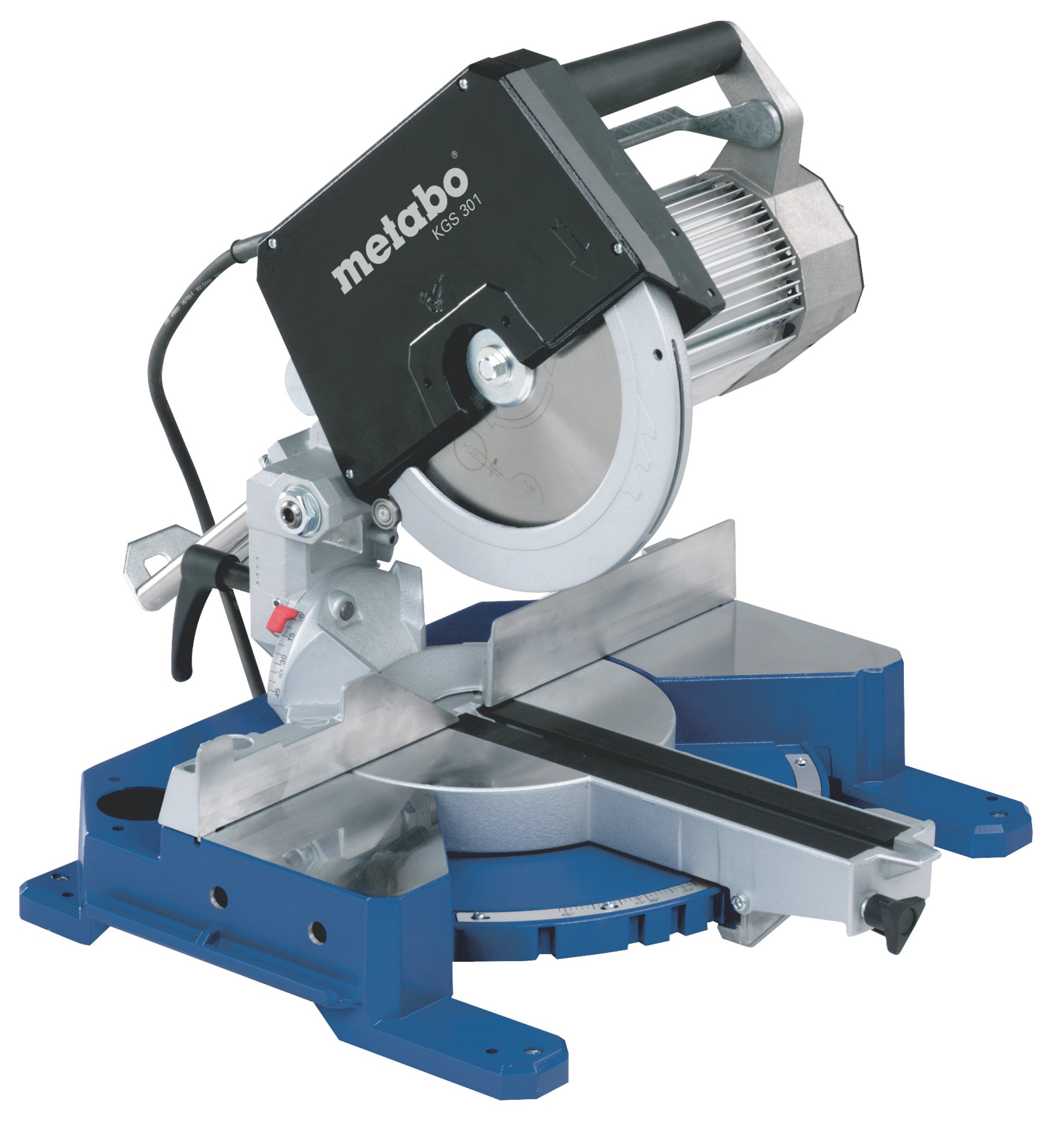
Figure 1: Metabo Elektra Beckum KGS 301 Radial Saw. This image displays the complete radial saw unit, highlighting its main body, motor housing, blade guard, and the adjustable radial arm mechanism.
3. Setup
3.1 Unpacking and Inspection
- Carefully remove all components from the packaging.
- Inspect the saw for any damage that may have occurred during transit. If damage is found, do not operate the tool and contact your supplier.
- Ensure all listed components are present. Refer to the packing list for details.
3.2 Mounting the Saw
- Mount the radial saw securely to a stable workbench or stand using appropriate bolts and fasteners. Ensure the mounting surface can support the weight and operational forces of the saw.
- Verify the saw is level and stable before connecting to power.
3.3 Blade Installation (if not pre-installed)
- WARNING: Disconnect the saw from the power supply before installing or changing the blade.
- Lift the blade guard to expose the blade arbor.
- Place the saw blade onto the arbor, ensuring the teeth are oriented correctly for cutting (usually pointing downwards towards the front of the saw).
- Secure the blade with the provided flange and arbor nut. Tighten firmly using the appropriate wrench.
- Lower the blade guard back into position.
3.4 Power Connection
- Connect the saw's power cord to a grounded electrical outlet that matches the saw's voltage requirements (230 Volts).
- Ensure the power switch is in the 'OFF' position before plugging in the tool.
4. Operating Instructions
4.1 Basic Operation
- Material Placement: Place the workpiece firmly against the fence and the table. Use clamps to secure small or unstable pieces.
- Adjusting Cut Settings: Adjust the radial arm for desired crosscut length, miter angle, and bevel angle according to your project requirements. Lock all adjustments securely.
- Starting the Saw: Ensure the blade is clear of the workpiece. Press the 'ON' button. Allow the blade to reach full operating speed (4500 rpm) before beginning the cut.
- Making a Cut: Slowly and steadily pull the saw head through the workpiece. Do not force the cut. Maintain a firm grip on the handle.
- Finishing a Cut: Once the cut is complete, release the trigger or press the 'OFF' button. Allow the blade to stop completely before returning the saw head to its resting position and removing the workpiece.
4.2 Adjusting for Miter and Bevel Cuts
- Miter Adjustment: Loosen the miter lock knob/lever. Rotate the saw table to the desired miter angle (e.g., 45 degrees). Tighten the lock knob/lever firmly.
- Bevel Adjustment: Loosen the bevel lock knob/lever. Tilt the saw head to the desired bevel angle. Tighten the lock knob/lever firmly.
- Always perform a test cut on scrap material to verify settings before cutting your final workpiece.
5. Maintenance
Regular maintenance ensures the longevity and safe operation of your radial saw. Always disconnect the saw from the power supply before performing any maintenance.
- Cleaning: After each use, clean the saw thoroughly. Remove sawdust and debris from the motor vents, blade guard, and table using a brush or compressed air. Do not use solvents that could damage plastic parts.
- Blade Inspection: Regularly inspect the saw blade for sharpness, cracks, or missing teeth. Replace dull or damaged blades immediately.
- Lubrication: Periodically apply a light coat of machine oil to moving parts and pivot points as indicated in the detailed service manual (if applicable) to ensure smooth operation.
- Cord Inspection: Check the power cord for any signs of damage, cuts, or fraying. Replace damaged cords immediately to prevent electrical hazards.
- Brush Replacement: Carbon brushes in the motor may need periodic replacement. Refer to a qualified service technician or the full service manual for instructions.
6. Troubleshooting
This section addresses common issues you might encounter with your radial saw.
| Problem | Possible Cause | Solution |
|---|---|---|
| Saw does not start | No power supply; Faulty power cord; Overload protection tripped; Defective switch | Check power connection and outlet; Inspect power cord; Reset circuit breaker; Contact service for switch replacement |
| Poor cut quality (rough cuts, burning) | Dull or damaged blade; Incorrect blade for material; Blade installed backward; Saw not stable | Replace or sharpen blade; Use appropriate blade; Reinstall blade correctly; Secure saw to workbench |
| Excessive vibration or noise | Loose blade; Damaged blade; Loose mounting bolts; Worn motor bearings | Tighten blade arbor nut; Replace blade; Tighten mounting bolts; Contact service for bearing replacement |
| Motor overheats | Overloading the saw; Blocked ventilation slots; Worn motor brushes | Reduce cutting pressure; Clean ventilation slots; Have brushes inspected/replaced by service |
7. Specifications
Technical data for the Metabo Elektra Beckum KGS 301 Radial Saw.
- Manufacturer: Elektra Beckum (Metabo)
- Reference: 7982-20
- Power Source: Corded Electric
- Voltage: 230 Volts
- Speed: 4500 rpm
- Item Weight: 23 Kilograms
- Package Dimensions: 62.8 x 59.2 x 41.6 cm
- Batteries Required: No
- Blade Shape: Radial
- International Article Code: 04003665353609
8. Warranty and Support
For warranty information, please refer to the documentation provided at the time of purchase or contact your retailer. Metabo products typically come with a manufacturer's warranty covering defects in materials and workmanship.
For technical support, spare parts, or service inquiries, please contact your authorized Metabo dealer or visit the official Metabo website for contact information in your region. When contacting support, please have your model number (KGS 301) and reference number (7982-20) available.


