
1. Introduction
This manual provides detailed instructions for the assembly, operation, maintenance, and troubleshooting of your Celestron PowerSeeker 114EQ Reflector Telescope. The PowerSeeker 114EQ is a Newtonian Reflector telescope designed for observing celestial objects such as planets, the Moon's craters, distant stars, and nebulae. It features a 114mm aperture and a German Equatorial mount for precise tracking.
Please read this manual thoroughly before using your telescope to ensure proper setup and optimal viewing experience.
2. Safety Information
- Never look directly at the Sun with your telescope or its finder scope. Permanent and irreversible eye damage may result.
- Do not point the telescope at the Sun without a professionally made solar filter. Even a brief glance at the Sun can cause immediate and permanent damage to your eyes.
- Always supervise children when they are using the telescope.
- Handle optical components with care to avoid scratches or damage.
- Ensure the tripod is stable on a level surface to prevent tipping.
3. Package Contents
Your Celestron PowerSeeker 114EQ Reflector Telescope package includes the following components:
- 114mm Newtonian Reflector Optical Tube
- German Equatorial Mount
- Height-Adjustable Aluminum Tripod
- Accessory Tray
- 20mm Eyepiece (1.25")
- 4mm Eyepiece (1.25")
- 3x Barlow Lens (1.25")
- 5x24 Finderscope with Bracket
- Slow-motion control cables

Figure 3.1: Fully assembled Celestron PowerSeeker 114EQ Reflector Telescope.
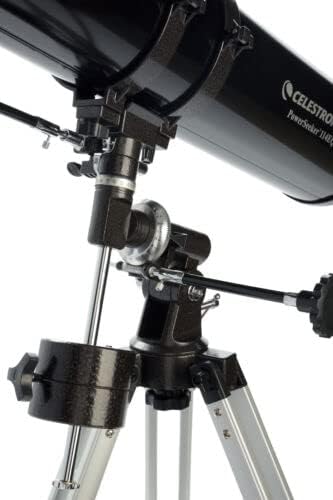
Figure 3.2: The 20mm and 4mm eyepieces, along with the 3x Barlow lens, included with your telescope.
4. Setup and Assembly
Assembly of the PowerSeeker 114EQ is straightforward and requires no tools. Follow these steps to set up your telescope:
- Set up the Tripod: Spread the tripod legs apart until they are fully extended. Secure the accessory tray to the center brace of the tripod. Adjust the leg height to your desired viewing level, ensuring the tripod is stable.
- Attach the Equatorial Mount: Place the German Equatorial mount onto the tripod head. Secure it using the large knob or screw located underneath the tripod head. Ensure it is tightly fastened.
- Mount the Optical Tube: Locate the mounting rings on the optical tube. Align these rings with the mounting plate on the equatorial mount. Secure the optical tube by tightening the screws on the mounting rings.
- Install the Finderscope: Slide the finderscope into its bracket on the optical tube. Tighten the small screws on the bracket to hold it in place. The finderscope is crucial for locating objects before viewing them through the main telescope.
- Insert Eyepieces: Loosen the thumbscrews on the focuser. Insert the desired eyepiece (e.g., the 20mm for lowest magnification and widest field of view) into the focuser. Tighten the thumbscrews to secure the eyepiece. For higher magnification, you can use the 4mm eyepiece or the 3x Barlow lens in conjunction with an eyepiece.
- Attach Slow-Motion Controls: Connect the slow-motion control cables to the appropriate shafts on the equatorial mount. These cables allow for fine adjustments when tracking celestial objects.

Figure 4.1: Detail of the German Equatorial mount attached to the tripod, showing the slow-motion controls.
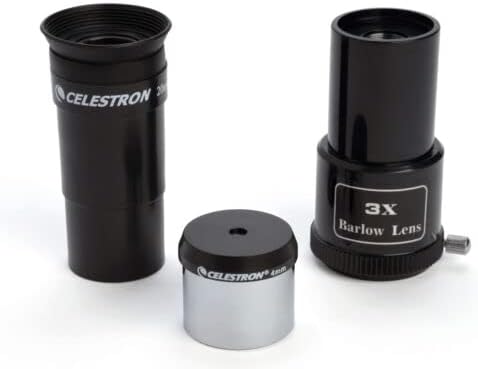
Figure 4.2: The focuser assembly with an eyepiece inserted, and the finderscope mounted on the optical tube.
5. Operating the Telescope
5.1 Aligning the Finderscope
Before observing, the finderscope must be aligned with the main telescope. This allows you to easily locate objects in the night sky.
- Point the main telescope at a distant, stationary object (e.g., a streetlight or a distant tree) during daylight hours.
- Center the object in the main telescope's eyepiece (start with the 20mm eyepiece).
- Look through the finderscope. Use the adjustment screws on the finderscope bracket to move the crosshairs until they are centered on the same object.
- Once aligned, objects centered in the finderscope will also be visible in the main telescope's eyepiece.
5.2 Focusing
To achieve a sharp image, rotate the focus knob located on the focuser until the image appears clear. You may need to make slight adjustments as objects move or as your eyes adjust.
5.3 Using the German Equatorial Mount
The German Equatorial mount is designed to track celestial objects as they move across the sky due to Earth's rotation. To use it effectively:
- Polar Alignment: For long observation sessions, align the mount's polar axis with the North Celestial Pole (near Polaris in the Northern Hemisphere). This allows you to track objects by rotating only one axis (Right Ascension).
- Tracking: Once an object is found and focused, use the slow-motion control cables to make fine adjustments to keep the object centered in the eyepiece as it drifts. The Right Ascension (RA) control tracks the object horizontally, and the Declination (DEC) control tracks it vertically.
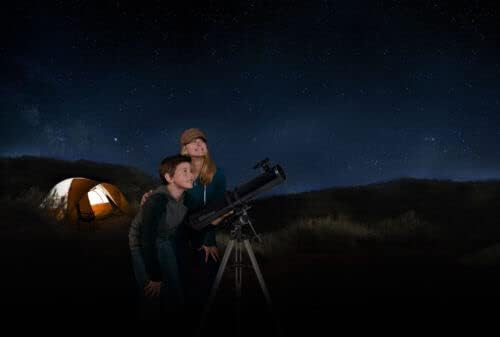
Figure 5.1: Observing the night sky with the Celestron PowerSeeker 114EQ telescope.
6. Maintenance and Care
- Cleaning Optics: Use a soft brush to remove dust from lenses and mirrors. For smudges, use a specialized optical cleaning solution and a microfiber cloth. Avoid touching optical surfaces with your fingers.
- Storage: Store the telescope in a dry, dust-free environment. Keep dust caps on the optical tube and eyepieces when not in use.
- Collimation: As a Newtonian reflector, the 114EQ's mirrors may occasionally require collimation (alignment). This is an advanced procedure; refer to online resources or the detailed user guide for instructions if you notice image distortion.
- General Care: Avoid exposing the telescope to extreme temperatures or sudden temperature changes. Do not overtighten knobs or screws.
7. Troubleshooting
| Problem | Possible Cause | Solution |
|---|---|---|
| Image is blurry or out of focus. | Incorrect focus; poor atmospheric conditions; misaligned optics (collimation needed). | Adjust the focus knob slowly. Wait for stable atmospheric conditions. Check collimation if persistent. |
| Cannot find objects. | Finderscope not aligned; using too high magnification. | Align the finderscope (see Section 5.1). Start with the lowest magnification eyepiece (20mm). |
| Image appears dim. | Light pollution; using too high magnification; dirty optics. | Observe from a dark location. Use lower magnification. Clean optics if necessary. |
| Objects drift out of view quickly. | Improper tracking with equatorial mount; mount not polar aligned. | Use slow-motion controls to track. For extended viewing, perform polar alignment. |
8. Specifications
| Feature | Detail |
|---|---|
| Optical Design | Newtonian Reflector |
| Aperture (Objective Lens Diameter) | 114 Millimeters |
| Optical Tube Length | 875 Millimeters |
| Eyepieces Included | 20mm, 4mm (1.25") |
| Barlow Lens | 3x |
| Finderscope | 5x24 Finderscope |
| Mount Type | German Equatorial Mount |
| Focus Type | Manual Focus |
| Power Source | Manual |
| Tripod | Aluminum, Height-Adjustable |
| Item Weight | 12.28 pounds |
| Product Dimensions (Packaged) | 37 x 16 x 10 inches |
9. Warranty and Support
Celestron provides a 2-Year US Warranty for the PowerSeeker 114EQ Reflector Telescope, covering defects in materials and workmanship. For warranty claims or technical assistance, please contact Celestron's US-based expert support team.
For a more detailed user guide, you can download the official PDF document:


