
1. Introduction
This manual provides essential information for the safe installation, operation, and maintenance of the Connecticut Electric CH260 Type CH Miniature Circuit Breaker. This 2-pole, 60 Amp circuit breaker is designed for use in Cutler-Hammer Type CH load centers and is rated for 120/240 VAC applications with a 10 kA interrupting capacity. Please read this manual thoroughly before proceeding with any installation or maintenance.
2. Safety Information
DANGER: Risk of Electric Shock.
Always disconnect power at the main service panel before working on or near electrical equipment. Failure to do so can result in severe injury or death. Only qualified electricians should perform electrical installations.
WARNING: Fire Hazard.
Ensure all wire connections are tight and properly sized for the circuit breaker's rating. Loose connections or undersized wiring can lead to overheating and fire. Do not use this breaker for applications exceeding its specified voltage or current ratings.
CAUTION: Equipment Damage.
This circuit breaker is designed for specific load centers. Verify compatibility with your existing electrical panel before installation. Refer to local electrical codes for all installation requirements.
3. Product Overview
The Connecticut Electric CH260 is a double-pole, 60 Amp miniature circuit breaker. It is specifically designed as a replacement or new installation breaker for Cutler-Hammer Type CH load centers. Key features include:
- 2 Pole, 60 Amp rating
- Compatible with Cutler-Hammer Type CH load centers
- Requires two 3/4-inch spaces in the panel
- 120/240 VAC voltage rating
- 10 kA interrupting capacity
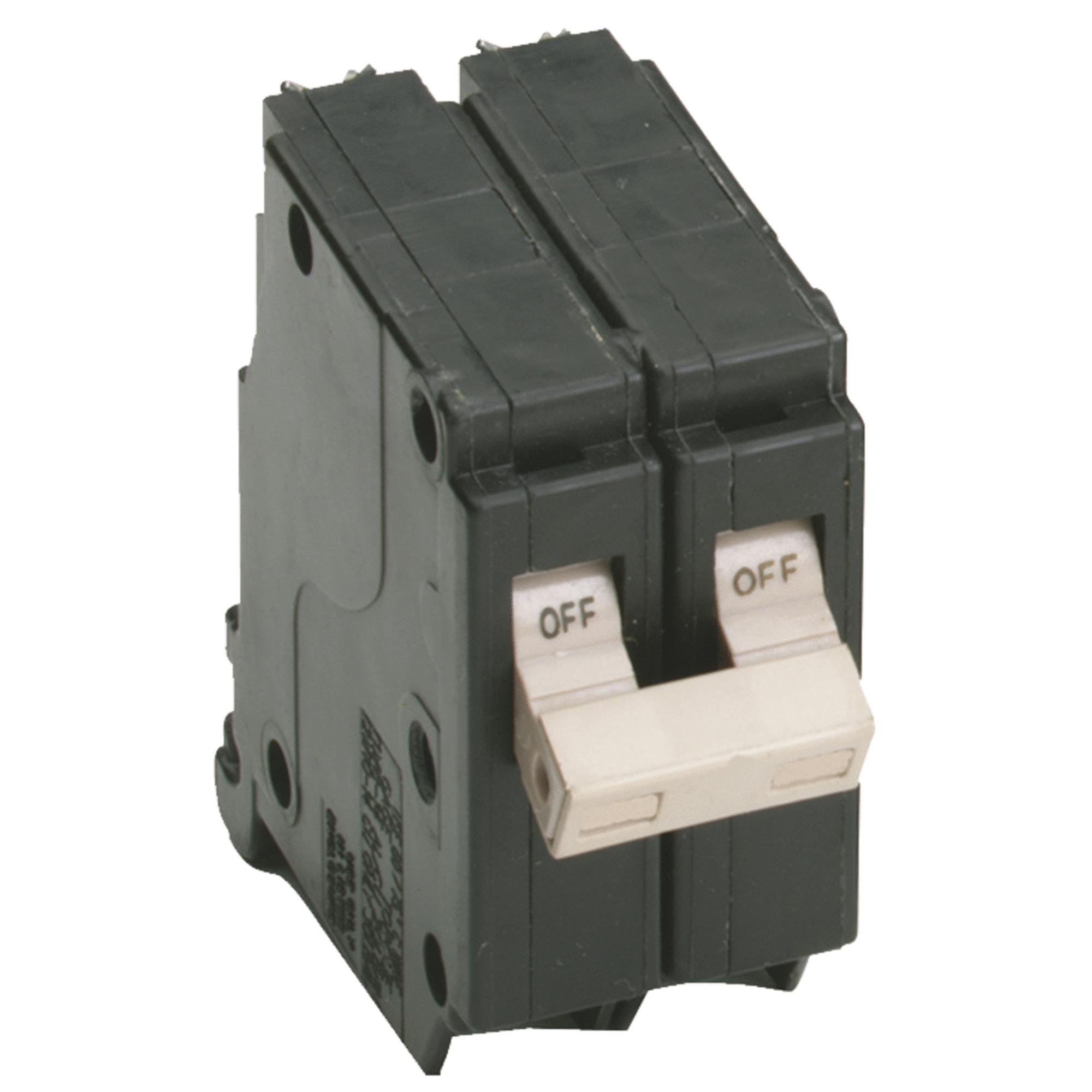
An image showing the front and side view of the Connecticut Electric CH260 Type CH Miniature Circuit Breaker, highlighting its compact design and terminal connections.
4. Setup and Installation
Installation of this circuit breaker should only be performed by a qualified electrician in accordance with all national and local electrical codes.
Installation Steps:
- Disconnect Main Power: Locate the main service panel and turn off the main circuit breaker to completely de-energize the panel. Verify power is off using a voltage tester.
- Remove Panel Cover: Carefully remove the cover of the electrical panel.
- Prepare Wiring: If replacing an existing breaker, disconnect the wires from the old breaker. If installing a new circuit, route the appropriate gauge wires to the panel.
- Install Breaker: Position the CH260 circuit breaker into two adjacent 3/4-inch spaces in the Cutler-Hammer Type CH load center. Ensure it is firmly seated on the bus bar.
- Connect Wires: Connect the circuit wires to the appropriate terminals on the breaker. For a 240V circuit, connect both hot wires to the breaker terminals. Tighten all terminal screws to the manufacturer's specified torque settings.
- Replace Panel Cover: Once all connections are secure and verified, replace the electrical panel cover.
- Restore Power: Turn the main circuit breaker back on at the service panel.
5. Operating Instructions
The CH260 circuit breaker is designed to automatically trip (turn off) when an overcurrent condition (overload or short circuit) occurs on the protected circuit. This protects wiring and equipment from damage.
Resetting a Tripped Breaker:
- Identify Tripped Breaker: A tripped breaker will typically be in an intermediate position between ON and OFF, or fully in the OFF position.
- Turn OFF: Firmly push the breaker handle to the full OFF position.
- Turn ON: Firmly push the breaker handle to the full ON position.
If the breaker immediately trips again, there is still an issue on the circuit. Do not repeatedly reset the breaker without investigating the cause. Consult a qualified electrician.
6. Maintenance
Circuit breakers generally require minimal maintenance. However, periodic inspection is recommended.
- Annual Inspection: With the main power OFF, visually inspect the breaker and its connections for any signs of damage, discoloration, or loose wires.
- Cleaning: If necessary, gently clean the exterior of the breaker with a dry, non-abrasive cloth. Ensure power is OFF before cleaning.
- Avoid Lubricants: Do not apply any lubricants or cleaning solvents to the internal mechanisms of the breaker.
7. Troubleshooting
Breaker Trips Frequently:
- Overload: The circuit may be drawing more current than the breaker's rating. Reduce the load on the circuit by unplugging some devices.
- Short Circuit: A direct connection between hot and neutral/ground wires. This requires immediate investigation by an electrician.
- Ground Fault: Current leaking to ground.
- Faulty Appliance/Wiring: An appliance or part of the circuit wiring may be defective.
Breaker Does Not Reset:
- Ensure you are pushing the handle fully to the OFF position before attempting to reset to ON.
- If it still won't reset, there may be a persistent fault on the circuit or the breaker itself may be damaged. Do not force it.
No Power to Circuit:
- Check if the breaker is in the ON position.
- Verify the main breaker for the panel is ON.
- Inspect for loose connections (only with power OFF).
For any persistent electrical issues, always consult a qualified electrician.
8. Specifications
| Brand | Connecticut Electric |
| Model | CH260 |
| Current Rating | 60 Amps |
| Voltage | 120/240 Volts AC |
| Number of Poles | 2 |
| Interrupting Rating | 10 kA |
| Mounting Type | Plug-in (for Type CH panels) |
| Product Dimensions (D x W x H) | 3"D x 1.48"W x 3.02"H |
| Item Weight | 0.38 Pounds |
9. Warranty Information
This Connecticut Electric CH260 circuit breaker comes with a 2-year warranty from the date of purchase. This warranty covers defects in materials and workmanship under normal use. It does not cover damage resulting from improper installation, misuse, abuse, or unauthorized modifications. Please retain your proof of purchase for warranty claims.
10. Support
For technical assistance, warranty claims, or further information regarding your Connecticut Electric CH260 circuit breaker, please contact Connecticut Electric customer support. Contact details can typically be found on the product packaging or the official Connecticut Electric website.


