Introduction
This manual serves as a detailed guide to the book "Development and Implementation of Ship BWMS," providing an overview of its content and the critical aspects of Ballast Water Management Systems (BWMS). The book aims to introduce the fundamental components and operational principles of common ballast management systems, offering insights into their design, implementation, and maintenance.
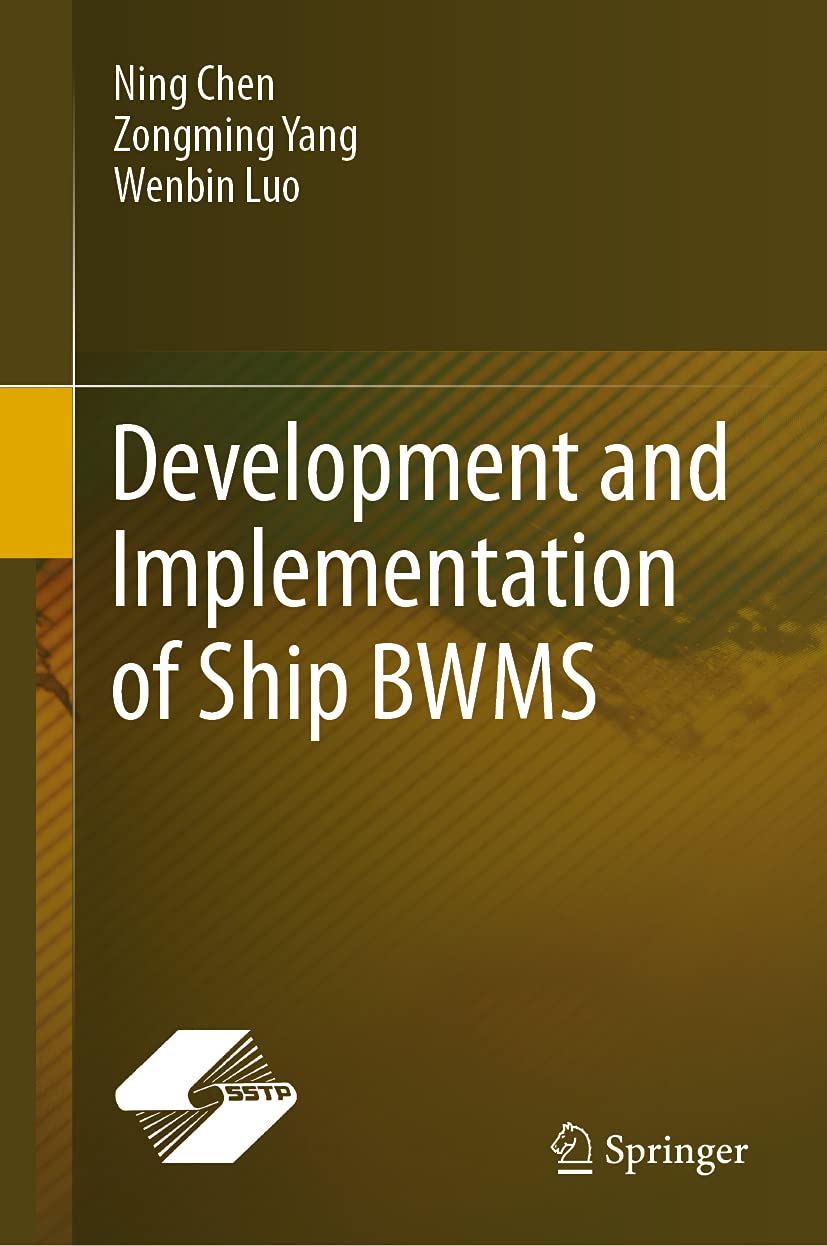
Image: Front cover of the book "Development and Implementation of Ship BWMS," featuring the title, authors, and publisher logo.
It covers various aspects from the working principles of different equipment to the intricacies of system management and human-computer interfaces, culminating in essential maintenance practices.
Key Components and Principles
This section elaborates on the core components and foundational principles that govern common ballast management systems. Understanding these elements is crucial for effective operation and maintenance.
- System Architecture: Overview of the overall structure of BWMS.
- Core Principles: Explanation of the underlying scientific and engineering principles.
Working Principles of Equipment
The book details the operational mechanisms of various equipment used within BWMS, focusing on filtration, cleaning, and sterilizing technologies.
- Filtration Systems: How different filtration methods remove suspended solids and organisms.
- Cleaning Technologies: Techniques employed for maintaining system hygiene and preventing biofouling.
- Sterilizing Equipment: Principles of various sterilization methods to eliminate harmful aquatic organisms and pathogens.
Construction Design and Simulation
This part of the manual highlights the methodologies for construction design and simulation pertinent to BWMS. It covers the calculation norms and simulation techniques essential for system development.
- Calculation Norms: Standards and guidelines for designing BWMS components.
- Simulation Methods: Techniques for modeling and predicting system performance under various conditions.
System Management
Different aspects of managing a ballast water management system are analyzed, providing a holistic view of operational management.
- Operational Procedures: Best practices for daily operation.
- Regulatory Compliance: Adherence to international and national regulations.
- Performance Monitoring: Methods for tracking and evaluating system efficiency.
Control System and Human-Computer Interface
This section delves into the technological backbone of BWMS, covering detecting sensors, hardware components of the control system, and the design principles of the human-computer interface (HCI).
- Detecting Sensors: Types and functions of sensors used for monitoring system parameters.
- Control System Hardware: Description of the physical components that constitute the control system.
- HCI Design: Principles and methods for designing intuitive and effective user interfaces.
Maintenance and Management
Crucial information regarding the maintenance and management of the ballast water management system is provided, with a particular focus on the key components.
- Routine Maintenance: Scheduled checks and procedures to ensure optimal performance.
- Troubleshooting: Common issues and their resolutions.
- Component-Specific Care: Detailed maintenance guidelines for critical parts of the system.
Specifications
Detailed specifications of the book "Development and Implementation of Ship BWMS" are provided below:
| Attribute | Value |
|---|---|
| Publisher | Springer |
| Publication Date | April 16, 2021 |
| Edition | 1st ed. 2021 |
| Language | English |
| Print Length | 294 pages |
| ISBN-10 | 9813368640 |
| ISBN-13 | 978-9813368644 |
| Item Weight | 1.35 pounds |
| Dimensions | 6.14 x 0.69 x 9.21 inches |
About the Authors
This book is authored by leading experts in the field:
- Ning CHEN: Professor and Director of the Institute of Marine Turbine System and Equipment. Graduated from Jiangsu University of Science and Technology with a Master's degree in Mechanical Manufacture. Engaged in marine engineering, a senior member of China society of naval architecture and marine engineering computer application committee members, member of the professional committee on the integration of shell outfitting and coating, and Deputy Director of committee members of Jiangsu shipbuilding turbine engineering association.
- Zongming YANG: Associate Professor and head of the Department of Power Engineering at the School of Energy and Power, Jiangsu University of Science and Technology. Graduated from Harbin Institute of Marine Engineering with a Master's degree in Marine Power Plant. Focuses on marine power systems, power plants, and energy conservation research, with participation in international cooperation projects.
- Wenbin LUO: (Information not detailed in provided JSON, but listed as author.)


