1. Introduction to the Book
This manual provides guidance for engaging with Virtue Ethics for Women 1250-1500, a scholarly work edited by Karen Green and Constant Mews. The book explores the representation and discussion of women's virtues within medieval thought, tracing the evolution of ethical ideas from the medieval to the Renaissance period. It highlights key figures and texts, offering insights into how women were perceived and how they contributed to ethical discourse during this era.
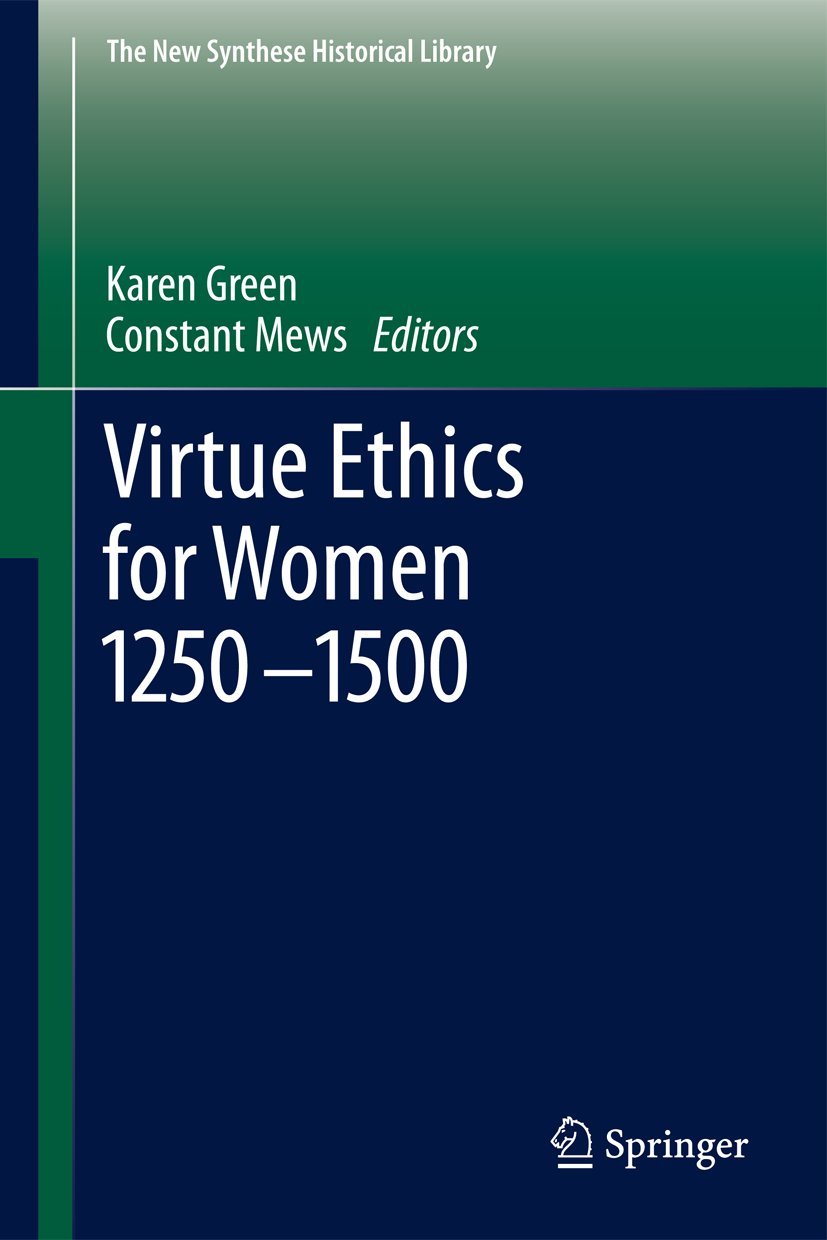
This image displays the front cover of the book 'Virtue Ethics for Women 1250-1500'.
Purpose of the Book
The primary purpose of this book is to examine the historical context of virtue ethics as it pertains to women between 1250 and 1500. It specifically investigates how figures like Christine de Pizan argued for women's virtuous participation in political communities and introduces lesser-known texts such as the Speculum Dominarum. The work aims to illuminate the ethical ideas of notable women including Anne of France, Laura Cereta, Marguerite of Navarre, and the Dames de la Roche, positioning their contributions within the broader philosophical transition from medieval to Renaissance thought.
2. Getting Started with the Text
Understanding the Context
To fully appreciate the arguments presented, readers should familiarize themselves with the historical and philosophical landscape of the medieval and early Renaissance periods. Key concepts include scholasticism, humanism, and the evolving roles of women in society and intellectual life. The book assumes a foundational understanding of virtue ethics.
Target Audience
This volume is intended for scholars and students of virtue ethics, the history of women's ideas, and medieval and Renaissance thought. It serves as a valuable resource for those interested in the intersection of philosophy, gender studies, and historical analysis.
3. Engaging with the Content
Reading Strategies
- Sequential Reading: For a comprehensive understanding, read chapters in the order presented, as arguments often build upon previous discussions.
- Focused Reading: If you have a specific research interest, consult the table of contents (if available in the physical book) or index to locate relevant sections.
- Critical Analysis: Engage with the primary and secondary sources discussed. Consider the authors' interpretations and form your own conclusions.
Key Themes to Observe
- The evolving definition of virtue in relation to gender.
- The role of women in political and intellectual life.
- The transition from medieval scholasticism to Renaissance humanism in ethical thought.
- The influence of specific texts and figures, such as Christine de Pizan and the Speculum Dominarum.
4. Care and Preservation
Physical Book Care
- Storage: Store the book in a cool, dry place away from direct sunlight to prevent fading and damage to the pages and binding.
- Handling: Handle with clean, dry hands. Avoid folding pages or placing heavy objects on the book.
- Protection: Consider using a bookmark instead of dog-earing pages.
Intellectual Engagement
- Re-reading: Revisit sections or chapters to deepen your understanding of complex arguments.
- Cross-referencing: Utilize the bibliography and footnotes to explore related scholarly works and primary sources.
- Discussion: Engage in discussions with peers or instructors to gain diverse perspectives on the book's themes.
5. Troubleshooting and Further Resources
Addressing Difficult Concepts
- Glossary: If the book includes a glossary, refer to it for definitions of specialized terms.
- Contextual Research: For particularly challenging historical or philosophical concepts, consult encyclopedias or introductory texts on medieval philosophy or women's history.
- Academic Support: If you are a student, discuss difficult passages with your professor or teaching assistant.
Finding Specific Information
Use the index at the back of the book to quickly locate discussions on specific individuals, concepts, or historical events. The bibliography can guide you to further reading on related topics.
6. Product Specifications
| Publisher | Springer |
| Publication Date | May 29, 2013 |
| Edition | 2011th |
| Language | English |
| Print Length | 256 pages |
| ISBN-10 | 9400735820 |
| ISBN-13 | 978-9400735828 |
| Item Weight | 12.8 ounces |
| Dimensions | 6.1 x 0.58 x 9.25 inches |
| Series | The New Synthese Historical Library, 69 |
7. Warranty and Support
Publisher Information
This book is published by Springer. For inquiries regarding publication details, content, or academic permissions, please contact Springer directly through their official website.
Return Policy
For issues related to the physical condition of the book (e.g., printing errors, damaged pages), please refer to the return policy of the retailer from whom the book was purchased. Standard return policies typically allow for returns or exchanges within a specified period for defective items.
For purchases made through Amazon, the buybox winner indicates a return policy of 30 days for refund/replacement, fulfilled by Amazon. Please consult your Amazon order details for specific return instructions.