1. Introduction: Purpose of the Book
This book, "Film Editing in the History of Cinema: Techniques, Forms, Functions," delves into the crucial yet often overlooked aspect of film editing within cinematic production and representation. It explores the evolution and purpose of various editing forms, tracing their development from the earliest days of cinema to the contemporary digital era.
The content integrates both theoretical frameworks from renowned masters and practical insights from technical manuals, offering a comprehensive understanding of the subject. It aims to provide readers with a foundational knowledge of editing's historical significance and its ongoing impact on cinematic storytelling.
2. Key Concepts Covered
This manual covers a wide range of topics essential to understanding film editing:
- Historical Evolution of Film Editing: Tracing the development of editing techniques and theories from early cinema to modern practices.
- Theoretical Perspectives on Montage: Examination of influential theories and concepts proposed by key figures in film history.
- Practical Techniques and Methodologies: Insights into the practical application of editing principles across different eras and genres.
- Impact of Digital Technology on Editing: Analysis of how digital advancements have transformed the art and craft of film editing.
- Analysis of Editing Forms and Functions: Detailed exploration of various editing styles and their narrative, emotional, and thematic roles.
3. Target Audience
This book is intended for students, researchers, film enthusiasts, and professionals in the fields of cinema studies, film production, media arts, and cultural history. It serves as an essential resource for anyone seeking a deeper understanding of the art and science of film editing.
4. How to Use This Book
The book is structured to guide readers through a chronological and thematic exploration of film editing. Each chapter focuses on specific periods, movements, or technical advancements. Readers are encouraged to engage with the provided examples and theoretical discussions to build a robust understanding of the subject.
For academic study, cross-referencing with external film examples and primary sources is recommended to enrich the learning experience. The comprehensive nature of the content makes it suitable for both introductory learning and advanced research.
5. Product Overview
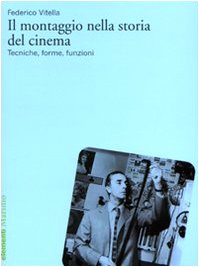
This image displays the front cover of the book. The title 'Il montaggio nella storia del cinema: Tecniche, forme, funzioni' is prominently featured at the top, along with the author's name, Federico Vitella. The lower part of the cover includes a black and white photographic element, depicting a man in a suit, possibly an editor or filmmaker, in a studio setting. The overall design is clean with a light blue background.
6. Specifications
| Publisher | Marsilio |
| Publication Date | April 23, 2009 |
| Language | Italian |
| Print Length | 200 pages |
| ISBN-10 | 8831797751 |
| ISBN-13 | 978-8831797757 |
| Item Weight | 240 g |
| Dimensions | 13.8 x 1.2 x 18.8 cm |
| Format | Paperback |
7. About the Author
Federico Vitella is the esteemed author of this comprehensive work on film editing. His profound knowledge and meticulous research contribute significantly to the authoritative nature of this manual. Vitella's contributions to cinema studies are widely recognized.
For further information about the author's background, academic contributions, or other published works, please refer to his official author page or the publisher's resources. You can find more details about Federico Vitella here.
8. Publisher Information and Support
This book is published by Marsilio. For any inquiries regarding this publication, including academic permissions, distribution, or other related matters, please contact the publisher directly.
Official contact details and further information about Marsilio's catalog can typically be found on their official website. Please refer to the imprint page within the book for specific publisher contact information.


