1. Introduction
This manual serves as a reference guide for "Prolog: The Standard: Reference Manual," a foundational text for understanding the standardized aspects of the Prolog programming language. It is designed for computer professionals and programmers seeking a rigorous and comprehensive definition of Prolog. The book addresses the need for solid theoretical foundations in computer programming, particularly in the realm of digital complexity, where logic serves as a primary mathematical discipline.
Authored by Pierre Deransart, AbdelAli Ed-Dbali, and Laurent Cervoni, with contributions from R.S. Scowen and C. Biro, this work aims to provide a uniform understanding of Prolog syntax and functionality, crucial for both compiler writers and application developers.
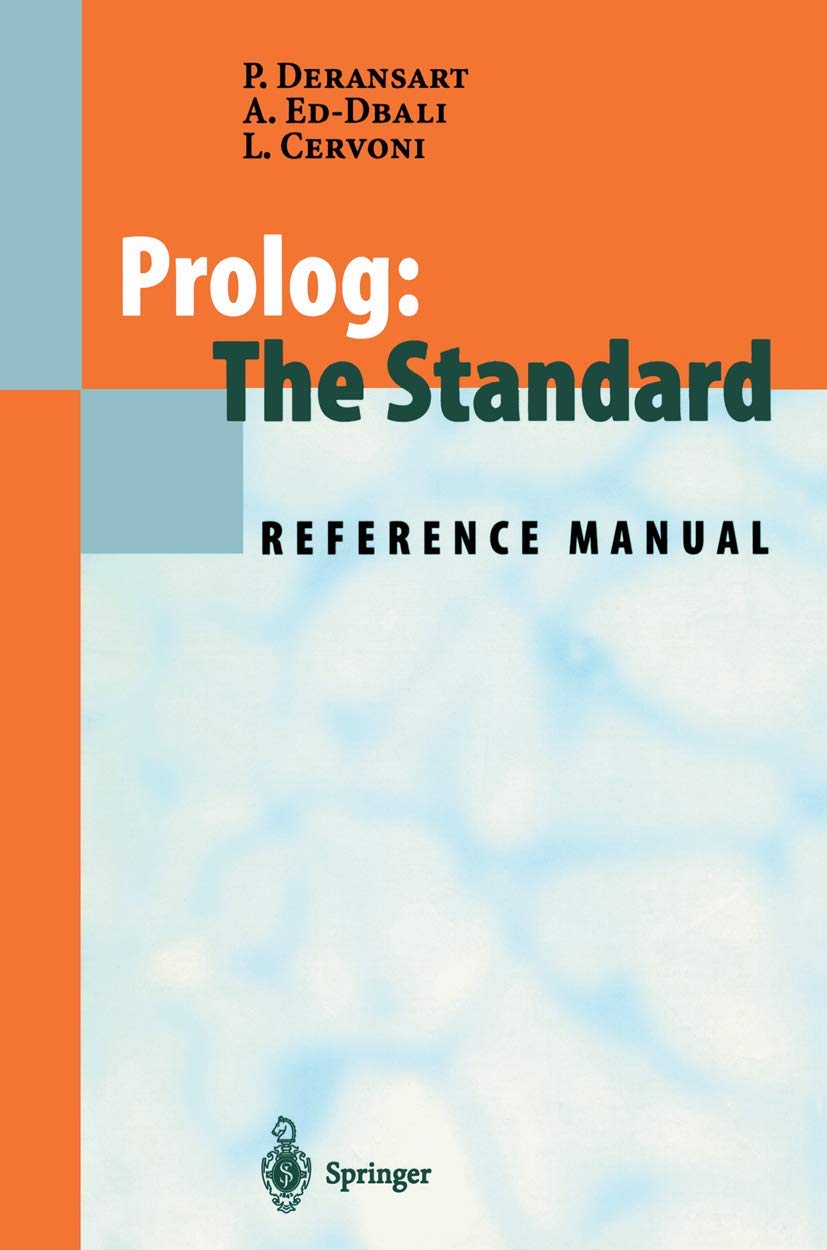
Figure 1: Cover of "Prolog: The Standard: Reference Manual." This image displays the front cover of the book, featuring its title and authors, providing a visual identification of the product.
2. Setup and Prerequisites
This reference manual is intended for individuals with a foundational understanding of programming concepts and an interest in logic programming. It is not a tutorial for beginners but rather a definitive guide to the Prolog standard.
2.1 Target Audience
- Experienced Programmers: Those familiar with other programming paradigms who wish to understand Prolog's standardized features.
- Prolog Developers: Individuals already working with Prolog who need to ensure their code adheres to the official standard for portability and interoperability.
- Compiler Writers: Developers creating or maintaining Prolog interpreters and compilers, requiring precise definitions of the language.
- Academics and Researchers: Students and researchers in computer science, particularly in areas like Artificial Intelligence and logic programming.
2.2 Recommended Approach
To maximize the utility of this manual:
- Familiarize yourself with basic logic programming concepts before diving into the specifics of the standard.
- Use the book as a primary reference when encountering ambiguities or needing precise definitions of Prolog constructs.
- Cross-reference with practical implementations of Prolog to observe how the standard is applied in various environments.
3. Operating and Interpretation
This section outlines how to effectively navigate and interpret the content of "Prolog: The Standard: Reference Manual" to gain a clear understanding of the language's official specification.
3.1 Understanding the Standard
The manual defines the syntax, semantics, and built-in predicates of the Prolog language. Each chapter focuses on specific aspects, from fundamental terms and clauses to control flow and input/output operations. Pay close attention to the formal definitions and examples provided.
3.2 Key Areas of Focus
- Syntax Definitions: Understand the formal grammar used to describe Prolog programs.
- Semantic Rules: Grasp how Prolog programs are evaluated and executed according to the standard.
- Built-in Predicates: Refer to the precise behavior and arguments of standard predicates to ensure correct usage and portability.
- Error Conditions: Identify the specified error conditions and how a standard-compliant Prolog system should react.
The book emphasizes uniformity across various Prolog implementations, making it an invaluable resource for writing portable Prolog code.
4. Maintenance and Updates
While a physical book does not require software updates, maintaining its utility as a reference involves staying informed about the evolution of the Prolog language and its implementations.
4.1 Physical Care
To preserve the physical condition of your manual:
- Store in a dry, cool place away from direct sunlight.
- Avoid bending the spine excessively to prevent damage to the binding.
- Handle with clean hands to prevent smudges and wear.
4.2 Standard Evolution
Programming language standards can evolve over time. While this manual defines the standard at its publication date (April 15, 1996), it is advisable to:
- Consult official ISO/IEC documents for any subsequent revisions or amendments to the Prolog standard.
- Follow developments in the Prolog community and specific Prolog implementation documentation for updates and extensions.
5. Troubleshooting and Common Issues
This section addresses common challenges and misunderstandings that users might encounter when working with the Prolog standard or interpreting this reference manual.
5.1 Discrepancies with Implementations
It is common for specific Prolog implementations to include extensions or deviate slightly from the ISO standard. If your code behaves differently than expected based on the manual:
- Check Implementation Documentation: Refer to the documentation of your specific Prolog system (e.g., SWI-Prolog, GNU Prolog) to understand its adherence to the standard and any proprietary extensions.
- Standard Compliance Mode: Many Prolog systems offer a "standard compliance mode" that can be enabled to strictly adhere to the ISO standard, which can help in debugging portability issues.
5.2 Understanding Formal Notation
The manual uses formal notation to define syntax and semantics. If you find this challenging:
- Review Formal Language Theory: A basic understanding of formal grammars (like BNF) and operational semantics can greatly aid comprehension.
- Focus on Examples: The examples provided are crucial for illustrating the formal definitions in a practical context.
6. Specifications
This section provides the key publication and physical specifications of "Prolog: The Standard: Reference Manual."
| Title | Prolog: The Standard: Reference Manual |
| Authors | Pierre Deransart, AbdelAli Ed-Dbali, Laurent Cervoni |
| Publisher | Springer |
| Publication Date | April 15, 1996 |
| Edition | Softcover reprint of the original 1st ed. 1996 |
| Language | English |
| Print Length | 288 pages |
| ISBN-10 | 3540593047 |
| ISBN-13 | 978-3540593041 |
| Item Weight | 1 pounds |
| Dimensions | 6.1 x 0.66 x 9.25 inches |
7. Warranty and Support
As a published book, "Prolog: The Standard: Reference Manual" does not typically come with a traditional product warranty in the electronic or mechanical sense. However, support for the content and potential errata is generally handled by the publisher.
7.1 Publisher Information
For inquiries regarding the content, potential errata, or future editions, please contact the publisher:
- Publisher: Springer
- Website: www.springer.com
It is recommended to check the publisher's website for any official errata lists or supplementary materials related to this publication.
7.2 Community Support
For general questions about Prolog programming or the ISO Prolog standard, various online communities and forums can provide assistance:
- Prolog user groups and mailing lists.
- Academic resources and computer science forums.


