Introduction
This manual provides a thorough and up-to-date reference on the Mohs tissue processing technique. Mohs micrographic surgery is a distinct surgical and tissue processing technique that allows comprehensive margin control for high-risk skin cancers with the highest cure rate. Mohs micrographic surgery entails expertise in Mohs tissue frozen section processing in a fully licensed Mohs laboratory.
The Laboratory Manual for Mohs Micrographic Surgery Frozen Tissue Processing offers extensive practical guidance on optimal management from leading experts in the field. It includes perspectives from Mohs technicians, laboratory managers, Mohs surgeons, and regulatory affairs. This resource covers the Mohs lab training curriculum for technicians and Micrographic Surgery and Dermatologic Oncology fellows, making it an extremely valuable resource for any healthcare professional in the Mohs micrographic surgery field.
Core Principles of Mohs Micrographic Surgery
Mohs micrographic surgery is a specialized surgical procedure for the removal of skin cancers. Its primary advantage lies in its ability to achieve comprehensive margin control, ensuring that all cancerous cells are removed while preserving as much healthy tissue as possible. This technique boasts the highest cure rate for many high-risk skin cancers.
A fundamental aspect of Mohs surgery is the immediate microscopic examination of excised tissue. This real-time analysis allows the surgeon to map the exact location of any remaining cancer cells, guiding subsequent excisions until the margins are clear. This iterative process minimizes the amount of tissue removed, leading to smaller defects and better cosmetic outcomes.
Mohs Tissue Frozen Section Processing
The success of Mohs surgery heavily relies on precise and efficient frozen tissue processing. This section details the critical steps involved in preparing tissue samples for microscopic examination:
- Tissue Excision and Orientation: Proper removal and meticulous mapping of the tissue specimen are crucial for accurate margin assessment.
- Freezing: Rapid freezing of the tissue is performed to preserve cellular morphology and allow for thin sectioning.
- Cryosectioning: Using a cryostat, extremely thin sections of the frozen tissue are cut. The quality of these sections directly impacts the diagnostic accuracy.
- Staining: Sections are stained (commonly with Hematoxylin and Eosin, H&E) to highlight cellular structures and identify cancerous cells.
- Microscopic Examination: The stained slides are then examined by the Mohs surgeon to identify any residual cancer cells at the margins.
- Mapping and Re-excision: Based on the microscopic findings, the surgeon precisely maps any remaining cancer and performs targeted re-excision until all margins are clear.
Maintaining a fully licensed Mohs laboratory with trained personnel is essential for adhering to the highest standards of tissue processing.
Roles and Responsibilities
Effective Mohs micrographic surgery requires a collaborative effort from various professionals. This manual provides insights from the perspectives of:
- Mohs Technicians: Responsible for the precise handling, processing, and staining of tissue specimens. Their expertise is vital for producing high-quality slides.
- Laboratory Managers: Oversee the operations of the Mohs laboratory, ensuring compliance with regulations, managing resources, and maintaining equipment.
- Mohs Surgeons: Perform the surgical excisions, interpret the microscopic slides, and make critical decisions regarding further excisions and reconstruction.
- Regulatory Affairs Personnel: Ensure that the laboratory adheres to all relevant local, national, and international regulations and accreditation standards.
Training and Education
This manual serves as a foundational text for the Mohs lab training curriculum, specifically designed for:
- Mohs Technicians: Providing comprehensive guidance on all aspects of tissue processing and laboratory procedures.
- Micrographic Surgery and Dermatologic Oncology Fellows: Offering in-depth knowledge essential for their specialized training in Mohs surgery.
The content is structured to support both theoretical understanding and practical application, preparing professionals for the rigorous demands of a Mohs laboratory environment.
Product Specifications
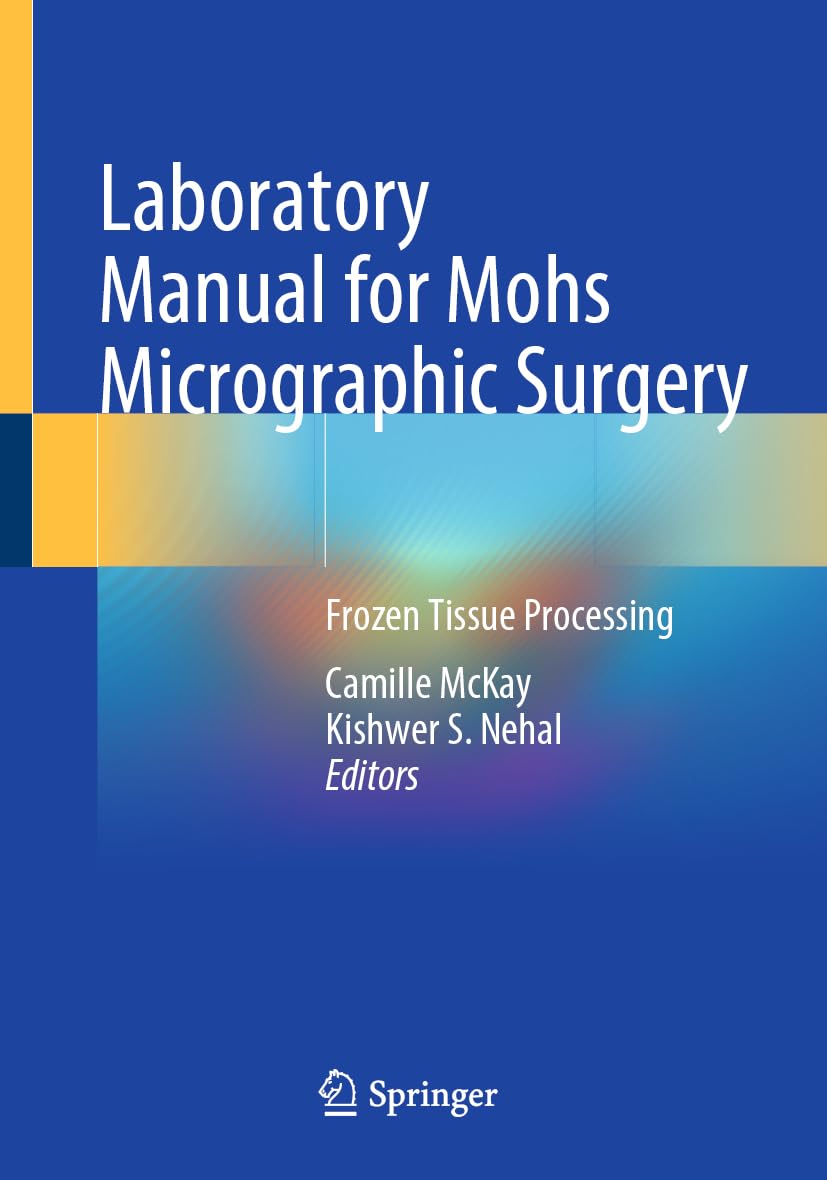
This image displays the front cover of the 'Laboratory Manual for Mohs Micrographic Surgery: Frozen Tissue Processing'. The cover features the title prominently, along with the names of the editors, Camille McKay and Kishwer S. Nehal, and the publisher's logo, Springer, at the bottom.
| Title | Laboratory Manual for Mohs Micrographic Surgery: Frozen Tissue Processing |
| Authors/Editors | Camille McKay, Kishwer S. Nehal |
| Publisher | Springer |
| Publication Date | April 19, 2024 |
| Language | English |
| Print Length | 258 pages |
| ISBN-10 | 3031524330 |
| ISBN-13 | 978-3031524332 |
| Item Weight | 2.31 pounds |
| Dimensions | 7.1 x 0.5 x 10 inches |
Important Notice
This manual is intended for informational and educational purposes only. It is not a substitute for professional medical advice, diagnosis, or treatment. Always seek the advice of your physician or other qualified health provider with any questions you may have regarding a medical condition. The publisher and authors disclaim any liability for any adverse effects resulting from the information contained herein.


