Introduction to Abundance
Abundance: What Progress Takes is a groundbreaking work that challenges conventional thinking about societal progress and the barriers to building a more prosperous future. This manual provides a structured guide to the book's core arguments, enabling readers to fully grasp its insights and apply its principles.
The book posits that many of the scarcities experienced in the 21st century are not inevitable but are, in fact, "chosen scarcities" resulting from policy and institutional failures. It advocates for a renewed politics of plenty, focusing on building and inventing more of what society needs, rather than accepting limitations.
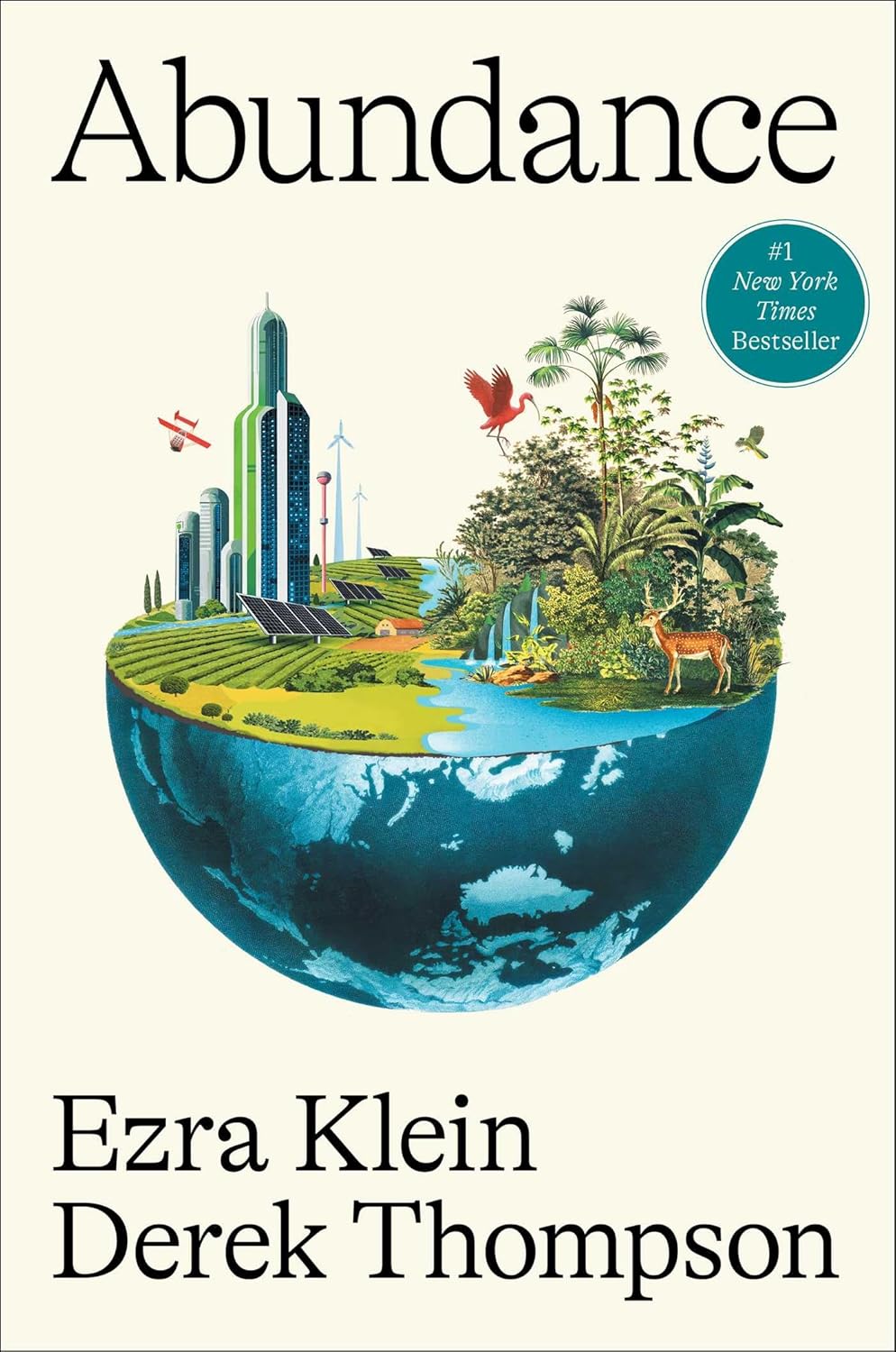
Image 1: The front cover of "Abundance," illustrating a world where nature and sustainable development coexist, symbolizing the book's theme of building a better future.
Understanding the Core Concepts
To fully engage with Abundance, it is essential to understand its foundational concepts:
- Chosen Scarcities: The idea that many contemporary shortages (e.g., housing, energy, infrastructure) are not due to inherent limitations but to policy choices, regulatory hurdles, and institutional inertia.
- The Politics of Plenty: A call to shift political focus from managing scarcity to actively enabling abundance through building, innovation, and efficient governance.
- Institutional Sclerosis: An analysis of how existing governmental and societal structures have become resistant to change and effective action, hindering progress.
- Building Blocks of the Future: Identification of critical areas—housing, transportation, energy, and health—where a renewed focus on building and innovation can yield significant societal benefits.
The authors argue that both the political right and left have contributed to these chosen scarcities, albeit through different mechanisms. The book encourages readers to critically examine these mechanisms and consider new approaches.
Key Themes and Arguments
The book delves into several critical areas, providing detailed arguments and historical context:
- Housing Crisis: Explores how zoning laws, NIMBYism, and complex permitting processes have artificially inflated housing costs and limited supply in many regions.
- Energy Transition: Discusses the challenges in building clean energy infrastructure, often due to regulatory delays and opposition, despite the urgent need for climate action.
- Infrastructure Development: Examines why ambitious public projects frequently face delays, cost overruns, and are rarely completed, leading to a decaying infrastructure.
- Scientific and Technological Progress: Analyzes how bureaucratic hurdles and risk aversion can stifle innovation and the rapid deployment of new solutions.
The authors emphasize that recognizing these chosen scarcities is thrilling because it implies that alternative, more abundant futures are possible if different choices are made.

Image 2: The back cover of "Abundance," showcasing endorsements that highlight the book's impact and relevance to contemporary political and economic discourse.
Engagement and Application
To maximize the utility of Abundance, consider the following:
- Critical Reflection: Reflect on the examples provided and identify similar "chosen scarcities" in your local community or national context.
- Policy Analysis: Use the book's framework to analyze current policy debates, distinguishing between genuine limitations and self-imposed barriers to progress.
- Advocacy: Consider how the principles of abundance can inform advocacy for more effective and efficient governance, promoting building and innovation.
- Discussion: Engage in discussions with others about the book's ideas, fostering a broader understanding of the challenges and opportunities for creating abundance.
The book serves as a catalyst for rethinking how society approaches problem-solving, moving from a reactive stance to a proactive, building-oriented mindset.
Specifications
| Attribute | Detail |
|---|---|
| Title | Abundance: What Progress Takes |
| Authors | Ezra Klein, Derek Thompson |
| Format | Hardcover |
| Publisher | Avid Reader Press / Simon & Schuster |
| Publication Date | March 18, 2025 |
| Language | English |
| Print Length | 304 pages |
| ISBN-10 | 1668023482 |
| ISBN-13 | 978-1668023488 |
| Item Weight | 2.31 pounds |
| Dimensions | 6 x 1.1 x 9 inches |
About the Authors
Ezra Klein
Ezra Klein is an opinion columnist and host of the award-winning Ezra Klein Show podcast at The New York Times. He is the author of Why We're Polarized, an instant New York Times bestseller, named one of Barack Obama's top books of 2022. He lives in Brooklyn, New York.
Derek Thompson
Derek Thompson is a staff writer at The Atlantic and the host of the podcast Plain English. He is the author of the national bestseller Hit Makers and On Work, an anthology of his writing on labor and technology. He lives in Chapel Hill, North Carolina.
Editorial Reviews
The book has received widespread acclaim for its insightful analysis and compelling arguments:
-
"Spectacular…Offers a comprehensive indictment of the current problems and a clear path forward…Klein and Thompson usher in a mood shift. They inspire hope and enlarge the imagination."
—David Brooks, The New York Times
-
"A terrific book…Powerful and persuasive."
—Fareed Zakaria
-
"An absolute must-read."
—Stephanie Ruhle, MSNBC


Image 3: A collection of positive reviews and endorsements for "Abundance" from various critics and media personalities.
Support and Further Information
For additional information about Abundance, including author events, interviews, and related content, please visit the publisher's official website or the authors' respective platforms.
- Publisher: Avid Reader Press / Simon & Schuster
- Website: Simon & Schuster Official Page for Abundance
- Ezra Klein: The New York Times
- Derek Thompson: The Atlantic
This manual is intended to enhance your reading experience and provide a deeper understanding of the concepts presented in Abundance.


