Haynes Service & Repair Manual for Kawasaki Vulcan 700, 750 & 800 (1985-2004)
Comprehensive guide for maintenance, service, and repair procedures.
Introduction
This Haynes Service & Repair Manual provides detailed instructions and illustrations for the maintenance, service, and repair of Kawasaki Vulcan 700, 750, and 800 series motorcycles manufactured between 1985 and 2004. It is designed for both the novice and experienced mechanic, offering step-by-step procedures to ensure proper vehicle care and repair.
The manual covers a wide range of topics, including routine maintenance, tune-up procedures, engine repair, cooling and heating systems, fuel and exhaust systems, emissions control, ignition, brakes, suspension, steering, electrical systems, and comprehensive wiring diagrams. Adherence to the procedures outlined in this manual will help maintain the motorcycle's performance, reliability, and safety.
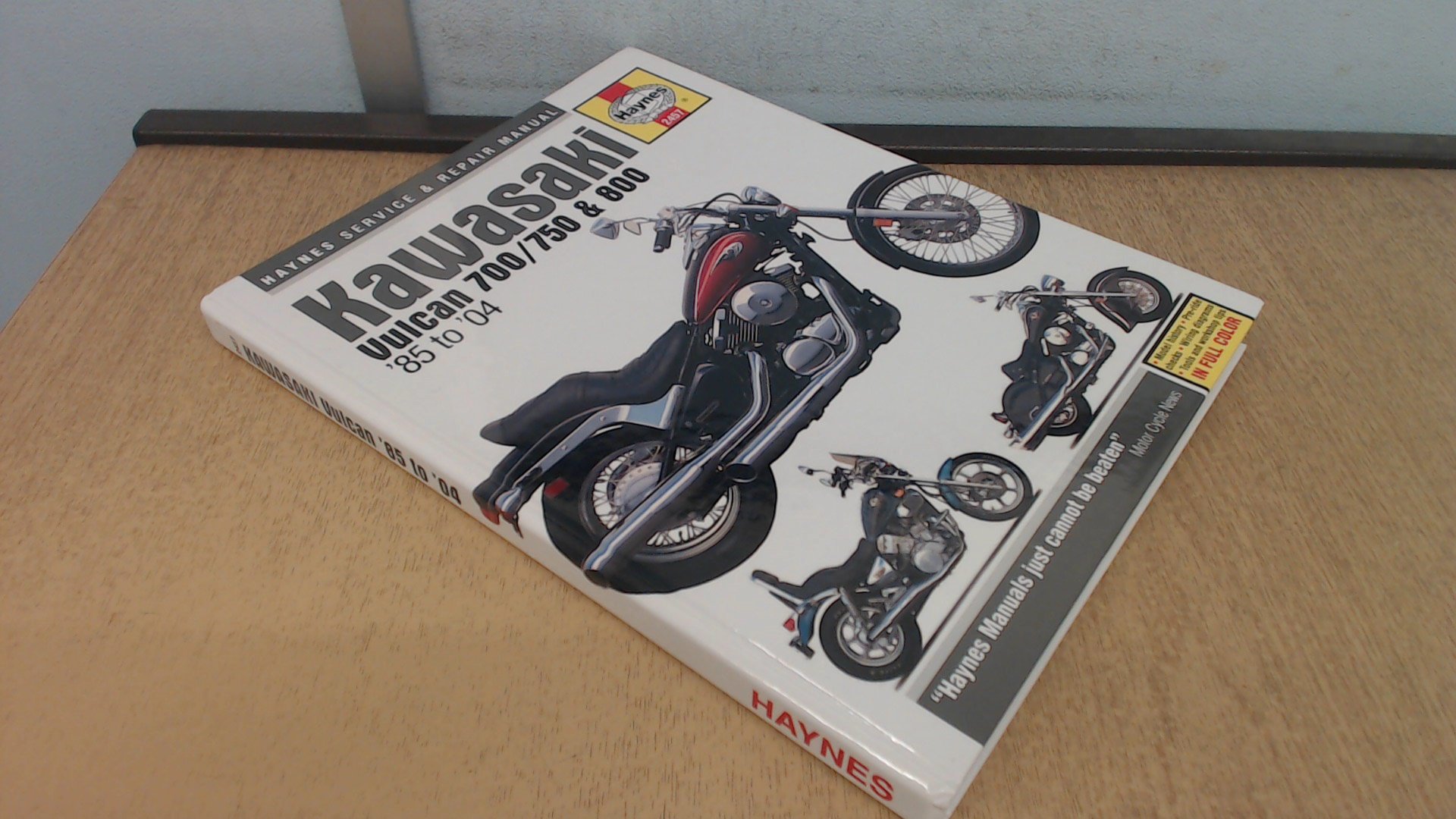
Image: Front cover of the Haynes Service & Repair Manual for Kawasaki Vulcan motorcycles. This image displays the title, applicable models, and publication years.
Safety Information
Always prioritize safety when performing any maintenance or repair work on your motorcycle. Failure to follow proper safety precautions can result in serious injury or damage to the vehicle. This manual provides general safety guidelines, but it is the responsibility of the user to exercise caution and use appropriate protective equipment.
- Wear appropriate personal protective equipment (PPE), including safety glasses, gloves, and sturdy footwear.
- Ensure the motorcycle is stable and securely supported before beginning any work. Use a proper stand or lift.
- Disconnect the battery's negative terminal before working on electrical components to prevent accidental shorts.
- Allow the engine and exhaust system to cool completely before servicing to avoid burns.
- Work in a well-ventilated area, especially when dealing with fuel, lubricants, or cleaning solvents.
- Keep a fire extinguisher readily available.
- Refer to the motorcycle's owner's manual for additional safety warnings and specific procedures.
Routine Maintenance and Tune-Up Procedures
Regular maintenance is crucial for the longevity and optimal performance of your Kawasaki Vulcan motorcycle. This section details the recommended service intervals and procedures for routine checks and tune-ups.
Key Maintenance Tasks:
- Fluid Checks and Changes: Engine oil, coolant, brake fluid, and shaft drive oil (if applicable).
- Filter Replacement: Air filter, oil filter, and fuel filter.
- Spark Plug Inspection and Replacement: Checking gap and condition.
- Ignition System Checks: Timing and component inspection.
- Carburetor/Fuel Injection Synchronization: Adjustment for smooth engine operation.
- Cable and Lever Lubrication: Clutch, throttle, and brake cables.
- Tire Inspection: Pressure, tread depth, and wear patterns.
- Brake System Inspection: Pad wear, fluid levels, and line condition.
Refer to the specific chapter in the manual for detailed, step-by-step instructions and torque specifications for each procedure.
Engine Repair and Systems
This section covers comprehensive procedures for diagnosing, disassembling, repairing, and reassembling the engine and its associated systems. It includes detailed information on:
- Engine Overhaul: Cylinder head, cylinder block, pistons, crankshaft, and camshaft components.
- Cooling System: Radiator, water pump, thermostat, hoses, and coolant replacement.
- Fuel System: Fuel tank, fuel pump, carburetors (cleaning, adjustment, rebuilding), fuel lines, and fuel filter.
- Exhaust System: Mufflers, headers, and catalytic converter (if equipped) inspection and replacement.
- Emissions Control: Components and procedures for maintaining compliance with emissions standards.
Accurate torque settings and proper assembly techniques are critical for engine reliability. Always consult the manual for specific values and sequences.
Electrical Systems and Wiring Diagrams
The electrical system is vital for the operation of your motorcycle. This section provides guidance on diagnosing and repairing electrical issues, including:
- Battery: Testing, charging, and maintenance.
- Charging System: Alternator/stator, rectifier/regulator, and wiring.
- Starting System: Starter motor, solenoid, and related circuits.
- Ignition System: Coils, igniter, sensors, and spark plug circuits.
- Lighting and Signaling: Headlights, taillights, turn signals, and horn.
- Switches and Sensors: Troubleshooting and replacement.
- Wiring Diagrams: Detailed schematics to trace circuits and identify components.
When working with electrical components, always disconnect the battery to prevent short circuits and potential damage.
Brakes, Suspension, and Steering
Maintaining these critical systems ensures safe handling and stopping power. This section covers:
- Brake System: Disc and drum brake inspection, pad/shoe replacement, caliper/wheel cylinder service, master cylinder overhaul, and brake fluid bleeding.
- Suspension: Front fork service (oil change, seal replacement), rear shock absorber inspection and replacement, and suspension adjustments.
- Steering: Handlebar removal/installation, steering head bearing inspection and adjustment/replacement.
Proper adjustment and maintenance of these systems are paramount for rider safety.
Troubleshooting
This section provides diagnostic charts and common symptoms to help identify problems with your motorcycle. It offers systematic approaches to pinpoint issues related to:
- Engine starting difficulties.
- Poor engine performance (e.g., misfires, lack of power).
- Brake system malfunctions.
- Electrical system failures.
- Unusual noises or vibrations.
Always begin troubleshooting with the simplest checks and proceed methodically.
Specifications
This section contains essential technical data, including dimensions, weights, fluid capacities, torque specifications, and adjustment values for the Kawasaki Vulcan 700, 750, and 800 models. Always refer to the specific tables and charts within the manual for precise figures relevant to your motorcycle's year and model variant.
General Information (Refer to manual for specific model data):
- Engine Type: V-twin, liquid-cooled
- Displacement: 699cc, 749cc, 805cc (depending on model)
- Fuel Type: Unleaded gasoline
- Oil Capacity: Varies by model, consult manual
- Tire Pressure: Specific values for front and rear tires (cold)
- Spark Plug Gap: Specific value for optimal ignition
Using incorrect specifications can lead to component damage or unsafe operation.