1. Introduction to High-Frequency Trading
This manual provides a comprehensive guide to the principles and applications detailed in "High-Frequency Trading: A Practical Guide to Algorithmic Strategies and Trading Systems, Second Edition." It is designed to assist readers in understanding and effectively utilizing the advanced concepts presented within the book.
High-frequency trading is a complex yet potentially profitable field, capable of generating stable returns across various market conditions. Success in this discipline requires a strong foundation in both theoretical knowledge and practical application. Whether you are an institutional investor seeking deeper insights into high-frequency operations or an individual trader exploring new methodologies, this guide will help you navigate the dynamic landscape of modern financial markets.
Building upon the success of its predecessor, the Second Edition incorporates the latest research and addresses contemporary questions that have emerged since the initial publication. The book meticulously covers a range of topics, including new portfolio management techniques specific to high-frequency trading, recent technological advancements enabling HFT, updated risk management strategies, and methods for safeguarding information and order flow in both dark and lit markets.

Figure 1.1: Front cover of the "High-Frequency Trading" book, illustrating its focus on algorithmic strategies and trading systems.
2. Key Features and Content Overview
The Second Edition of "High-Frequency Trading" offers a wealth of information and practical tools:
- Quantitative Trading Strategies: The book provides numerous quantitative trading strategies and essential tools for constructing a robust high-frequency trading system.
- Core Aspects of HFT: It addresses the most critical elements of high-frequency trading, from the initial formulation of trading ideas to comprehensive performance evaluation.
- Companion Website: A dedicated companion website is available, offering downloadable sample trading strategies that can be tested and adapted.
- Expert Authorship: The content is authored by Irene Aldridge, a respected industry expert in quantitative finance and high-frequency trading.
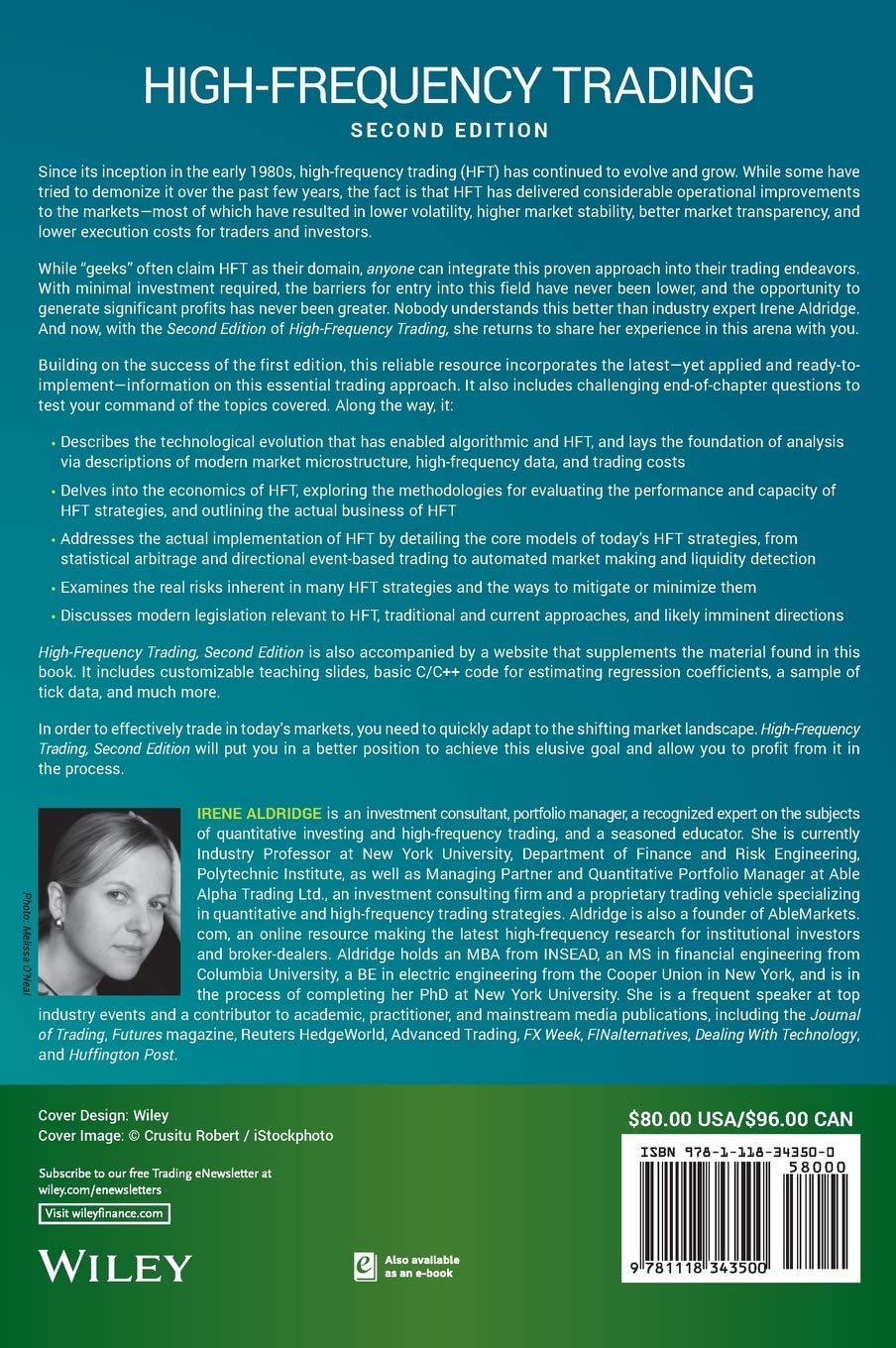
Figure 2.1: Back cover detailing the book's scope and benefits for readers interested in HFT.
3. About the Author
Irene Aldridge is a distinguished investment consultant, portfolio manager, and an acknowledged authority in quantitative investing and high-frequency trading. She is also a seasoned educator in the field.
Ms. Aldridge serves as Managing Partner and Quantitative Portfolio Manager at Able Alpha Trading Ltd., an investment consulting firm and proprietary trading vehicle specializing in quantitative and high-frequency trading strategies. She is also the founder of AbleMarkets.com, an online resource dedicated to providing the latest high-frequency research for institutional investors and broker-dealers.
Her academic credentials include an MBA from INSEAD, an MS in financial engineering from Columbia University, and a BE in electrical engineering from the Cooper Union in New York. Irene Aldridge is a frequent speaker at leading industry events and a regular contributor to academic, practitioner, and mainstream media publications, such as the Journal of Trading, Futures magazine, Reuters HedgeWorld, Advanced Trading, FX Week, FINalternatives, Dealing With Technology, and Huffington Post. She also provides executive education courses on high-frequency trading through HFTTraining.com.
4. Setup: Approaching the Material
To maximize your learning from "High-Frequency Trading," it is recommended to approach the material systematically:
- Initial Review: Begin by reviewing the book's table of contents and chapter introductions to gain an overview of its structure and the topics covered.
- Sequential Reading: Concepts within the book often build upon preceding chapters. For optimal comprehension, read the chapters sequentially.
- Utilize Companion Resources: As you progress, actively engage with the companion website. Download and explore the sample trading strategies and supplementary materials provided for practical reinforcement of theoretical concepts.
- Note-Taking: Consider taking detailed notes, highlighting key definitions, formulas, and strategic insights to aid retention and future reference.
5. Operating: Applying the Knowledge
The principles and strategies detailed in this guide are intended for practical application in the development of algorithmic trading systems. Consider the following operational guidelines:
- Simulated Environments: Before deploying any strategy in live markets, rigorously test it in simulated or backtesting environments. This allows for performance evaluation and identification of potential issues without financial risk.
- Risk Management: Implement the robust risk management strategies discussed in the book. Proper risk controls are paramount for maintaining stable and profitable operations in high-frequency trading.
- Data Analysis: Leverage the insights on high-frequency data analysis to refine your strategies and adapt to evolving market microstructure.
- Technological Considerations: Pay attention to the technological developments enabling HFT, ensuring your infrastructure can support the demands of high-speed trading.
6. Maintenance: Staying Current
The landscape of high-frequency trading is constantly evolving. To ensure your knowledge and strategies remain current and effective, consider these maintenance practices:
- Continuous Learning: Regularly seek out new research, industry reports, and academic publications related to HFT and market microstructure.
- Companion Website Updates: Periodically check the book's companion website for any new resources, errata, or updated sample code.
- Regulatory Awareness: Stay informed about changes in legislation and regulatory frameworks that may impact high-frequency trading practices.
- Strategy Review: Periodically review and re-evaluate your implemented strategies against current market conditions and performance metrics.
7. Troubleshooting Common Challenges
Readers may encounter challenges when delving into complex topics or applying theoretical concepts. Here are some common issues and troubleshooting tips:
- Difficulty with Quantitative Models: If a particular quantitative model or mathematical concept is unclear, revisit the foundational sections or consult supplementary academic resources. Breaking down complex formulas into smaller components can also be helpful.
- Implementation Issues with Sample Code: When working with sample code from the companion website, ensure your development environment (e.g., C/C++) is correctly configured. Verify all dependencies are met and refer to any provided documentation or comments within the code.
- Understanding Market Microstructure: The nuances of market microstructure can be intricate. Re-read sections on order books, liquidity, and market impact. Consider observing real-time market data to see these concepts in action.
- Strategy Performance Discrepancies: If a strategy's performance in practice differs from theoretical expectations, meticulously review your implementation, data quality, and the assumptions made during backtesting. Market conditions are dynamic and may require strategy adjustments.
8. Specifications

Figure 8.1: Physical dimensions of the book for reference.
| Attribute | Detail |
|---|---|
| Publisher | Wiley |
| Publication Date | April 22, 2013 |
| Edition | 2nd |
| Language | English |
| Print Length | 320 pages |
| ISBN-10 | 1118343506 |
| ISBN-13 | 978-1118343500 |
| Item Weight | 2.31 pounds |
| Dimensions | 7.3 x 1.1 x 10.3 inches |
9. Warranty and Support
As a published work, "High-Frequency Trading" does not come with a traditional product warranty. However, support for the content and associated resources is available through the publisher and author's platforms.
- Publisher Support: For general inquiries regarding the book, publication details, or to report any printing errors, please visit the official website of the publisher, Wiley.com, or contact their customer service department.
- Companion Website: Access the book's companion website for supplementary materials, sample code, and potential updates. The URL for the companion website is typically provided within the book itself or on the publisher's product page.
- Author Resources: Additional insights and resources from the author, Irene Aldridge, may be found on her professional platforms, including HFTTraining.com and AbleMarkets.com. These sites often provide further educational content and discussions related to high-frequency trading.
Please note that content and external website availability are subject to change by the publisher or author.