Introduction
Many people perceive trading as nothing more than a gamble. However, individuals who consistently achieve success in trading have learned to distinguish between gambling and strategic trading. This distinction is achieved by developing and adhering to a proper plan. This manual outlines the principles and methods presented in "Trading Without Gambling" by Marcel Link, demonstrating how to create and utilize a robust game plan to enhance every aspect of trading, thereby minimizing reliance on chance.
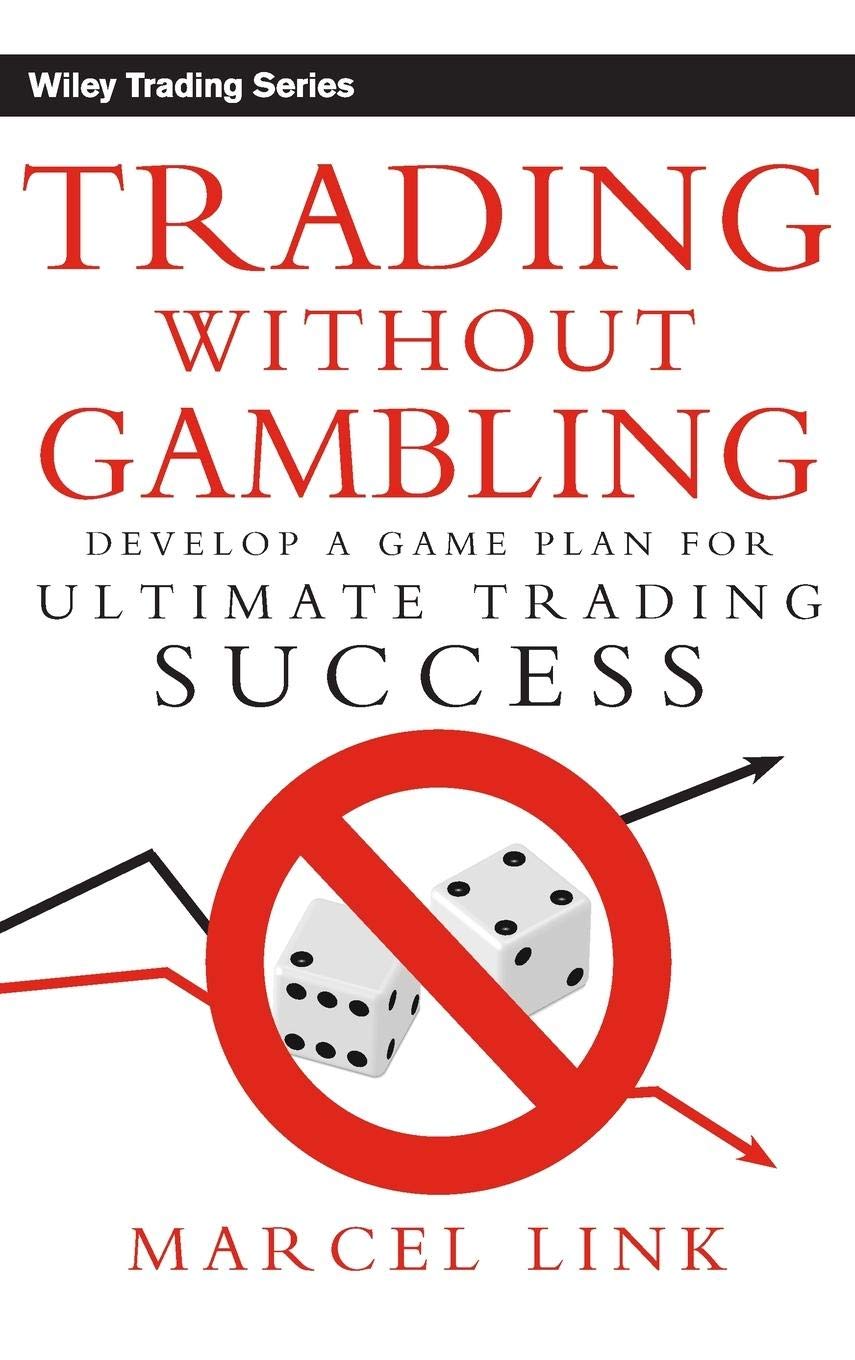
Image: Front cover of the book "Trading Without Gambling: Develop a Game Plan for Ultimate Trading Success" by Marcel Link. The cover features the title prominently with a red circle and line through two dice, symbolizing the avoidance of gambling in trading, alongside upward and downward trending lines representing market movements.
Setup: Establishing Your Trading Foundation
Before engaging in trading, it is crucial to establish a solid foundation. This involves understanding the core philosophy of trading without gambling and preparing your mindset and approach.
Key Principles
- Separating Trading from Gambling: Recognize that consistent success in trading stems from a disciplined, planned approach, not from speculative bets.
- Importance of a Game Plan: A well-defined game plan is essential for guiding your trading decisions and reactions to market conditions.
- Discipline: Adherence to your trading plan is paramount. This includes taking profits, cutting losses, and managing position sizes.
The book emphasizes that trading is not merely about buying and selling, but about understanding the when and why behind each action. This foundational understanding is the first step in setting up for success.
Operating: Implementing Your Trading Game Plan
This section details the practical application of the book's strategies to develop and execute your trading game plan effectively.
Components of a Detailed Trading Plan
- Trade Entry: Define clear criteria for initiating a trade.
- Trade Exit: Establish predefined conditions for closing a trade, both for profit and loss.
- Stop Placement: Determine precise stop-loss levels to limit potential losses.
- Position Sizing: Calculate appropriate position sizes to manage risk effectively.
- Money Management Parameters: Set rules for overall capital allocation and risk exposure.
- Selection of Assets to Trade: Focus on specific markets or instruments you understand well.
- Trading Time Frames: Define the time horizon for your trades (e.g., day trading, swing trading, long-term).
- Backtesting: Validate your trading system using historical data.
- Performance Review: Regularly analyze your trading results to identify strengths and weaknesses.
- Risk vs. Reward: Evaluate the potential profit against the potential loss for each trade.
The author provides numerous examples from his twenty years of trading experience, illustrating both successful trades and common mistakes. These examples serve as practical lessons for developing your own robust game plan.
Maintenance: Continuous Improvement in Trading
Successful trading is an ongoing process of learning and adaptation. Maintaining your trading edge requires continuous review and refinement of your game plan.
Key Maintenance Activities
- Regular Performance Analysis: Consistently review your trades against your plan. Identify deviations and their impact.
- Market Adaptation: While your core principles remain, be prepared to adjust your tactics based on evolving market conditions.
- Self-Reflection: Periodically ask yourself, "If I did not have this position on, would I buy now?" This helps maintain objectivity.
- Avoiding Overtrading: Recognize that sometimes, the best position is no position. Patience is a critical component of maintenance.
The book stresses that working smart and hard, rather than seeking quick riches, is the path to improving your bottom line.
Troubleshooting: Addressing Common Trading Challenges
Even with a solid plan, traders encounter challenges. This section addresses common pitfalls and how the book's principles help mitigate them.
Common Issues and Solutions
- Emotional Trading: The game plan provides a structured framework to reduce impulsive decisions driven by fear or greed. Stick to your predefined rules.
- Lack of Focus: By concentrating on one market or a specific set of instruments, as advised, you can avoid being overwhelmed and improve your understanding.
- Inconsistent Results: This often stems from not adhering to the plan. Regular performance reviews and strict discipline are the remedies.
- Over-diversification: The book suggests focusing on a few well-understood assets rather than spreading too thin across many markets.
The book's emphasis on planning for all possibilities, including market downturns, helps traders navigate difficult periods with greater resilience.
Specifications
| Attribute | Detail |
|---|---|
| Publisher | Wiley |
| Publication Date | December 10, 2008 |
| Edition | 1st |
| Language | English |
| Print Length | 288 pages |
| ISBN-10 | 0470118741 |
| ISBN-13 | 978-0470118740 |
| Item Weight | 1.4 pounds |
| Dimensions | 6.3 x 1.05 x 9.3 inches |
Support and Resources
For additional information and resources related to the author's work and trading insights, please refer to the official website:
This website may offer further articles, updates, or contact information related to the author's publications and trading philosophy.


